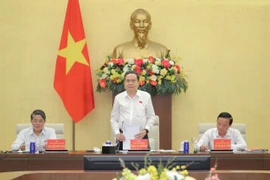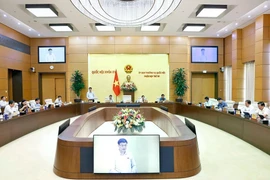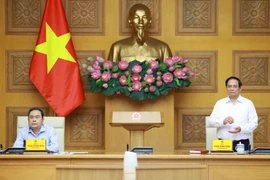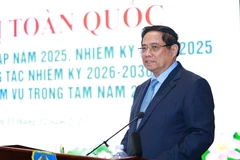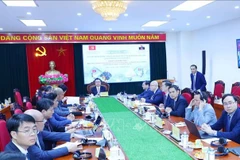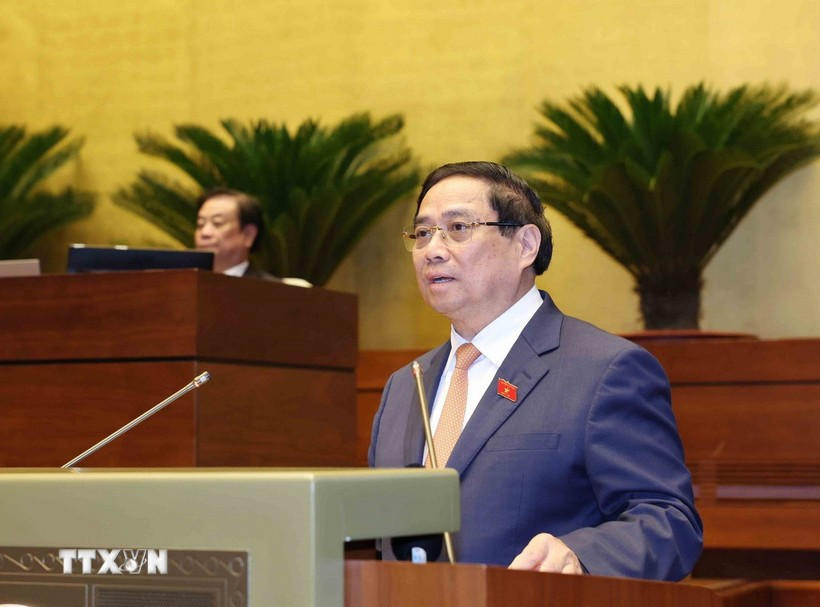
Hanoi (VNA) – Prime Minister Pham Minh Chinh underlined need to foster innovation to promote rapid and sustainable development this year and beyond, in his remarks at the opening ceremony of the 10 session of the 15th National Assembly on October 20.
The Government leader presented a report on results of socio-economic development for 2025 and the last five years, along with projections for 2026, emphasising priorities such as maintaining macroeconomic stability and keeping inflation in check, strengthening strategic autonomy, restructuring the economy, reforming development model, and accelerating industrialisation, modernisation, and urbanisation to achieve socio-economic development goals for 2026.
He highlighted the need to build a modern, smart, streamlined, and efficient administration, strengthen and improve institutional frameworks, and create significant breakthroughs in socio-economic infrastructure.
Attention must be paid to managing and using natural resources effectively, protecting the environment, adapting to climate change, further enhancing national defence and security, and maintaining political stability and social order, he stressed.
In 2026, the country aims to achieve 15 socio-economic development targets, including GDP growth of at least 10%, an average CPI increase of 4.5%, and labour productivity growth of 8%. Per capita GDP is projected at 5,400–5,500 USD, while the poverty rate, measured by the multidimensional poverty standard, is expected to decline by 1–1.5%.
Other key priorities include resolving long-standing stalled projects; investing in strategic infrastructure; developing high-quality human resources; responding to climate change and protecting the environment; boosting diplomacy and international integration; and maintaining an environment of peace, stability, cooperation, and development.
The PM ordered close coordination of fiscal, monetary, and other policies; managing interest and exchange rates appropriately; striving to lower lending rates; directing credit to production, business, and priority sectors; implementing preferential credit packages effectively; and efficiently managing the gold, corporate bond, and real estate markets.
The government aims to increase state budget revenue by at least 10%, strictly cut spending, and reduce regular expenditures, while raising development investment to 40%. It will also withhold 5% of investment spending for the Lao Cai–Hanoi–Hai Phong railway project and 10% of regular spending for social welfare right from the budget allocation stage.
The central coffer should focus on key national projects, while local budgets will prioritise inter-provincial and inter-communal projects, he said.
He demanded strongly developing the domestic market and e-commerce, boosting consumer demand through trade fairs, strictly combating smuggling and trade fraud, promoting exports, effectively tapping traditional markets, and expanding free trade agreements with the Middle East, Latin America, Africa, Pakistan, and other regions.
He said it is necessary to strongly promote new growth drivers, including the digital, green, circular, and sharing economies, as well as the semiconductor and artificial intelligence industries. He also called for controlled pilot mechanisms for new business models, completion of legal frameworks, and development of financial, stock, gold, technology, labour, and real estate markets. The leader emphasised the need to effectively pilot the digital asset market, foster a data market, and accelerate the development of an international financial centre in Ho Chi Minh City and Da Nang, along with new-generation free trade zones in selected localities.
The PM urged strict execution of the Politburo’s directives in critical sectors, the advancement of strategic and emerging industries including railways, nuclear power, and green energy; the efficient exploitation of outer space, maritime, and underground resources through scientific and technological innovation; and promoting the development of supporting industries.
He called for vigorously implementing special mechanisms and policies, immediately leveraging the Politburo’s resolutions on science and technology, innovation, digital transformation, state and private economic development, education and training, and public health; and selectively attracting FDI projects linked to advanced technology transfer.
Mechanisms and policies for developing special economic zones in Van Don, Van Phong, and Phu Quoc must be finalised, he stated.
In 2026, all unnecessary business conditions will be eliminated and simplified, and administrative procedure compliance time and costs will be reduced by 50% compared to 2024. The government will vigorously implement Project 06 and the “Digital Literacy for All” movement, and strengthen efforts against corruption, wastefulness, and other negative practices./.
VNA