VNA



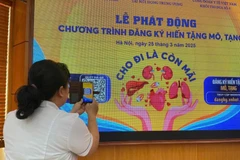
At the launching ceremony for the campaign at the hospital on March 25, Assoc. Prof. Dr. Pham Tuan Canh, NOH Director underscored organ donation is a symbol of human compassion that transcends life itself, with each donated liver, kidney, cornea or tissue able offer a life-saving opportunity to those teetering on the edge of death.
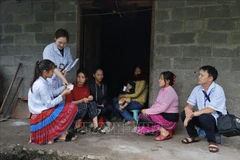
Through the aid, about 2 million people in four border provinces are expected to benefit from awareness campaigns and training for healthcare and veterinary workers.

Vietnam has recorded an 89% TB treatment success rate, surpassing the global average of 88%. In 2024, over 113,000 TB cases were detected nationwide, marking a 7% increase from the previous year.
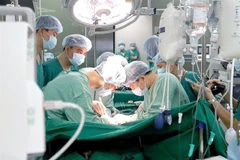
In the past three years, Vietnam has consistently recorded over 1,000 successful transplants annually – the highest in the region.
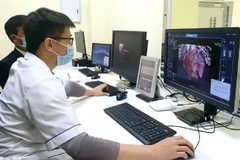
Health Minister Dao Hong Lan has recently signed an action plan to implement the Politburo and Government’s resolutions on scientific development, innovation and the national digital transformation.
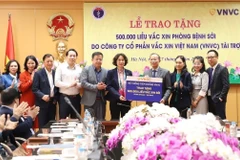
The Ministry of Health (MoH) has received 500,000 doses of measles vaccine presented by the Vietnam Vaccine JSC (VNVC) to support a nationwide immunisation campaign.

Vietnam has recorded nearly 40,000 suspected measles cases and five measles-related deaths since the beginning of this year. The southern region reported the highest number of cases (57%), the central region accounted for 19.2%, the north 15.1%, and the Central Highlands 8.7%.
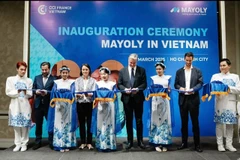
This office plays a key role as a strategic liaison point, capable of conducting in-depth market research and developing new key partnerships in the country.
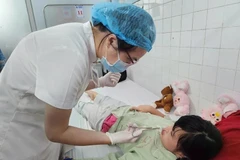
A team of 13 specialists from Germany, Italy, Austria, and Spain is conducting screenings for hundreds of children and performing over 100 surgeries to correct cleft lip, palate, and other congenital facial defects.

Vietnam wishes to receive continued international support, particularly in vaccine provision. It is ready to handle potential outbreaks and also plans to roll out further immunisation campaigns.
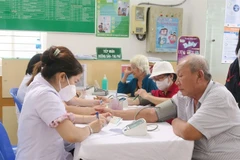
Seniors are now entitled to get free annual checks at general clinics, medical centres, and grade 2 and grade 1 hospitals, according to the Ho Chi Minh City Department of Health.
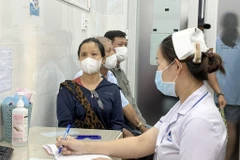
Hospitals in Ho Chi Minh City have digitised patient records, ensuring that information is securely stored while remaining easily retrievable and transferrable across healthcare facilities.
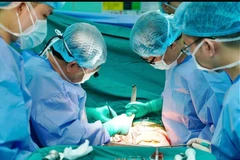
Organ transplantation is a major medical breakthrough for Vietnam, offering life-saving operations and improving the quality of life for patients with end-stage organ failure.
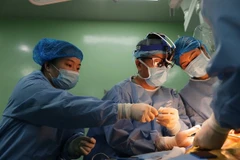
Organ donations from deceased and brain-dead donors remain scarce, while the demand for transplants continues to rise, with the main reason being lack of public awareness and ineffective communication and advocacy efforts.
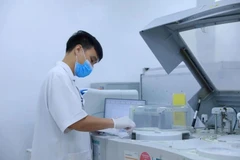
According to Digital Times, with the healthcare market in Vietnam growing at an impressive average rate of 28% annually from 2018 to 2022, and projected to continue expanding at 10% per year until 2027, the country offers enormous potential.
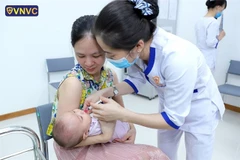
Titled 'Protect Your Baby from the First Steps', the campaign, jointly launched by UNICEF Vietnam and the Ministry of Health, seeks to enhance public awareness, particularly among parents, of the crucial role of the Rota vaccine in preventing acute diarrhoea caused by the Rotavirus.

The centre has integrated a high-success-rate infertility treatment model, investing in state-of-the-art medical technology.

MEDIAIPLUS will showcase its innovative platforms MediC and FiCRO at MWC 2025, held from March 3 to 6 at Hall 7, Stand 7F62, Fira Gran Via, in Barcelona, Spain.
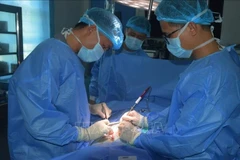
Recently, military medical workers of the Song Tu Tay island infirmary have successfully provided first aid and treatment for many fishermen with health problems while fishing in the Truong Sa sea area.

Deputy Minister of Health Tran Van Thuan said that today, more than 500,000 medical staff across the country are committed to their profession. They have made continuous efforts to achieve significant medical breakthroughs, some of which have earned international recognition.