Hanoi (VNS/VNA) - The year 2024 marks a major breakthrough in Vietnam’s organ transplantation sector, with a significant increase in organ donations from brain-dead donors, giving many patients a second chance at life.
Advancements in transplantation techniques have positioned the field as one of the most outstanding achievements in Vietnamese medicine.
However, health experts stress the need for improvements in policies and regulatory frameworks to ensure the sustainable growth of organ donation, procurement, and transplantation to effectively meet patient demand.
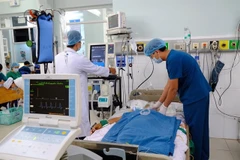
A man named B. A. from Binh Duong province, was admitted last year to the hospital in critical respiratory failure. Despite the doctors' best efforts, his condition deteriorated, and the 47-year-old was declared brain-dead. In a spirit of generosity, his family donated his organs to save four lives.
His two kidneys were transplanted into two pediatric patients with end-stage renal failure at Children's Hospital 2 in Ho Chi Minh City and the National Children's Hospital in Hanoi. His liver was sent to the University Medical Centre in HCM City, where it was split and transplanted into two patients simultaneously. His corneas were sent to Cho Ray Hospital, restoring vision for two female patients who had suffered from vision impairments for decades.
One of the cornea recipients, C., 57, in HCM City, said: "I lost my eyesight due to vehicle exhaust burns when I was 17 and have lived in darkness while caring for my elderly mother. Thanks to this generous donation, I can see light again after nearly 40 years."
The family of a 13-year-old boy who received a kidney transplant expressed their relief. The boy had suffered from end-stage kidney failure since fourth grade and had to undergo dialysis three times a week, travelling from Long An to HCM City. With neither parent a compatible donor, he remained on the transplant waiting list. "After two years of waiting, my son finally received a kidney transplant and can now return to school," his mother said.
Remarkable growth
Thirty-two years after its first kidney transplant in 1992, Vietnam has become the leading country in Southeast Asia for organ transplantation. By the end of 2024, Vietnamese doctors had performed 9,516 transplants in 27 hospitals across the country, with over 1,000 successful transplants annually in the past three years — the highest in the region.
HCM City has seen remarkable growth, performing more than 1,126 kidney transplants since its first in 1992. According to Tang Chi Thuong, director of HCM City’s Department of Health, the city has adopted advanced techniques such as cross-match kidney transplants, ABO-incompatible transplants, and liver splitting for dual recipients.
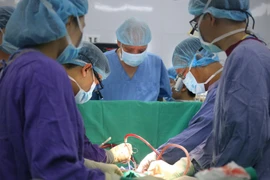
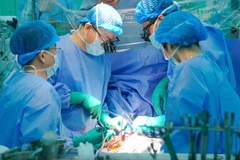
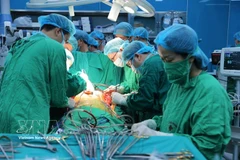
A major milestone in 2024 was Vietnam’s first cross-country heart transplant at the University Medical Centre, HCM City, offering hope to patients with severe heart conditions.
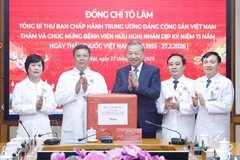
Minister of Health Dao Hong Lan highlighted Vietnam’s mastery of various organ transplantation techniques, saying that the country is now on par with advanced medical nations. In 2024, organ transplantation was recognised as one of the most significant achievements in the healthcare sector.
The country also performed its first-ever trachea transplant from a brain-dead donor, a globally rare procedure.
Doctors at Vietnam-Germany Friendship Hospital in Hanoi successfully conducted the country’s first simultaneous heart and liver transplant. Additionally, Vietnam achieved three successful lung transplants, considered among the most challenging transplant procedures.
Dr Nguyen Thi Kim Tien, Chairwoman of the Vietnam Association for Organ and Tissue Donation Advocacy, acknowledged that the country had never achieved such consistent progress in organ transplantation. The former health minister expressed optimism that Vietnam would soon catch up with regional and global leaders in transplant technology and brain-dead donor rates.
“We have established strong coordination between hospitals in organ donation and transplantation," Dr Tien said. "Many hospitals now have organ donation advocacy groups. This is a bold initiative, considering the challenges, but the health sector has achieved it at an impressive pace."
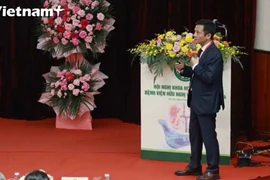
Dr Dong Van He, Director of the National Coordination Centre for Human Organ Transplantation, said that setting a national record for organ donations resulted from both public awareness campaigns and crucial government support.
Prime Minister Pham Minh Chenh launched a national organ donation registration campaign in Hanoi on May 19, 2024.
Also in May Minister of Health Lan issued a call for organ donation within the medical sector, leading hospitals nationwide to organise their own registration drives among their staff.
Previously, most organ donations were concentrated in Hanoi, Hue, and HCM City. However, in 2024, brain-dead organ donations were recorded in 13 provinces and cities, totalling 41 cases, marking a major step in expanding nationwide donation efforts.
Addressing shortages
Despite these achievements, the shortage of donated organs remains a major challenge. According to Dr Tien, the rate of brain-dead organ donors in Vietnam remains alarmingly low at just 5-10% compared to advanced countries. In contrast, the rate reaches 50-60% in the Republic of Korea, over 60% in Thailand, and as high as 80% in China.
"Every day, thousands of patients in Vietnam wait for organ transplants, while many individuals pass away without their valuable organs being used to save other lives. We cannot allow such a precious resource to go to waste," she said.
Dr Phan Tan Duc, head of the Urology-Nephrology Department at Children's Hospital 2, highlighted the pressing need for increased organ donations, particularly for child patients.
Statistics from Children's Hospital 2 show a significant demand, with approximately 100 child patients waiting for liver transplants and 70 for kidney transplants. On average, two children die each month while waiting for a donor organ.
Several factors contribute to the low rate of organ donation, including cultural and religious beliefs about bodily integrity after death, gaps in the legal framework, and ineffective public awareness campaigns.
Dr Tien stressed the need for a well-structured healthcare system, better organisation from hospitals to transplant coordination centres, and collective efforts from the government, religious organisations, and the community to encourage organ donation as a noble act.
Deputy Minister of Health Tran Van Thuan said that Vietnam lacked comprehensive policies for counselling potential organ donors, particularly for brain-dead and cardiac arrest cases. Additionally, there was no standardised pricing for costs related to transplantation, making it difficult for hospitals to manage procedures and reimbursements.
To address these challenges, the Ministry of Health is refining the legal framework to strengthen the organ donation network, according to Thuan.
The National Coordination Centre for Organ Transplantation has been urged to propose a National Organ Donation Day, as directed by the Prime Minister, to raise public awareness and encourage more registrations.
Additionally, the centre is enhancing its use of digital technology to manage donor registrations, transplant waiting lists, and donated organ allocation, ensuring efficiency, transparency, and fairness in organ transplantation.
By establishing a compatible database linking donor and transplant centres nationwide, authorities can maximise organ use, reduce waiting times, and prevent wastage amid high demand./.

First southern pediatric organ transplant centre to become operational in 2025
The first pediatric organ transplant centre in Vietnam’s southern region is scheduled to be completed and put into operation on the occasion of the 50th anniversary of the Liberation of the South and National Reunification Day (April 30, 1975 - 2025).