Hanoi (VNA) - The Drug Administration of Vietnam (DAV) under the Ministry of Health has issued a directive requesting localities and relevant units to implement measures to fully meet the demand for medicines for medical examination and treatment, particularly in disease prevention and control during the winter–spring season and the Lunar New Year (Tet) Festival.
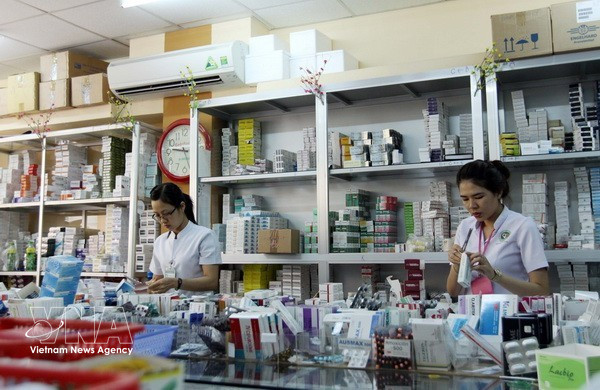
Accordingly, provincial and municipal health departments are required to direct hospitals, centres for disease control and health care facilities to urgently develop plans and carry out medicine procurement to ensure sufficient supply, absolutely avoiding shortages. Medicines must meet quality standards and be sold at reasonable prices, with no sudden price increases allowed.
Units are asked to prioritise ensuring adequate supplies of emergency medicines, drugs for disease prevention and control, especially those serving healthcare needs during Tet, as well as medicines for seasonal diseases such as dengue fever, influenza A, hand-foot-and-mouth disease, measles, rubella, rotavirus-related diarrhoea, and respiratory and gastrointestinal infections.
Heads of medical facilities are responsible for ensuring sufficient, quality medicines for emergency care and treatment, and for organising night-time medicine sales in accordance with regulations.
Local authorities are also requested to coordinate with relevant agencies to strengthen inspection and supervision of compliance with pharmaceutical regulations, including production, trading and import of medicines. Particular attention should be paid to detecting counterfeit, substandard or unlicensed medicines, as well as acts of hoarding and price manipulation, with strict handling of violations.
Hospitals are required to maintain 24/7 medicine sales and publicly disclose information to ensure timely access for patients during the holiday, while assigning dedicated staff to remain on duty throughout the Tet break to monitor the situation and ensure uninterrupted supply.
The DAV has also urged hospitals under the Ministry of Health to proactively coordinate with suppliers, place orders early, monitor delivery progress, and promptly conduct additional procurement if there is a risk of shortages, ensuring medicines are always available for medical services.
Pharmaceutical manufacturers and importers are asked to strengthen supply capacity, develop and implement supply plans, promptly fulfil orders from health care facilities, refrain from hoarding or price increases during Tet, and strictly comply with internal quality control and release procedures./.
See more
Hue provides free surgery for disadvantaged children with cleft lips, palates
Medical specialists and professors from Germany, Italy, Austria, and Spain conducted screenings for 80 children with cleft lips and palates and other congenital deformities. Following medical assessments, nearly 40 cases were selected for reconstructive surgery.
Robotic surgery takes a leap forward in Vietnam with new FV centre
FV Hospital aims to develop into a leading robotic surgery hub in Southeast Asia, with the long-term goal of making the world’s most advanced treatment technologies more accessible to patients across Vietnam.
Ho Chi Minh City targets free basic hospital fees for residents by 2030
Under the programme, the southern largest economic hub has set several key health targets to be achieved by 2030. The average height of children and adolescents under 18 is expected to increase by at least 1.5cm, while the average life expectancy of residents is projected to reach around 77 years, including at least 68 years of healthy living.
Vietnam conducts clinical trials of first oral antiviral drug to treat dengue fever
In Vietnam, dengue fever consistently records cyclical increases, especially during the rainy season. In recent years many localities have recorded high numbers of cases, putting significant pressure on the healthcare system and directly impacting the health, daily lives and economy of the people.
Refining rare disease management policies needed to ensure equitable health care
In Vietnam, an estimated 6 million people live with rare diseases, about 58% of whom are children, while nearly 30% of affected children die before the age of five due to delayed diagnosis or limited access to appropriate treatment.
Vietnamese doctors in Laos help foster bilateral solidarity
Commending the Hanoi – Vientiane General Hospital’s 13-year development, Ambassador Nguyen Minh Tam noted that prioritising conscience and virtue has helped it build a strong reputation among Lao citizens, the Vietnamese community and international friends in Laos.
Health sector requested to ensure timely, equitable medical services to every citizen
Human resources remain decisive, as no matter how advanced equipment becomes, it is doctors who directly deliver care and sustain patients’ confidence, said Party General Secretary To Lam.
Professional excellence, dedication define Vietnam’s healthcare system
When patients pull through from the brink of death, when their vital signs stabilise and transplanted hearts begin beating strongly in new bodies, the joy shared by the entire medical team is overwhelming. And when the country welcomes the New Year, saving lives takes on an even more profound significance — offering patients and their families a new spring of hope.
Vietnam fosters maternal and child healthcare, advances toward 2035 goals
The under-five mortality rate in Vietnam in 2025 was estimated at below 16 per 1,000 live births, more than three times lower than the 1990 level. The infant mortality rate (under one year) declined fourfold to below 11 per 1,000, while the neonatal mortality rate dropped fivefold, from 44 per 1,000 in 1990 to 8.8 per 1,000 in 2025.
Over 6,000 patients receive free medicines
The schemes focus primarily on cancer, rare diseases and severe chronic conditions, areas where treatment costs are high and often require expensive biological and originator drugs.
Vietnam reaches new height in organ transplantation
From demanding cross-country transplants to highly specialised procedures nearing regional and international standards, the sector has created new chances of survival for thousands of patients. However, persistent bottlenecks in organ donation and the legal framework highlight the urgent need to further perfect the national donation–transplantation system. In the era of advanced medicine, progress is measured not only by surgical mastery, but also by the ability to turn loss into hope and sustain life.
University Medical Centre performs ninth heart transplant from brain-dead donor
The surgery was carried out in the early morning of February 23 (the seventh day of the Lunar New Year), marking the hospital’s ninth heart transplant from a brain-dead donor.
Vietnam, China open “green lane” for ambulance transfer on humanitarian grounds
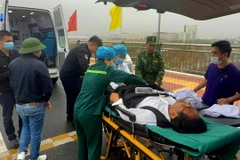
At around 16:20 the same day, the lane was activated at Bac Luan II Bridge area to allow an ambulance bearing license plate 15N-049.80 to transfer 63-year-old Chinese man Zhang Huizhong, who had suffered a cerebral infarction, to China for immediate treatment.
Resolution 72 opens path to a modern, sustainable healthcare system
To build a resilient healthcare system capable of meeting the challenges of ageing, emerging diseases and rising expectations for quality care, Vietnam must continue to strengthen primary and preventive care, invest in human resources, accelerate digitalisation and big data development, and refine healthcare financing mechanisms.
Aviation industry tightens round-the-clock health checks to prevent Nipah virus infections
An airport representative said Noi Bai has tightened health controls around the clock, with close coordination between the International Health Quarantine unit and the airport’s emergency medical team helping detect abnormal signs early and ensuring the aviation gateway remains safe and smooth.
Vietnam tightens Nipah virus prevention at border gates
Local authorities have been instructed to strengthen disease prevention and control measures at border gates, medical facilities and in the community, stay updated with global disease information, and closely monitor inbound travellers.
Health sector steps up preparedness against Nipah virus disease
Nipah virus infection is designated a Group A infectious disease, with reported fatality rates of between 40 and 75%. At present, no vaccine or specific antiviral treatment is available. The virus is mainly transmitted from animals to humans or through contact with contaminated food and objects, and can also spread between people via direct contact with bodily fluids and secretions of infected patients.
Vietnam reports no Nipah virus cases, health sector on high alert
Vietnam has recorded no cases of Nipah virus infection as of January 26, according to the Ministry of Health (MoH), which has instructed localities to step up surveillance and preventive measures and remain ready to respond to any potential outbreak.
Health minister highlights comprehensive, people-centred healthcare orientation
Member of the Party Central Committee and Minister of Health Dao Hong Lan said the Politburo's Resolution No. 72 provides a breakthrough orientation for the protection, care and improvement of the people’s health. It places the people’s health at the centre of all healthcare policies and services, while aiming to address long-standing bottlenecks in the health sector that have yet to be fundamentally resolved.
14th National Party Congress: Hanoi’s health sector ready to respond to all situations
Ensuring medical security, disease prevention and control, food safety, environmental hygiene, and readiness to handle all medical contingencies is among the key tasks directly contributing to the success of the 14th National Party Congress.