Two brain-dead donors give new life to 13 patients through organ donation

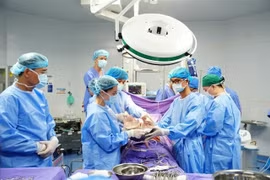
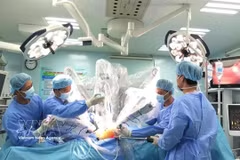
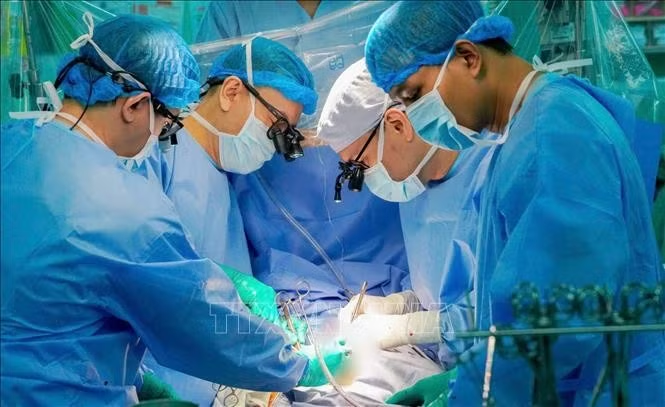
Most recently, University Medical Centre HCM City successfully performed two simultaneous transplants, a heart and a liver, using organs donated from a brain-dead patient at People’s Hospital 115.

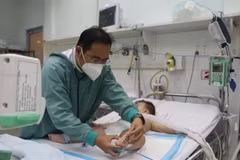
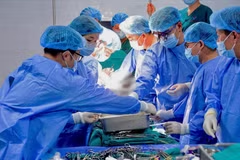
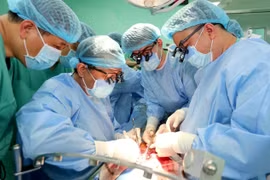
Doctors at the University Medical Centre Ho Chi Minh City perform a heart transplant on a patient. (Photo published by VNA)

Hanoi (VNA) – Between December 31 and January 4, two cases of organ donation following brain death in Ho Chi Minh City helped save lives and restore sight for 13 patients, highlighting the deep humanitarian significance of organ donation.

Most recently, University Medical Centre HCM City successfully performed two simultaneous transplants, a heart and a liver, using organs donated from a brain-dead patient at People’s Hospital 115.

The heart was transplanted into a 61-year-old man who had lived with dilated cardiomyopathy for more than a decade and had progressed to end-stage heart failure, for which transplantation was the only treatment option. At the same time, a liver transplant was carried out for a 16-year-old patient with advanced chronic liver disease that had deteriorated into end-stage cirrhosis and acute liver failure, posing an immediate threat to life.

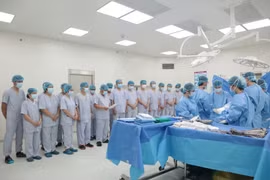
On the night of January 4, medical teams at University Medical Centre HCM City raced against time to complete the two transplants. In addition, another portion of the donated liver was transferred to the National Children’s Hospital for transplantation into a paediatric patient, while two corneas were allocated to Hue Central Hospital.

Earlier, on December 31, People’s Hospital 115 also recorded a case of organ donation after brain death. With coordination by the Vietnam National Coordinating Centre for Human Organ Transplantation (VNHOT), eight organs from the donor were distributed to transplant centres nationwide, benefiting patients in critical need. These included one lung, one heart, two kidneys, two livers and two corneas.

Notably, one donated heart was transplanted into a 15-year-old boy with end-stage heart failure at University Medical Centre HCM City, offering him a renewed chance at life./.
VNA

See more

Deputy Minister of Health Đao Xuan Co delivers a speech at the forum marking 50 years of healthcare cooperation between Vietnam and Sweden (Photo: VNA)

Vietnam, Sweden seek to deepen healthcare cooperation through innovation

The two sides discussed new opportunities for partnership at a recent conference in Hanoi, part of Sweden-Vietnam Health Week 2026, which brings together more than 200 policymakers, healthcare leaders, researchers, medical professionals and business representatives from both countries.

Male plastic surgery: Why masculine aesthetics require a different approach

Male plastic surgery: Why masculine aesthetics require a different approach

Plastic surgery has long been associated with procedures for women, but men also seek treatment for abdominal fat, enlarged breasts and age-related changes around the eyes and face. The American Society of Plastic Surgeons (ASPS) includes liposuction, gynecomastia surgery and eyelid surgery among procedures performed on male patients.

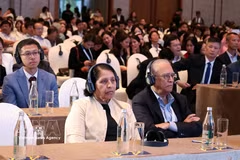
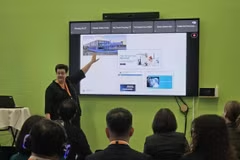
A speaker delivers presentations at the conference (Photo published by VNA)

Vietnam, Denmark expand cooperation in high-tech healthcare

Ambassador Nguyen Le Thanh called on Vietnamese and Danish partners to identify priority areas and promote research and training programmes, knowledge transfer and technology application in line with Politburo's Resolution No. 57-NQ/TW on breakthroughs in science – technology development, innovation and national digital transformation.

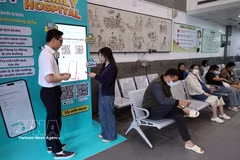
Ho Chi Minh City has favourable conditions for developing the ecosystem, including a large population, diverse healthcare needs and an extensive public and private medical network. (Illustrative photo: VNA)

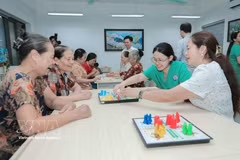
Ho Chi Minh City develops multi-tier elderly care network amid population ageing

Dr. Huynh Minh Chin, Deputy Director of the department, said rising elderly care needs are putting pressure on traditional family-based care, as older people increasingly face multiple chronic illnesses, mobility problems, malnutrition, dementia and depression, requiring continuous support and closer coordination among hospitals, grassroots healthcare facilities, families and social support institutions.

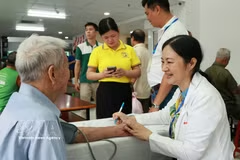
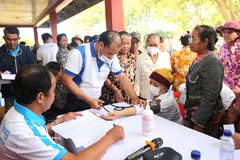
Local residents in Mondulkiri province, Cambodia, receive free medical check-ups and health consultation. (Photo: VNA)

Free medical examinations provided to remote communities in Cambodia

Vietnamese Ambassador Nguyen Minh Vu said the programme has been jointly organised by the embassy and the hospital annually in various Cambodian localities to provide healthcare support to disadvantaged households and contribute to the Cambodian Government’s efforts to improve public health. The initiative also reflects close cooperation in healthcare and the strong bonds between the people of Vietnam and Cambodia.

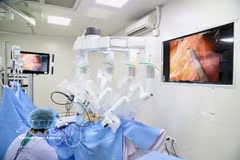
With the assistance of robotic-assisted laparoscopic surgery, doctors successfully perform a complex operation (Photo: VNA)

Vietnam advances towards high-quality, specialised healthcare

Recent developments in Hanoi and other localities highlight efforts to develop specialised treatment, standardise professional practices and apply artificial intelligence (AI) and advanced medical techniques, towards a more modern healthcare system.