Vietnam reports no Nipah virus cases, health sector on high alert

Vietnam has recorded no cases of Nipah virus infection as of January 26, according to the Ministry of Health (MoH), which has instructed localities to step up surveillance and preventive measures and remain ready to respond to any potential outbreak.

Hanoi (VNA) – As of January 26, Vietnam has recorded no cases of Nipah virus infection, according to the Ministry of Health (MoH), which has instructed localities to step up surveillance and preventive measures and remain ready to respond to any potential outbreak.

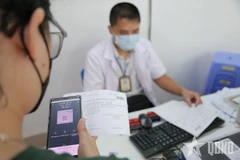
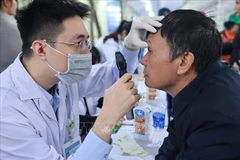
The ministry has directed enhanced disease monitoring at border gates, medical facilities and in communities nationwide, while preparing response plans to prevent and control the disease if necessary.

“The MoH will continue to closely monitor developments, and coordinate with the World Health Organisation (WHO) and countries around the world to promptly issue appropriate and effective disease prevention and control measures,” the ministry said.

The Nipah virus was first identified in 1999 in Malaysia. Human infections were first reported in Bangladesh in 2001, and later detected in India.

According to the WHO, Nipah virus infections have been recorded sporadically on a small scale in several countries and have not developed into large outbreaks. The case fatality rate is estimated at 40% to 75%. This rate can vary by outbreak depending on local capabilities for epidemiological surveillance and clinical management. There is currently no vaccine or specific antiviral treatment for Nipah virus infection in humans or animals. Data from infectious disease surveillance systems show that between December 27, 2025 and January 26, 2026, India reported five suspected Nipah virus cases, including two laboratory-confirmed cases, at a hospital in West Bengal.

Nipah virus infection is classified as a Group A infectious disease. The virus is transmitted primarily from animals to humans - currently through fruit bats in India, or through contact with contaminated objects or food. It can also spread from person to person via direct contact with bodily fluids or secretions of infected patients. The incubation period ranges from four to 14 days. Symptoms may include headache, muscle pain, vomiting and sore throat, followed by dizziness, drowsiness, altered consciousness and neurological signs indicative of acute encephalitis.

To proactively prevent and control Nipah virus infection, the MoH has advised the public to avoid travel to areas affected by Nipah virus unless absolutely necessary, and monitor health closely for 14 days after returning from affected areas. If symptoms such as headache, muscle pain, vomiting, sore throat, dizziness, drowsiness, confusion or seizures occur, people must promptly contact the nearest medical facility, limit contact with others, and clearly inform healthcare workers of travel and exposure history.

The MoH also underlined the need to ensure food safety by following the principle of “eat thoroughly cooked food and drink boiled water”; wash and peel fruit before consumption; avoid eating or drinking fruit that shows signs of being bitten or gnawed by animals such as bats or birds; and refrain from consuming raw or unprocessed tree sap (such as palm sap or fresh coconut sap).

It advised the public to avoid close contact with animals that pose a high risk of transmission, particularly fruit bats; wash hands regularly with soap or disinfectant after slaughtering or handling animals; limit direct contact with infected patients or contaminated items; use masks, gloves and personal protective equipment when caring for or treating suspected or confirmed cases, and wash hands thoroughly with soap or disinfectant afterwards./.

VNA

See more

Member of the Party Central Committee and Minister of Health Dao Hong Lan (Photo: VNA)

Health minister highlights comprehensive, people-centred healthcare orientation

Member of the Party Central Committee and Minister of Health Dao Hong Lan said the Politburo's Resolution No. 72 provides a breakthrough orientation for the protection, care and improvement of the people’s health. It places the people’s health at the centre of all healthcare policies and services, while aiming to address long-standing bottlenecks in the health sector that have yet to be fundamentally resolved.

Elderly people do morning exercises in the Hoan Kiem Lake area in Hanoi. (Photo: VNA)

Strategic roadmap for healthier future

As Vietnam’s population ages rapidly, Dr Angela Pratt, WHO Representative in Vietnam, identified two strategic priorities: strengthening primary healthcare and developing a formal long-term care system. These measures are essential not only for healthy ageing, but also as long-term investments with wide-ranging socio-economic returns.

Professor Dr Tran Van Thuan, Deputy Minister of Health. (File photo: VNA)

More than 300 medical staff assigned to serve 14th National Party Congress

Deputy Minister of Health Tran Van Thuan called on experts and healthcare workers to uphold a strong sense of responsibility, professionalism and expertise to ensure that medical services for the 14th National Party Congress are delivered safely, effectively and with the highest level of care.

Health check-up offered to citizens in Gia Lai province. (Photo: VNA)

Health ministry maps out three phases for hospital fee exemption

Health insurance participants from near-poor households and those aged 75 and above who are receiving social pension allowances will be entitled to 100% coverage of medical examination and treatment costs within the scope of health insurance benefits.

A patient pays hospital fees using cashless transactions (Photo: qdnd.vn)

Hanoi aims for modern healthcare system

Hanoi's health sector will continue to expand the comprehensive use of digital technology in professional practices to improve management efficiency and service quality, aiming to develop a modern, transparent, and people-centred healthcare system.

Doctors from the Vietnam Young Physicians Association provide free medical examinations and treatment for residents of the capital. (Photo: VNA)

3.37 billion USD earmarked for public health care, population quality improvement

The programme’s overarching goal is to ensure that all people receive primary healthcare management and early, preventive care delivered close to home, thereby reducing disease burden; to increase the total fertility rate and strive for a balanced sex ratio at birth; to adapt to population ageing while improving population quality; to improve care for vulnerable groups; and to contribute to improvements in physical and mental health, stature, life expectancy and overall quality of life, towards building a healthier Vietnam.

A representative of the Health Strategy and Policy Institute shares the results of a study titled “Assessment of Vietnam’s Readiness for Self-Care and Its Influence Factors”. (Photo courtesy of the organiser)

Vietnam ranks 4th in health self-care readiness

Self-care is an essential component of primary healthcare, with WHO defining it as the ability of individuals, families, and communities to promote and maintain health, prevent disease, and cope with illness with or without the support of healthcare professionals.

A proton machine in a hospital in Singapore. Proton beam therapy provides more options for cancer patients. (Photo courtesy of IHH Healthcare Singapore)

Proton therapy, an alternative method for cancer patients

In recent years, Vietnam's Ministry of Health has held numerous meetings with relevant units to assess the progress in developing proton therapy centres in the country. The project for establishing proton therapy centres is set to commence preparations in 2025 and aims for completion between 2026 and 2030.

At the event (Photo: VNA)

First hospital in Mekong Delta earns US AACI accreditation

Nam Can Tho University Hospital on December 15 hosted a ceremony to announce its accreditation by the American Accreditation Commission International (AACI), a US-based body, becoming the first facility in the Mekong Delta and among a select few in Vietnam to earn the distinction.

National health target programme prioritises the most vulnerable groups (Photo: VietnamPlus)

National target programme on health prioritises most vulnerable groups

The National Assembly on December 11 adopted a resolution on the National Target Programme on Healthcare, Population, and Development for the 2026–2035 period, marking a significant step in Vietnam’s long-term commitment to improving public health and population quality.

A view of the International Conference on Molecular Diagnostics in Microbiology and Diseases, organised by Rencontres du Vietnam and the International Centre for Interdisciplinary Science and Education (ICISE) in the central province of Gia Lai on December 11. (Photo: VNA)

Nearly 100 international scientists attend molecular diagnostics conference in Vietnam

The conference features almost 80 presentations across plenary sessions, parallel sessions and poster sessions, focusing on leading research trends such as point-of-care diagnostics; predictive biomarkers used to anticipate individual responses to therapy; and the development of new tools and platforms for rapid molecular-level detection and diagnosis.