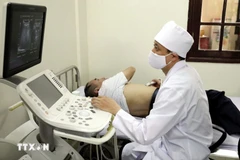
HCM City (VNA) – Doctors at Tu Du Hospital in Ho Chi Minh City have successfully saved a newborn in an exceptionally rare medical case, in which the birth of the second twin was delayed by eight weeks after the first twin was lost mid-pregnancy.
This outcome is considered extraordinary as the global medical community has documented only a few dozen successful cases of delayed delivery in twin pregnancies, with delays typically lasting just one to four weeks.
The information was shared by the hospital’s leadership on January 14.
The 21-year-old mother from the southern province of Tay Ninh became pregnant with dichorionic diamniotic twins through in vitro fertilisation in June 2025. During the first trimester, both fetuses developed normally, and prenatal screening tests showed low risks of abnormalities.
However, at 16–17 weeks of gestation, early morphological ultrasound detected a severe congenital malformation in one fetus, including open sacral spinal bifida and brain herniation. As this fetus had no chance of survival after birth, doctors consulted the family and decided to terminate the abnormal fetus in order to preserve the survival prospects of the remaining twin.
At 20 weeks, follow-up ultrasound confirmed that one fetus was developing normally while the other had ceased development. On the afternoon of November 10, 2025, when the pregnancy reached 24 weeks and six days, the woman suddenly experienced abdominal pain and noticed an abnormal mass protruding from the vagina. At hospital, doctors confirmed that the non-viable fetus had miscarried, while part of the umbilical cord and the entire placenta remained in the uterus.
At that time, the cervix was dilated by 2cm and uterine contractions begun. Given that the remaining fetus was extremely premature, weighing only around 620 grams and with very low chances of survival, doctors agreed on a cautious approach to prolong the pregnancy as long as possible while ensuring the mother’s safety.
Despite complications, including an E. coli infection detected during hospitalisation, the medical team managed to extend the pregnancy to 32 weeks.
On January 6, 2026, the mother delivered a baby girl weighing 1,800 grams. Both mother and child recovered well, and the baby was discharged on January 13.
Director of Tu Du Hospital Tran Ngoc Hai said this eight-week delay far exceeded expectations and highlights the hospital’s high level of expertise and strong multidisciplinary coordination in managing rare, high-risk obstetric cases, giving fragile lives a precious chance from the very beginning./.