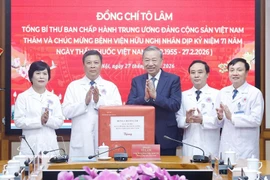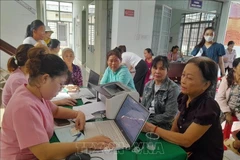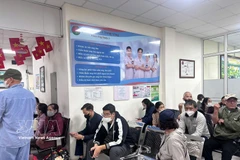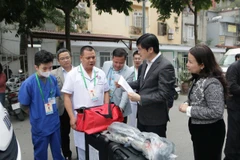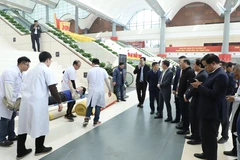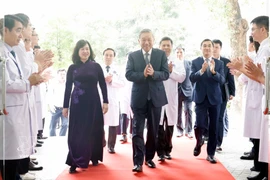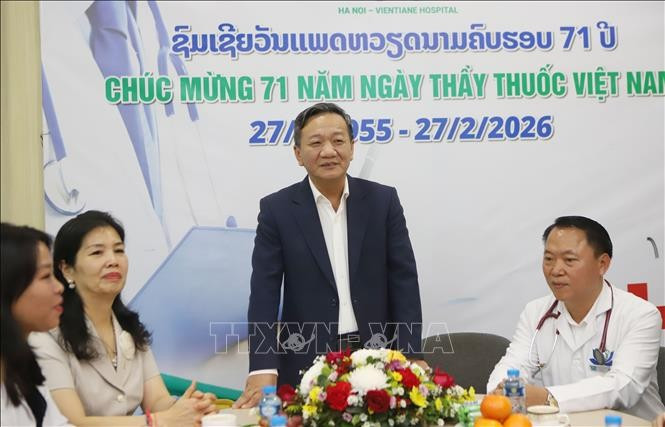
Vientiane (VNA) – Vietnamese Ambassador to Laos Nguyen Minh Tam, his spouse and embassy staff on February 27 visited and extended greetings to leaders and staff of the Hanoi – Vientiane General Hospital on the occasion of the 71st anniversary of the Vietnamese Doctors’ Day (February 27, 1955–2026).
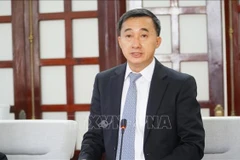
Welcoming the delegation, Director of the hospital Tran Van Nang said that since its establishment in late 2012 and operation from February 2013, the hospital has steadily affirmed its position as a high-quality non-public healthcare facility in the Lao capital.
It has invested in modern infrastructure and equipment, strengthened professional capacity through cooperation with the Hanoi Medical University Hospital, and implemented telemedicine and tele-ICU programmes.
Beyond medical services, the hospital has actively engaged in social welfare activities, including free check-ups and medicine distribution for local residents, support for disadvantaged overseas Vietnamese, and coordination with Vietnam – Laos associations in community health care. Its staff consistently uphold medical ethics and place patients’ health at the centre of their mission.
The Vietnamese ambassador recalled President Ho Chi Minh’s 1955 message to the health sector, which urged physicians to love patients as their own family, continuously improve expertise and preserve medical ethics. He stressed that these teachings remain a guiding principle for generations of medical workers.
Commending the hospital’s 13-year development, the ambassador noted that prioritising conscience and virtue has helped it build a strong reputation among Lao citizens, the Vietnamese community and international friends in Laos. Its services have helped reduce the need for overseas treatment, saving patients time and costs while promoting the positive image of Vietnamese people abroad.
He called on the hospital to strictly comply with host-country laws, enhance professional quality, expand charitable medical outreach to remote areas, and continue placing patients at the centre of care. The embassy stands ready to support these humanitarian efforts, contributing to the great friendship, special solidarity and comprehensive cooperation between Vietnam and Laos, he stated.
Recognised as a Grade-I general hospital by the Lao Ministry of Health in 2018, the hospital has 100 beds, nine clinical departments and five functional units, with 168 staff members, including Vietnamese doctors, members of the Vietnamese community in Laos and Lao doctors trained in Vietnam.
In 2026, it will prioritise human resources training, upgrade information infrastructure, and launch cardiology and nephrology–urology centres, and equip its emergency unit with a continuous renal replacement therapy system./.
See more
Professional excellence, dedication define Vietnam’s healthcare system
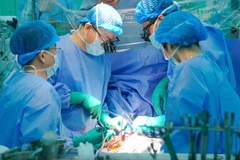
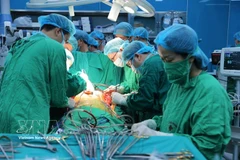
When patients pull through from the brink of death, when their vital signs stabilise and transplanted hearts begin beating strongly in new bodies, the joy shared by the entire medical team is overwhelming. And when the country welcomes the New Year, saving lives takes on an even more profound significance — offering patients and their families a new spring of hope.
Vietnam fosters maternal and child healthcare, advances toward 2035 goals
The under-five mortality rate in Vietnam in 2025 was estimated at below 16 per 1,000 live births, more than three times lower than the 1990 level. The infant mortality rate (under one year) declined fourfold to below 11 per 1,000, while the neonatal mortality rate dropped fivefold, from 44 per 1,000 in 1990 to 8.8 per 1,000 in 2025.
Over 6,000 patients receive free medicines
The schemes focus primarily on cancer, rare diseases and severe chronic conditions, areas where treatment costs are high and often require expensive biological and originator drugs.
Vietnam reaches new height in organ transplantation
From demanding cross-country transplants to highly specialised procedures nearing regional and international standards, the sector has created new chances of survival for thousands of patients. However, persistent bottlenecks in organ donation and the legal framework highlight the urgent need to further perfect the national donation–transplantation system. In the era of advanced medicine, progress is measured not only by surgical mastery, but also by the ability to turn loss into hope and sustain life.
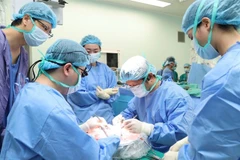
University Medical Centre performs ninth heart transplant from brain-dead donor
The surgery was carried out in the early morning of February 23 (the seventh day of the Lunar New Year), marking the hospital’s ninth heart transplant from a brain-dead donor.
Measures rolled out to ensure adequate medicine supply during Tet
Accordingly, provincial and municipal health departments are required to direct hospitals, centres for disease control and health care facilities to urgently develop plans and carry out medicine procurement to ensure sufficient supply, absolutely avoiding shortages. Medicines must meet quality standards and be sold at reasonable prices, with no sudden price increases allowed.
Vietnam, China open “green lane” for ambulance transfer on humanitarian grounds
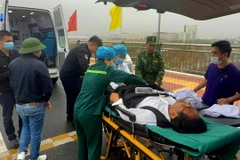
At around 16:20 the same day, the lane was activated at Bac Luan II Bridge area to allow an ambulance bearing license plate 15N-049.80 to transfer 63-year-old Chinese man Zhang Huizhong, who had suffered a cerebral infarction, to China for immediate treatment.
Resolution 72 opens path to a modern, sustainable healthcare system
To build a resilient healthcare system capable of meeting the challenges of ageing, emerging diseases and rising expectations for quality care, Vietnam must continue to strengthen primary and preventive care, invest in human resources, accelerate digitalisation and big data development, and refine healthcare financing mechanisms.
Aviation industry tightens round-the-clock health checks to prevent Nipah virus infections
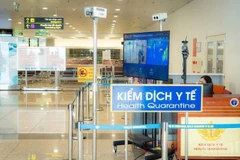
An airport representative said Noi Bai has tightened health controls around the clock, with close coordination between the International Health Quarantine unit and the airport’s emergency medical team helping detect abnormal signs early and ensuring the aviation gateway remains safe and smooth.
Vietnam tightens Nipah virus prevention at border gates
Local authorities have been instructed to strengthen disease prevention and control measures at border gates, medical facilities and in the community, stay updated with global disease information, and closely monitor inbound travellers.
Health sector steps up preparedness against Nipah virus disease
Nipah virus infection is designated a Group A infectious disease, with reported fatality rates of between 40 and 75%. At present, no vaccine or specific antiviral treatment is available. The virus is mainly transmitted from animals to humans or through contact with contaminated food and objects, and can also spread between people via direct contact with bodily fluids and secretions of infected patients.
Vietnam reports no Nipah virus cases, health sector on high alert
Vietnam has recorded no cases of Nipah virus infection as of January 26, according to the Ministry of Health (MoH), which has instructed localities to step up surveillance and preventive measures and remain ready to respond to any potential outbreak.
Health minister highlights comprehensive, people-centred healthcare orientation
Member of the Party Central Committee and Minister of Health Dao Hong Lan said the Politburo's Resolution No. 72 provides a breakthrough orientation for the protection, care and improvement of the people’s health. It places the people’s health at the centre of all healthcare policies and services, while aiming to address long-standing bottlenecks in the health sector that have yet to be fundamentally resolved.
14th National Party Congress: Hanoi’s health sector ready to respond to all situations
Ensuring medical security, disease prevention and control, food safety, environmental hygiene, and readiness to handle all medical contingencies is among the key tasks directly contributing to the success of the 14th National Party Congress.
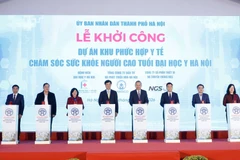
Party leader attends groundbreaking ceremony for Hanoi Medical University elderly health care complex
The Hanoi Medical University Elderly Health Care - Medical Complex is designed as a multi-functional integrated hub combining high-quality medical services, education and clinical training, scientific research, technology transfer and comprehensive elderly care, forming a synchronised healthcare–education–research ecosystem.
Strategic roadmap for healthier future
As Vietnam’s population ages rapidly, Dr Angela Pratt, WHO Representative in Vietnam, identified two strategic priorities: strengthening primary healthcare and developing a formal long-term care system. These measures are essential not only for healthy ageing, but also as long-term investments with wide-ranging socio-economic returns.
More than 300 medical staff assigned to serve 14th National Party Congress
Deputy Minister of Health Tran Van Thuan called on experts and healthcare workers to uphold a strong sense of responsibility, professionalism and expertise to ensure that medical services for the 14th National Party Congress are delivered safely, effectively and with the highest level of care.
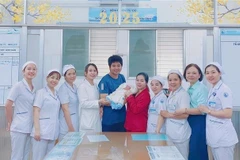
Tu Du Hospital saves newborn in extremely rare twin pregnancy case
The eight-week delay far exceeded expectations and highlights the hospital’s high level of expertise and strong multidisciplinary coordination in managing rare, high-risk obstetric cases, giving fragile lives a precious chance from the very beginning.
Female health care worker donates organs, giving five lives a new lease on life
The 108 Military Central Hospital, on January 12, announced that it had successfully performed a multi-organ transplant from a brain-dead donor, a health care worker.
Drill held to ensure medical support for upcoming 14th National Party Congress
Medical teams will participate in a full rehearsal at the National Convention Centre on January 13 to finalise all preparations ahead of the 14th National Party Congress, which will take place from January 19 to 25.