Female health care worker donates organs, giving five lives a new lease on life

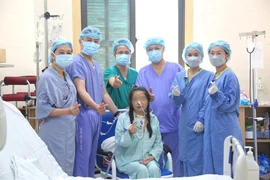
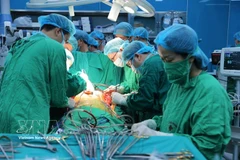
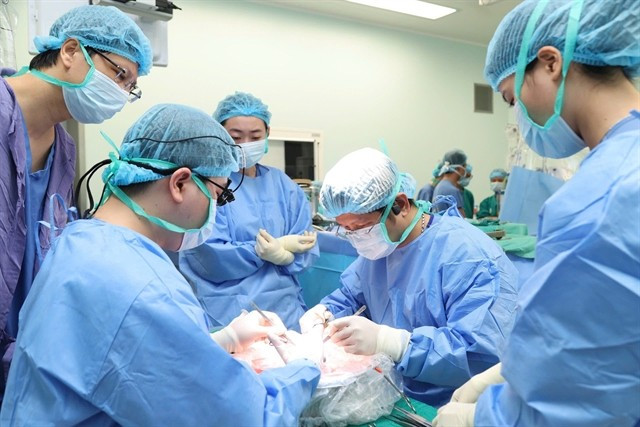
The 108 Military Central Hospital, on January 12, announced that it had successfully performed a multi-organ transplant from a brain-dead donor, a health care worker.

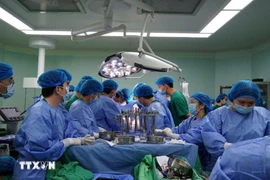
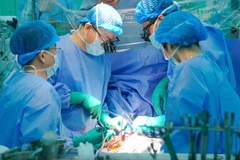
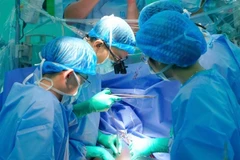
Doctors of the 108 Military Central Hospital perform the multi-organ transplant on January 12. (Photo courtesy of the hospital)

Hanoi (VNS/VNA) – The 108 Military Central Hospital in Hanoi on January 12 announced it had successfully performed a multi-organ transplant from a brain-dead donor, a healthcare worker, marking another milestone in Vietnam’s transplant medicine.

The donor was N.C., a 46-year-old female nurse from Hanoi, who was diagnosed with brain death following a haemorrhagic stroke. Despite immediate medical intervention, her condition did not improve.

The hospital’s organ donation mobilisation team counselled the patient’s family on the possibility of organ donation to save critically ill patients. Overcoming their grief, the family agreed to donate her organs to give life to others. On January 12, an expert council confirmed the patient was eligible for organ donation after three diagnoses of brain death.

In this case, the liver was transplanted to a 36-year-old male patient diagnosed with hepatocellular carcinoma, while two kidneys were transplanted to two patients with chronic kidney disease, a 37-year-old female and a 47-year-old male. Two corneas were transferred to Hue Central Hospital, creating opportunities for vision restoration for patients who have long awaited the return of sight.

After more than five hours of surgery, the liver transplant proceeded smoothly. Immediately afterwards, the recipients were closely monitored and cared for under specialised procedures. All three transplant patients are currently in stable condition, alert and breathing well on their own.

As a leading organ transplant centre in Vietnam and the top liver transplant centre in Southeast Asia, the 108 Military Central Hospital has so far performed 665 kidney transplants, 319 liver transplants, eight heart transplants, four lung transplants, one pancreas transplant, 34 corneal transplants and four limb transplants.

These procedures have achieved success rates and survival outcomes comparable to those in advanced countries worldwide, delivering significant scientific and humanitarian value and reaffirming the hospital’s professional capacity and pivotal role in organ donation and transplantation./.
VNA

See more

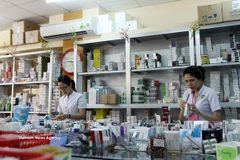
The DAV asks pharmacy producers and distributors to increase medicine supply capacity during Tet to meet increasing demand (Photo: VNA)

Measures rolled out to ensure adequate medicine supply during Tet

Accordingly, provincial and municipal health departments are required to direct hospitals, centres for disease control and health care facilities to urgently develop plans and carry out medicine procurement to ensure sufficient supply, absolutely avoiding shortages. Medicines must meet quality standards and be sold at reasonable prices, with no sudden price increases allowed.

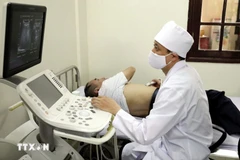
Military doctors conduct ultrasound examinations for residents in Dong Dang town, Cao Loc district, Lang Son province. (Photo: VNA)

Resolution 72 opens path to a modern, sustainable healthcare system

To build a resilient healthcare system capable of meeting the challenges of ageing, emerging diseases and rising expectations for quality care, Vietnam must continue to strengthen primary and preventive care, invest in human resources, accelerate digitalisation and big data development, and refine healthcare financing mechanisms.

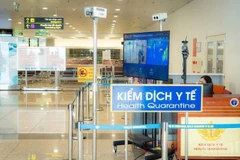
Vietnam steps up Nipah virus prevention at border gates (Photo: suckhoedoisong.vn)

Vietnam tightens Nipah virus prevention at border gates

Local authorities have been instructed to strengthen disease prevention and control measures at border gates, medical facilities and in the community, stay updated with global disease information, and closely monitor inbound travellers.

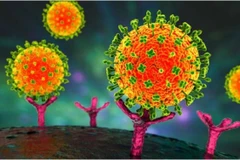
Nipah virus infection is designated a Group A infectious disease, with reported fatality rates of between 40 and 75%. (Photo: moh.gov.vn)

Health sector steps up preparedness against Nipah virus disease

Nipah virus infection is designated a Group A infectious disease, with reported fatality rates of between 40 and 75%. At present, no vaccine or specific antiviral treatment is available. The virus is mainly transmitted from animals to humans or through contact with contaminated food and objects, and can also spread between people via direct contact with bodily fluids and secretions of infected patients.

Member of the Party Central Committee and Minister of Health Dao Hong Lan (Photo: VNA)

Health minister highlights comprehensive, people-centred healthcare orientation

Member of the Party Central Committee and Minister of Health Dao Hong Lan said the Politburo's Resolution No. 72 provides a breakthrough orientation for the protection, care and improvement of the people’s health. It places the people’s health at the centre of all healthcare policies and services, while aiming to address long-standing bottlenecks in the health sector that have yet to be fundamentally resolved.

Elderly people do morning exercises in the Hoan Kiem Lake area in Hanoi. (Photo: VNA)

Strategic roadmap for healthier future

As Vietnam’s population ages rapidly, Dr Angela Pratt, WHO Representative in Vietnam, identified two strategic priorities: strengthening primary healthcare and developing a formal long-term care system. These measures are essential not only for healthy ageing, but also as long-term investments with wide-ranging socio-economic returns.

Professor Dr Tran Van Thuan, Deputy Minister of Health. (File photo: VNA)

More than 300 medical staff assigned to serve 14th National Party Congress

Deputy Minister of Health Tran Van Thuan called on experts and healthcare workers to uphold a strong sense of responsibility, professionalism and expertise to ensure that medical services for the 14th National Party Congress are delivered safely, effectively and with the highest level of care.

Health check-up offered to citizens in Gia Lai province. (Photo: VNA)

Health ministry maps out three phases for hospital fee exemption

Health insurance participants from near-poor households and those aged 75 and above who are receiving social pension allowances will be entitled to 100% coverage of medical examination and treatment costs within the scope of health insurance benefits.

A patient pays hospital fees using cashless transactions (Photo: qdnd.vn)

Hanoi aims for modern healthcare system

Hanoi's health sector will continue to expand the comprehensive use of digital technology in professional practices to improve management efficiency and service quality, aiming to develop a modern, transparent, and people-centred healthcare system.

Doctors from the Vietnam Young Physicians Association provide free medical examinations and treatment for residents of the capital. (Photo: VNA)

3.37 billion USD earmarked for public health care, population quality improvement

The programme’s overarching goal is to ensure that all people receive primary healthcare management and early, preventive care delivered close to home, thereby reducing disease burden; to increase the total fertility rate and strive for a balanced sex ratio at birth; to adapt to population ageing while improving population quality; to improve care for vulnerable groups; and to contribute to improvements in physical and mental health, stature, life expectancy and overall quality of life, towards building a healthier Vietnam.