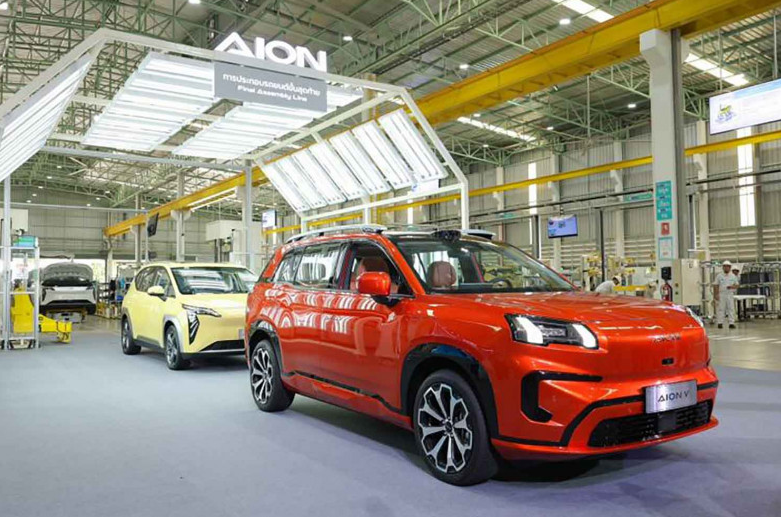
Thailand requires Chinese EV makers to increase localisation rate

Thailand’s Industry Ministry is requesting Chinese electric vehicle manufacturers to assemble their EVs with at least 40% of parts sourced locally in a move to support the automotive supply chain in the Southeast Asian nation.

GAC Aion factory in Rayong province in Thailand. (Photo: GAC Aion New Energy Automobile)

Bangkok (VNA) – Thailand’s Industry Ministry is requesting Chinese electric vehicle manufacturers to assemble their EVs with at least 40% of parts sourced locally in a move to support the automotive supply chain in the Southeast Asian nation.

The 40% threshold was suggested following talks involving the ministry and GAC Aion New Energy Automobile, an EV maker under Guangzhou Automobile Corporation (GAC).

Thai auto parts makers, which are mostly familiar with components designed for internal combustion engines (ICE), still require support from car manufacturers, though the latter are shifting their focus to electric mobility technology, said Industry Minister Pimphattra Wichaikul.

Authorities want to make sure local auto parts makers can adapt to the technological changes and are able to continue their businesses, following concerns that Chinese EV manufacturers will mainly buy EV components from Chinese firms and build their own EV supply chain.

The Board of Investment (BoI) earlier met with Chinese EV firms to discuss the possibility of using local auto parts for their EV operations in Thailand.

Narit Therdsteerasukd, Secretary-General of the BoI, said that most Chinese EV makers agreed with the government's request to use auto parts made by Thai companies, adding that this is a good sign.

According to the BoI, Chongqing-based Changan Automobile, which has committed to investing up to 10 billion THB (270 million USD) in Thailand, will start with a local content proportion of 60%, increasing it to 90% in the future. Meanwhile, Neta, another EV manufacturer from China, vowed it would buy parts from 16 companies based in Thailand, which would account for 60% of total components, and it would increase the share to 85% over the long term.

Over the past 2-3 years, the BoI supported investments worth 80 billion THB in the EV industry, with total EV production of 400,000 units. The board is promoting the growth of the EV industry by granting investment incentives to EV-related businesses, including battery production and EV charging facilities.

However, Pimphattra said this does not mean the government will "leave behind" manufacturers of ICE vehicles, elaborating that authorities will continue to support ICE makers which have run businesses in Thailand for over a decade as well as producers of hybrid EVs and plug-in hybrid EVs./.
VNA

See more

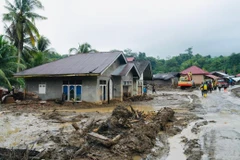
Indonesia investigates corporate role in floods and landslides (Photo: VNA)

Indonesia probes corporate responsibility for floods, landslides

The Indonesian government through the Forest and Mining Area Control Task Force (Satgas PKH) has found indications of a number of corporate and individual entities that contribute to the occurrence of floods and landslides in Aceh, North Sumatra, and West Sumatra.

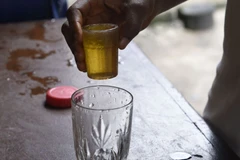
Illustrative image (Source: AFP)

Indonesia tops world in methanol poisoning cases

Indonesia tops the list with more than 300 methanol poisoning incidents, affecting 2,185 people and recording a mortality rate of up to 50.4%, a level described by experts as exceptionally high. Cambodia ranks second, with over 1,300 people affected, though its fatality rate is significantly lower at around 14.2%.

Police step up security ahead of Christmas and New Year in Indonesia (Photo:straitstimes.com/)

Indonesia steps up security for Christmas, New Year holidays

With the 2025 year-end holiday fast approaching, Indonesia’s National Police have stepped up security measures nationwide, deploying hundreds of thousands of personnel to ensure the public can celebrate Christmas and New Year safely.

Cambodia and Thailand are meeting at the General Border Committee (GBC) Secretariat level. (Photo: AKP)

Cambodia, Thailand start General Border Committee Secretariat Meeting

In this meeting, both parties will discuss and exchange documents to prepare for the upcoming 3rd Special GBC Meeting, scheduled to be held on December 27, to ensure the cessation of hostilities and find solutions to restore stability between the two countries, as well as to facilitate a swift return to normalcy.

The Port of Long Beach in California, the US. (Photo: AFP/VNA)

Top 10 standout international events in 2025

The US's imposition of reciprocal tariffs, the Thailand – Cambodia border conflict, and the AI race are among the 10 prominent international events in 2025 as selected by the Vietnam News Agency.

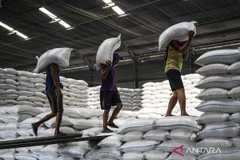
Workers carry sacks of rice at a Bulog warehouse in Semarang, Central Java. (Photo: ANTARA)

Indonesia's rice stock set to hit record in 2025

Statistics Indonesia earlier reported that potential domestic rice production this year is estimated at 34.79 million tonnes, up 4.17 million tonnes or 13.6% from 30.62 million tones in 2024.

Large crowds are expected in the Orchard Road area on Christmas Eve. (Photo: thestar.com.my)

Singapore tightens security ahead of Christmas Eve

Singapore Police have announced enhanced security measures along Orchard Road, the city-state’s busiest shopping belt, as large crowds of residents and visitors are expected on Christmas Eve and Christmas Day.

Philippine Secretary of Foreign Affairs Theresa P. Lazaro after the Special Asean Foreign Ministers’ Meeting (AMM) to discuss the current situation between Cambodia and Thailand. (Photo: BERNAMA)

Philippines ready to mediate in Thailand - Cambodia issue

"Following the discussions today, the Philippines said that it is prepared to assume the role of facilitator/mediator between Cambodia and Thailand should both parties decide to make use of the good offices of the Chair once the Philippines assumes the ASEAN Chairmanship in January 2026," the statement wrote.

Illustrative image (Source: da.gov.ph)

Philippines extends sugar import ban

The Philippine Government has decided to extend its ban on sugar imports until the end of December 2026, as domestic supply has improved. The move aims to continue protecting farmers and domestic producers, as well as stabilising the market.