President Truong Tan Sang has asked the police to join the public insecurity protection, thus creating a healthy environment where allcitizens have a sense of respecting the law.
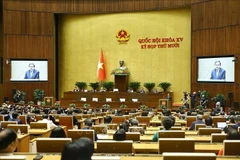
At a workingsession with the Ministry of Public Security in Hanoi on April 2,President Sang called for more attention key areas of improvingprofessional skills and self-discipline and spreading Party buildingactivities more widely.
He asked police units to recommendnecessary changes to existing laws, helping authorities to strengthenState management in social security and order.
He said theyneed to encourage members of the public to disclose illegal acts andhelp former offenders integrate into society after their rehabilitation.
The session heard that the economic slowdown both at homeand abroad has left many enterprises bankrupt and workers unemployed,and this has a role to play in the growing cases of crime.
Notably, the crime rate is on the rise in major cities, includingillegal debt collection services, loan sharks and drug smuggling.Violations in finance, banking, construction, land use and managementhave become serious, causing huge economic losses and sparking concernamong the public.
New crimes using technological advances have also appeared.
At the session, delegates suggested policies to make it easier to fight crime.-VNA
At a workingsession with the Ministry of Public Security in Hanoi on April 2,President Sang called for more attention key areas of improvingprofessional skills and self-discipline and spreading Party buildingactivities more widely.
He asked police units to recommendnecessary changes to existing laws, helping authorities to strengthenState management in social security and order.
He said theyneed to encourage members of the public to disclose illegal acts andhelp former offenders integrate into society after their rehabilitation.
The session heard that the economic slowdown both at homeand abroad has left many enterprises bankrupt and workers unemployed,and this has a role to play in the growing cases of crime.
Notably, the crime rate is on the rise in major cities, includingillegal debt collection services, loan sharks and drug smuggling.Violations in finance, banking, construction, land use and managementhave become serious, causing huge economic losses and sparking concernamong the public.
New crimes using technological advances have also appeared.
At the session, delegates suggested policies to make it easier to fight crime.-VNA