Conference seeks ways to promote Vietnam-US agricultural trade

In 2024, exports to the US reached over 13.7 billion USD, accounting for 22% of total sector export value. In the first four months of 2025, the figure rose to 4.34 billion USD, up 10.2% year-on-year.

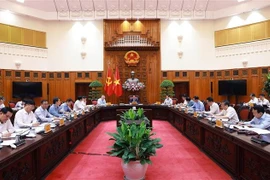
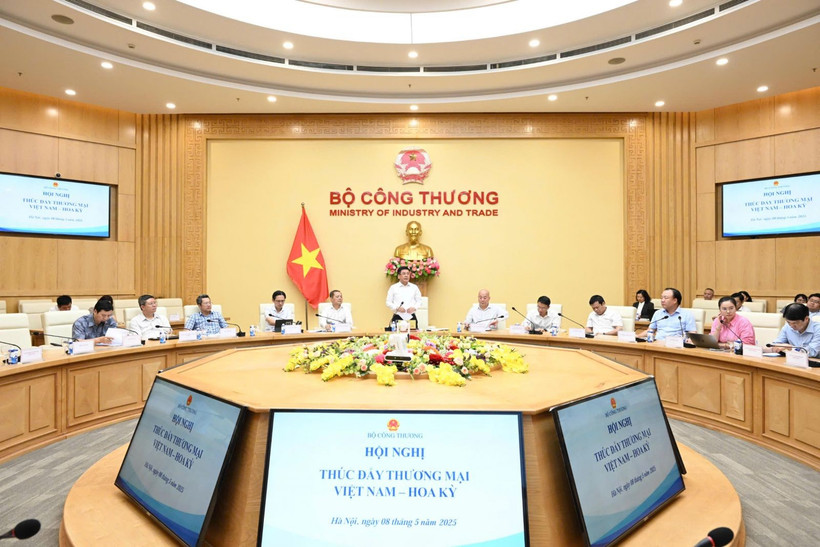
An overview of the conference (Photo: https://moit.gov.vn/)

Hanoi (VNA) – The Ministries of Industry and Trade, and Agriculture and Environment jointly held a conference aimed at boosting trade in agro-fishery-forestry products between Vietnam and the US in Hanoi on May 9.

Speaking at the event, Minister of Agriculture and Environment Do Duc Duy called on Vietnamese businesses to take a more proactive role in enhancing competitiveness and standardising production processes amid growing trade challenges, particularly from the US.

He warned that the US’s potential imposition of high reciprocal duties could create serious pressure on Vietnam’s key export sectors.

The US remains Vietnam’s largest export market for agricultural, forestry and fishery products.

In 2024, exports to the US reached over 13.7 billion USD, accounting for 22% of total sector export value. In the first four months of 2025, the figure rose to 4.34 billion USD, up 10.2% year-on-year.

Key products, including wood and wood products, seafood, cashew nuts, pepper and fresh fruit, have established a solid foothold in the US and are well received by American consumers. The US currently leads in market share at 20.5%, followed by China (17.1%), the EU (13%) and Japan (7.5%).

However, Duy noted that US considerations of reciprocal duties of up to 46% are putting immense pressure on Vietnamese exports. In response, the Government has swiftly implemented a range of measures – from developing action plans and engaging in negotiations with the US, to organising a business delegation to the US this June.

“So far, nearly 40 enterprises have registered for the trip, with a projected import value of 2 billion USD in raw materials – excluding timber,” he said.

Despite these efforts, the minister pointed out serious gaps in Việt Nam’s supply chain management, describing it as fragmented, non-transparent and not yet aligned with international standards for labour, environment and traceability.

This, he explained, leaves Vietnamese goods more vulnerable to trade investigations and tariff measures.

Duy called on enterprises to increase investment in deep processing technologies, cold chain logistics and quality control systems. He urged stronger linkages with farmers and cooperatives under value chain models, along with better responsiveness to new US market regulations and trade investigations.

He also emphasised the need for export market diversification, greater focus on the domestic market, effective use of signed free trade agreements and active participation in policy advocacy and international legal matters.

“We must not rely solely on tax incentives or temporary advantages. Without meaningful change, the US market may no longer be an opportunity, but a barrier to growth,” he said.

To support two-way trade balance, the Minister encouraged Vietnamese firms to explore greater imports of US-origin agricultural, forestry and fishery inputs for domestic production.

The Ministry of Agriculture and Environment has introduced an export plan for the US, focusing on clearer supply chains, digital traceability, stronger branding and greener farming to meet tough environmental standards in key markets like the US, EU and Japan.

“The Government, the Prime Minister and relevant ministries will continue to accompany businesses with concrete support in terms of institutions, policy and technical guidance – especially during difficult periods,” Duy confirmed.

However, he emphasised that keeping access to the US market and raising the global profile of Vietnamese farm products depends mainly on businesses making real strategic changes and taking clear action./.

VNA

See more

Vietnam is emerging as a preferred destination for many foreign enterprises (Photo: hanoimoi.vn)

Vietnam emerges as bright spot of growth, trusted and responsible partner

Despite a volatile global environment, Vietnam recorded solid gains in 2025. With flexible and proactive policies under the leadership of the Communist Party of Vietnam and the Government, all 15 key socio-economic targets were met or exceeded, while GDP expanded by about 8.02%, surpassing expectations.

An image of a Vietnamese game. CIS region has potential for gaming developers from Viet Nam. (Photo: Courtesy of cellphones.com.vn_

CIS: Opportunity for game developers in Vietnam

The CIS region, which includes Eastern Europe and Central Asia, has potential for gaming developers from Vietnam as this market displays user behaviour patterns that are highly favourable for mobile gaming growth, particularly around major holiday periods.

Banks, including MB Bank, have issued alerts about scams conducted via social media platforms such as Zalo and Facebook, where criminals impersonate acquaintances. (Photo: The Courtesy of MBBank)

Financial scams surge ahead of Tet

As the Lunar New Year (Tet) approaches, financial and banking scams in Vietnam are showing a sharp upward trend, prompting banks and law enforcement agencies to issue repeated warnings.

Hai Phong targets 4.3 billion USD in FDI in 2026 (Photo: VNA)

Hai Phong city targets 4.3 billion USD in FDI in 2026

Hai Phong’s investment appeal is underpinned by a rapidly expanding development space, including the Southern Coastal Economic Zone covering more than 20,000 hectares, a planned free trade zone, deep-water ports at Lach Huyen, and 12 industrial parks newly established in 2025.

The relocation of check-in counters aims to better meet the travel needs of residents and visitors. (Photo: VNA)

Vietjet shifts domestic check-in at Tan Son Nhat from January 13

During the recent New Year 2026 holiday peak, Vietjet added 380 flights, equivalent to nearly 78,000 additional seats, on many key domestic routes linking Hanoi and Ho Chi Minh City with destinations such as Vinh, Thanh Hoa, Hai Phong, Da Nang, Phu Quoc, Nha Trang and Da Lat.

Commercial banks are providing approximately 88% of total green credit outstanding in Vietnam. (Photo: nhandan.vn)

Capital sources expanded for sustainable growth

According to the State Bank of Vietnam (SBV), by the end of November 2025, outstanding green credit was estimated at around 750 trillion VND (28.55 billion USD), with an average growth rate exceeding that of overall credit in the economy.

Customers select goods at a supermarket. (Photo: VNA)

Retail market expands sharply, sustainability challenges persist

According to a report on recently released by the Ministry of Industry and Trade’s Agency for Domestic Market Surveillance and Development, the size of the market reached more than 7 quadrillion VND (about 266 billion USD) in 2025, up around 10% compared with 2024.

Oil rigs at the Bach Ho oil field. (Photo: VNA)

Resolution 79: State economy to lead growth

Resolution 79 is described as a “clear action declaration” by the Politburo, saying the state economy is not only responsible for maintaining macroeconomic stability, but must also become the force leading a new growth model that is green and sustainable.

Workers at Garment 10 Corporation produce apparel for export. (Photo: Nhan Dan)

Vietnam leverages export advantages within RCEP region

In 2025, seafood exports to China alone exceeded 2.2 billion USD, up about 33% compared to 2024. Shipments to Japan fetched nearly 1.7 billion USD, a year-on-year increase of 14.6%, while those to the Republic of Korea and Australia grew by 9.6% and 3.2%, respectively.

Certificates of membership in the Vietnam International Financial Centre in Da Nang are awarded at the conference on January 9. (Photo: VNA)

Da Nang continues targeted investment promotion approaches

According to Chairman of the Da Nang People’s Committee Pham Duc An, the city prioritises building sustainable economic ecosystems and focuses on key breakthrough sectors with strong spillover effects, including high technology and digital transformation, logistics, urban infrastructure, finance, processing and manufacturing industries, high-tech agriculture, and the pharmaceutical and medicinal herb industry.