Hanoi (VNA) – Vietnam’s state economy is expected to play a stronger leading role in driving growth and guiding the country’s green transition under a newly issued Politburo resolution, according to an economic expert.
Party General Secretary To Lam has recently signed Resolution No. 79-NQ/TW on the development of the state economy. The resolution affirms that the state economy is a “particularly important component” of Vietnam’s socialist-oriented market economy, playing the core role in guiding, regulating and stabilising economic activities, promoting growth, ensuring major economic balances, and linking economic development with social progress, national defence and security.
Speaking to the Vietnam News Agency, Duong Thi Bich Diep, Director of the Green Economic Institute under the Vietnam Union of Science and Technology Associations, said the resolution sends a clear and strong message about the role of the state economy in Vietnam’s new development stage.
She described Resolution 79 as a “clear action declaration” by the Politburo, stressing that the state economy is not only responsible for maintaining macroeconomic stability, but must also become the force leading a new growth model that is green and sustainable.
According to Diep, the resolution answers a key question facing Vietnam today: who will lead the country’s green transition? The answer, she said, lies with the state economy, which controls the most important national resources, including land, natural resources, infrastructure, the state budget, public credit and state-owned enterprises.
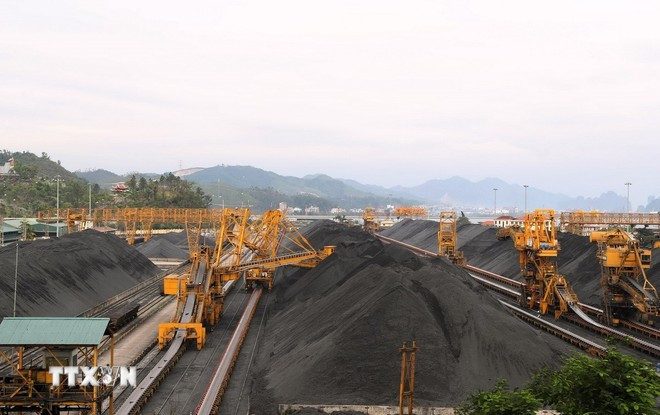
“If Vietnam wants a fast and real green transition, it must start with the sectors that control the ‘valves’ of the economy,” she said. These include energy infrastructure, transport and logistics systems, finance and credit, and the management of resources and data – all areas where the state economy plays a central role.
One notable point of the resolution, Diep noted, is that it clearly places environmental protection and climate change response as a goal of national resource management. The targets set toward 2030 emphasise the need to manage land and resources in a way that supports fast and sustainable growth, while also protecting the environment and adapting to climate change.
“This shows a shift in thinking,” she noted. “Natural resources are no longer seen only as inputs to be utilised, but as ‘natural capital’ that must be well managed to support long-term green growth.”
Resolution 79 also opens the door for wider use of market-based tools in green transition, especially through green infrastructure planning and a roadmap for taxation linked to carbon emissions.
According to Diep, green transition cannot rely only on slogans or administrative orders, but must be guided by price signals and proper infrastructure.
“When carbon pricing appears and green infrastructure is well developed, the market will adjust behaviour in a sustainable way,” she said.
Highlighting what she sees as a major change in approach, Diep said the resolution treats the state economy not as a separate sector, but as a system of national resources that must operate under market discipline, and modern and transparent governance, while fully taking into account social and environmental costs.
She stressed the importance of fully calculating environmental and resource costs in public investment and the use of state capital. “Economic growth cannot be based on pushing costs onto the environment or future generations,” she said.
Another key point is the role of state-owned enterprises (SOEs) as pioneers in green technology and innovation. Instead of relying only on administrative orders, the resolution encourages SOEs to invest in research and development, pioneer in low-emission and circular economy technologies, and help create markets for green products and services.
To ensure the resolution is effectively implemented, Diep highlighted several priorities, including introducing mandatory “green accounting” in public investment projects, developing a consistent carbon pricing system in fiscal policy, and expanding green public-private partnerships to attract private investment.
She also called for linking the performance of SOE leaders to green indicators, such as emission reductions, green revenue and investment in research and development, alongside traditional financial targets.
“Resolution 79 sets a very important principle: state resources must create growth, but not at the expense of the environment,” Diep said. “Turning this guiding role of the state economy into real leadership will be key to Vietnam’s transition toward a greener, more modern and sustainable growth model.”
"To bring Resolution 79 to life, the state economy must exercise real leadership through green accounting, carbon price signals, and green infrastructure investment that catalyse private-sector participation," she concluded./.