Hanoi (VNS/VNA) – As global seafood markets adjust to tightening supplies and shifting demand, Vietnam’s pangasius industry is entering 2026 with cautious optimism, buoyed by improving prospects in key export destinations.
Reflecting this more positive outlook, the Vietnam Association of Seafood Exporters and Producers (VASEP) forecasts that pangasius export turnover could reach around 2.3 billion USD in 2026, supported by tightening global whitefish supplies and improving demand in several key markets.
Amid ongoing global economic uncertainties throughout 2025, Vietnam’s pangasius sector recorded a clear divergence from other export markets.
While several traditional markets experienced sluggish growth or decline, a number of emerging markets and those covered by free trade agreements (FTAs) emerged as bright spots, helping to lay a foundation for more positive prospects in 2026.
Market signals
Brazil was the most successful market for Vietnamese pangasius in 2025, recording growth of around 35% and accounting for approximately 8% of total export share, said VASEP Deputy Secretary General To Thi Tuong Lan.
This performance highlights significant expansion potential in Latin America, particularly as many traditional markets face increasing trade barriers and fluctuating consumer demand.
China continued to serve as the backbone market for the pangasius industry, holding approximately 27% market share.
However, growth reached only about 2.3%, below expectations, mainly due to weakening purchasing power and unfavourable media coverage of Vietnamese pangasius, which has intensified competitive pressure on exporters.
Markets within the Comprehensive and Progressive Agreement for Trans-Pacific Partnership (CPTPP), comprising 11 Asia-Pacific countries, were also identified as a major bright spot in 2025.
These markets accounted for roughly 17% of total exports, with turnover reaching 340 million USD, up 37% year on year. Mexico and Japan posted particularly strong growth, reflecting the benefits of tariff preferences and market diversification strategies.
By contrast, the US market, which represented about 15% of export share, declined by 3.3% due to the impact of a 20% reciprocal tariff and trade defence measures.
The European Union (EU) maintained a stable market share of around 8% over the past three years, indicating consistency but also underscoring increasingly stringent requirements related to quality standards, traceability and sustainable development.
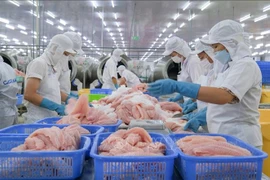
In terms of product structure, frozen pangasius fillets remained the dominant export item, accounting for approximately 98% of total export value, equivalent to around 1.5 billion USD.
Processed pangasius products recorded growth of 13–19% but still represented only about 2.4% of total export turnover, highlighting substantial room for expansion in value-added products.
Future outlook
Looking ahead to 2026, Vietnam’s pangasius industry is expected to face significant opportunities as global supplies of wild-caught whitefish continue to tighten.
Forecasts indicate that total global whitefish production in 2026 will reach just over 6.5 million tonnes, down approximately 145,000 tonnes compared to 2025.
This trend is forcing importers, particularly in Europe, to seek alternative sources that offer more stable pricing and sustainable supply.
In this context, Vietnamese pangasius is regarded as a suitable alternative in comparable value segments. The EU market in particular is expected to benefit from disruptions in the whitefish supply chain, opening opportunities to increase pangasius market share from the current 8% to the targeted 10%.
Vietnam also enjoys an advantage under the EU–Vietnam Free Trade Agreement (EVFTA) compared to other suppliers that do not benefit from tariff preferences.
However, these opportunities come with considerable challenges. The EU has set very high requirements regarding environmental, social and governance responsibilities, emissions reduction and traceability. These are considered prerequisites for any substitute products seeking entry into the market, according to Lan.
The EVFTA provides Vietnamese pangasius with a stronger competitive position compared to suppliers without FTAs with the EU. Notably, the domestic pangasius farming sector has the capacity to flexibly manage supply in response to market fluctuations, offering partners greater confidence in the stability of the supply chain.
In the US market, Vietnamese pangasius exporters continue to face risks associated with anti-dumping policies. China also poses potential risks stemming from media-related factors and import management policies.
Against this backdrop, VASEP recommends that enterprises diversify export markets, reduce reliance on major markets and increase the share of deeply processed products to enhance overall value.
VASEP's predicted 2.3 billion USD in Vietnam’s pangasius export turnover this year would represent a 5% increase compared to 2025, according to the association's deputy secretary general.
To achieve this target, enterprises will need to strengthen sustainability certifications such as ASC and BAP, optimise production and logistics costs, and effectively leverage trade agreements including the CPTPP and EVFTA.
After its development as a key commodity fewer than 35 years ago, pangasius has grown into a large-scale industry with strong export capacity.
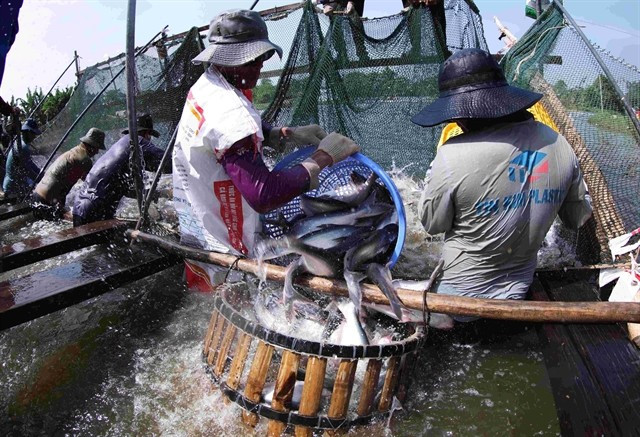
With the farming area remaining stable at around 6,400 hectares, estimated output of 1.67 million tonnes and export value of nearly 2.1 billion USD in 2025, pangasius continues to uphold its role as one of the key pillars of Vietnam’s seafood sector.
Market demands are increasingly emphasising quality and transparency. This means that Vietnam’s pangasius industry needs to accelerate digital transformation, apply advanced technologies and improve traceability systems.
These factors are viewed as critical pathways to enhancing competitiveness and steering the industry toward sustainable development in the future./.
VNA