Tra fish exports forecast to near 2.2 billion USD

Tra fish output in 2025 is estimated at around 1.67 million tonnes. To date, the sector has contributed approximately 2.1 billion USD to Vietnam’s total agro-forestry-fisheries export earnings.

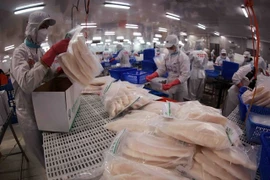
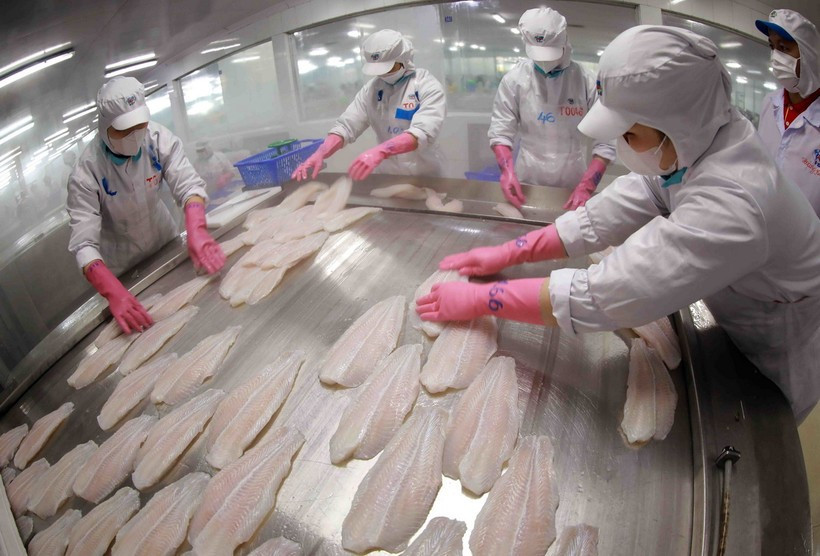
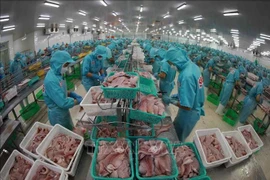
Freezing tra fish fillet products for export at a factory of the Sao Mai Group. (Photo: VNA)

Can Tho (VNA) – Vietnam’s tra fish (Pangasius) exports are forecast to reach nearly 2.2 billion USD this year, delegates heard at a conference reviewing the sector’s performance in 2025 and outlining key tasks for 2026.

According to To Thi Tuong Lan, Deputy General Secretary of the Vietnam Association of Seafood Exporters and Producers (VASEP), Brazil emerged as the most successful market for Vietnam's tra fish industry in 2025, recording year-on-year growth of 35% and accounting for 8% of total market share.

China remained the sector’s main pillar market, although growth fell short of expectations, with a market share of around 27% and growth of approximately 2.3%. The Comprehensive and Progressive Agreement for Trans-Pacific Partnership (CPTPP) market, comprising 11 Asia-Pacific countries, accounted for 17% of exports, reaching 340 million USD, up 37%. The US accounted for 15% of exports, down 3.3%, while the EU held a share of around 8%, a level that has remained relatively stable over the past three years.

Regarding product structure, Lan said frozen tra fish fillets continued to dominate, with export value of 1.5-1.6 billion USD, accounting for about 98% of the total. Processed products, although posting growth of 13-19%, made up a relatively small proportion, at around 2.4% of total export turnover. Frozen whole fish and dried fish products generated between 315 million USD and 348 million USD. Lan also pointed out that the US market poses significant challenges for Vietnamese exporters due to anti-dumping policies, while the EU market may benefit from upcoming disruptions in the supply chain, creating opportunities to raise market share to 8-10%, as planned.

Under pressure from supply shifts in Europe and price segmentation in the premium whitefish segment, suppliers are expected to seek alternative sources with more stable and sustainable pricing. These factors, Lan said, could present opportunities for Vietnamese tra fish exports next year.

According to her, Vietnam enjoys an advantage under the EU-Vietnam Free Trade Agreement (EVFTA) compared with other suppliers that do not have similar trade pacts with the bloc. In addition, the tra fish farming sector is capable of coordinating supply in line with market developments, giving partners greater confidence in supply chain stability.

“However, the challenge in Europe lies in increasingly stringent standards, particularly ESG (environmental, social and governance) requirements,” she noted.

Lan forecast that Vietnam’s tra fish export turnover next year could reach around 2.3 billion USD, up 5% annually.

At the conference, Deputy Minister of Agriculture and Environment Phung Duc Tien affirmed that the sector has developed into a large-scale commodity industry with strong export capacity, despite having been established for less than 35 years.
hoi-nghi.jpg
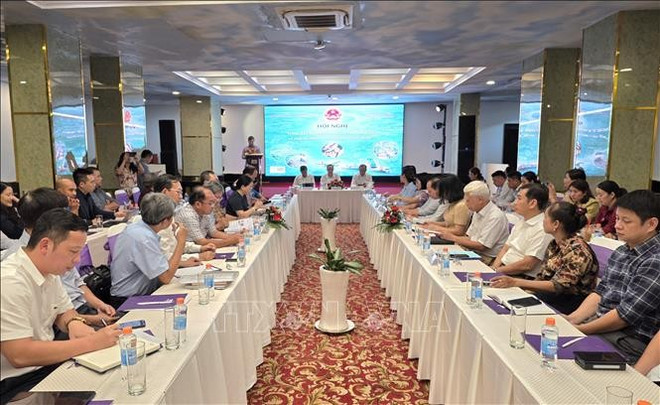
At a conference reviewing the tra fish sector’s performance in 2025 and outlining key tasks for 2026. (Photo: VNA)

Tra fish output in 2025 is estimated at around 1.67 million tonnes. To date, the sector has contributed approximately 2.1 billion USD to Vietnam’s total agro-forestry-fisheries export earnings.

To enhance competitiveness in the near future, the ministry highlighted the need to implement a digital transformation scheme for fisheries exploitation and data management, including software systems and cyber security. The application of technology and artificial intelligence in breeding selection, survival rate improvement, feed optimisation and economic efficiency enhancement was also stressed. Meanwhile, ensuring full traceability of products “from farm to table” is essential to meet the stringent standards of hotels and international markets./.

VNA

See more

Shoppers at a supermarket in Hung Yen (Photo: VNA)

Retailers see tax compliance, AI as key to survival in 2026 survey

The annual survey, conducted at the end of 2025 among retail and food and beverage (F&B) sellers nationwide, found that businesses are shifting their focus from rapid growth to operational efficiency, cost control and legal compliance amid increasingly stringent regulatory standards.

Visitors shop at Glorious Spring Fair 2026 (Photo: VNA)

Spring Fair 2026 opens broader prospects for Vietnam–UAE trade cooperation

For Vietnam, the UAE serves not only as a consumer market but also as a gateway to the Middle East and North Africa. Vietnamese agricultural products such as cashew nuts, pepper, cinnamon and rice have steadily gained market share, while aquatic products, including tra fish and tuna, are increasingly present in the UAE’s hospitality sector.

Bao Viet Bank's employee counts Vietnamese banknotes at a transaction counter in Hanoi. (Photo: VNA)

Credit quota reform, tighter capital rules may widen gap among banks

Yuanta Vietnam Securities estimates that to achieve GDP growth above 10%, credit growth would need to exceed 16%. This suggests bank credit is no longer expected to be the main growth driver, with greater reliance on fiscal policy, public investment and capital markets.

Commercial Counsellor Do Viet Phuong, Head of the Vietnam Trade Office in Cambodia. (Photo: VNA)

Spring Fair 2026 offers ample room to deepen Vietnam–Cambodia trade ties

Cambodia holds substantial potential for cooperation in agro-processing and exports, especially in key products such as rice, cashew nuts and rubber. In recent years, the country’s cultivation area and agricultural output have grown steadily, providing a stable raw material base for processing industries.

Vietnam is projected to have approximately 2.4 million SMEs, accounting for over 98% of the country’s total enterprises. (Photo: cafef.vn)

Banks offer diverse solutions to support SMEs

With an increasingly significant role in the economy, the small and medium-sized enterprise (SME) sector is becoming a key segment in the credit growth strategies of many banks and the banks have been taking diverse solutions to support the enterprises.

Workers process coconuts for export at Vina T&T Group. (Photo: nhandan.vn)

Agricultural exports reliant on securing raw material supply

According to Secretary General of the Vietnam Pepper and Spice Association Le Viet Anh, pepper remained Vietnam’s leading spice export in 2025, with shipments exceeding 247,000 tonnes, accounting for 59.3% of total spice export volume. Export revenue reached 1.66 billion USD, out of total spice exports of 2.1 billion USD.

Prime Minister Pham Minh Chinh speaks at the meeting between standing Government members and representatives of ministries, agencies and Phu Tho province (Photo: VNA)

PM orders new Lo river bridge to meet emerging development needs

Stressing both immediate and long-term imperatives, Prime Minister Pham Minh Chinh directed that authorities pursue a dual-track approach: repairing the existing bridge to ensure safety while simultaneously investing in a new structure capable of opening up new socio-economic development space and safeguarding national defence and security.