Vietnamese tra fish producers advised to adapt to new version of ASC standards

In 2024, Vietnam boasted over 58 pangasius farms meeting ASC standards, producing more than 210,000 tonnes annually for export to 61 countries. These farms achieve superior efficiency, saving an average of 140 cubic meters of water per tonne of fish, maintaining productivity rates above 70%, and controlling diseases close to 90%

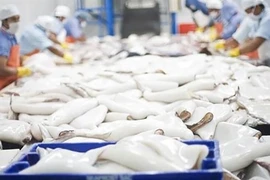
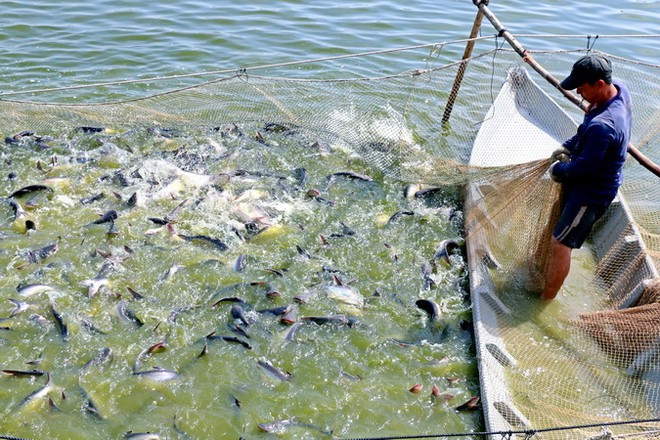
Tra fish farming in Dong Thap province (Photo: VNA)

Hanoi (VNA) – Although Vietnam’s tra fish has emerged as the global leader in Aquaculture Stewardship Council (ASC) certified tra fish production and steadily expanded its presence in premium markets, experts have advised aquaculture businesses and farmers to quickly adapt to the new, stricter ASC standards, which impose enhanced regulations and technical requirements.

According to the Vietnam Association of Seafood Exporters and Producers (VASEP), all ASC-certified tra fish production worldwide currently originates from Vietnam, underscoring the country’s reputation for quality and its shift toward sustainable, environmentally responsible aquaculture.

The ASC certification is an internationally recognised standard promoting responsible aquaculture practices. ASC-certified seafood enjoys strong brand recognition in demanding markets such as Germany, the UK, Switzerland, the US, and Japan.

In 2024, Vietnam boasted over 58 pangasius farms meeting ASC standards, producing more than 210,000 tonnes annually for export to 61 countries. These farms achieve superior efficiency, saving an average of 140 cubic meters of water per tonne of fish, maintaining productivity rates above 70%, and controlling diseases close to 90%. This boosts competitiveness by reducing costs and enhancing sustainability and competitiveness. In the Mekong Delta, the country’s major tra fish production hub, the rise of ASC-certified farms and cooperative models linked with processing enterprises has improved farmers’ access to capital, technical support, and stable markets, leading to higher incomes.

Alongside GlobalG.A.P and BAP (Best Aquaculture Practices), ASC ranks among the top three certifications embraced by Vietnamese seafood businesses. It is crucial for raising product value, building consumer trust, expanding market share, and promoting environmental protection and community development.

However, the new-version ASC standards present practical challenges. Tran Hoang Yen, deputy head of VASEP’s Representative Office, highlighted ten key issues faced by seafood businesses, including conflicting regulations on antibiotic use, excessive buffer zone requirements, and waste treatment standards beyond business capacities.

For instance, Yen said, some antibiotics allowed by the EU are banned by ASC, while others prohibited by multiple markets are accepted under ASC. Additionally, traceability requirements (Chain of Custody - CoC) raise concerns over protecting sensitive business data from potential leaks and unfair competition.

Koji Yamamoto, General Manager of ASC Japan and the ASC Representative for Southeast Asia, acknowledged that as an international programme integrating various global frameworks, inconsistencies sometimes occur.

ASC addresses these through a “request for modification” process, permitting adjustments or alternative solutions. Regarding antibiotics, ASC aims to enhance cooperation and dialogue with businesses and VASEP. For products farmed with antibiotic use, farms that use them can maintain ASC certification but cannot label those batches as ASC-certified in export markets. From October 2025, ASC-certified farms must use feed sourced exclusively from ASC-certified manufacturers.

Insiders held that international certifications such as ASC, MSC (Marine Stewardship Council for sustainable wild capture), and BAP are continually evolving with more rigorous standards. While adapting to new ASC regulations is challenging, it also offers an opportunity for seafood businesses to innovate, increase product value, and align with the growing global demand for sustainable consumption, they said./.

VNA
See more

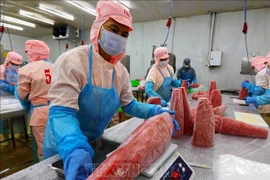
Illustrative image (Photo: VNA)

Vietnam consolidates position as one of Asia’s economic bright spots

Next year, Vietnam is expected not only to maintain a high growth rate relative to the region but also to further reinforce its status as one of Asia’s economic bright spots thanks to macroeconomic stability, a dynamic domestic market, and a clear orientation towards attracting strategic investments.

Many vessels have installed additional vessel monitoring systems to ensure uninterrupted information connectivity with shore-based stations during fishing trips. (Photo: VNA)

Decisive moment of fight against IUU fishing violations

Under the close direction of the Prime Minister, coastal localities nationwide, particularly in central Vietnam, are urgently implementing assigned tasks with clear schedules and milestones, delivering tangible weekly progress.

Prime Minister Pham Minh Chinh speaks at the 26th meeting of the National Steering Committee for Combating Illegal, Unreported and Unregulated (IUU) Fishing. (Photo: VNA)

Local leaders must be held accountable for IUU fishing violations: PM

PM Chinh requested the Government Inspectorate to promptly identify localities that lack determination or fail to handle violations thoroughly, including cases where vessels not meeting legal requirements are still allowed to leave ports, and to clarify responsibilities and impose sanctions without delay.

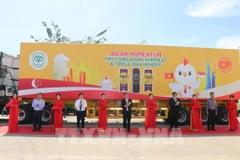
The ribbon-cutting ceremony marking the export of C.P. Vietnam's first container shipment to Singapore. (Photo: VNA)

C.P. Vietnam exports first processed chicken batch to Singapore

The CPV Food Binh Phuoc plant operates a closed-loop system and holds international certifications, including HACCP, BRC, ISO 22000, and Halal. Before reaching Singapore, the company’s processed chicken was already exported to Japan, Hong Kong (China), Cambodia, and Laos, with Japan alone importing 10,000 tonnes by November 2025.

Delegates visit a booth at the exhibition (Photo: VNA)

HanoiTex & HanoiFabric 2025 kicks off

Running until December 18, HanoiTex & HanoiFabric is expected to contribute to sustainable development and stronger international integration of Vietnam’s textile and garment industry.

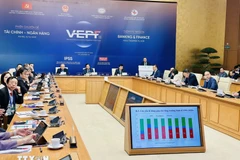
The thematic session on finance and banking of the Viet­nam Eco­nomy in 2025 and Pro­spects in 2026 Forum (VEPF). (Photo: VNA)

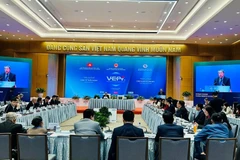
Vietnam economic forum 2025: balancing high growth and sustainability

At the thematic session on finance and banking, delegates focused on solutions for financial resources and eco­nomic growth tar­gets in the 2026-2030 period. The effective mobilisation of financial resources was identified as a key prerequisite for Vietnam to realise its target of double-digit economic growth during this phase.

Local residents and visitors tour and shop at a fair. (Photo: VNA)

Made in Vietnam Fair set to open in Hanoi

The Made in Vietnam Fair will showcase a wide range of products, including industrial and consumer goods, processed foods, agricultural produce and handicrafts, with the participation of distribution systems, e-commerce platforms, digital platforms and digital financial solution providers operating in Vietnam.

2025 a good year for Vietnam’s securities sector: SSC

2025 a good year for Vietnam’s securities sector: SSC

During the year, the SSC made significant progress in improving the legal and policy framework. Institutional work was implemented in a coordinated manner, including the issuance of two decrees, one resolution, seven circulars and three major schemes. At the same time, the regulator strengthened policy dialogue and expanded cooperation with international organisations to support the market upgrade process.

Vietnam shows strong FDI performance in the first 11 months of 2025 (Source: vtv.vn)

Vietnam shifting FDI attraction focus from volume to quality

As production relocation to Southeast Asia accelerates and competition for FDI intensifies, Vietnam faces increasing pressure from regional rivals such as India, Malaysia and Indonesia, which are offering bold tax incentives and developing specialised industrial parks. This reality requires Vietnam to shift its focus from attracting large volumes of capital to drawing high-quality investment, prioritising core technologies, innovation, value chain linkages and higher localisation rates.