Vietnam’s aquatic exports slow amid unpredictable challenges

Aquatic exports last month inched up just 4% from a year earlier to 876 million USD, a steep drop from May’s 20% surge, marking the weakest monthly gain in the first half.

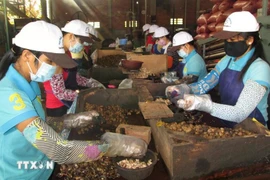
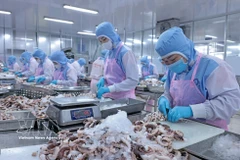
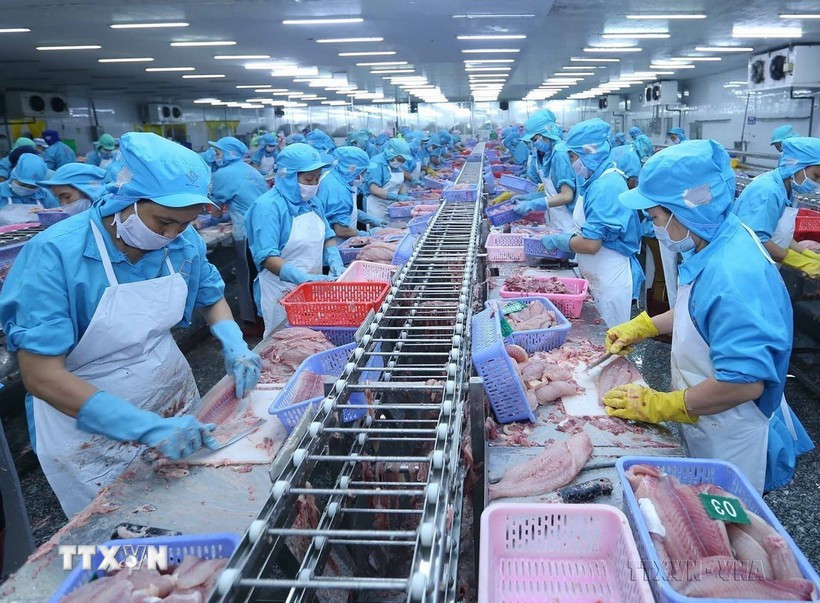
Processing aquatic products for export (Photo: VNA)

HCM City (VNA) – After months of double-digit growth, Vietnam’s aquatic exports hit a snag in June, signaling a tougher road ahead, according to the Vietnam Association of Seafood Exporters and Producers (VASEP).

Exports last month inched up just 4% from a year earlier to 876 million USD, a steep drop from May’s 20% surge, marking the weakest monthly gain in the first half, VASEP data showed.

For the January–June period, aquatic exports climbed 19% to 5.2 billion USD, fuelled by robust demand from China, Japan, the Republic of Korea (RoK), and ASEAN, where growth ranged from 15–28%. But the European Union (EU) market stalled, with shipments dipping 1%, while Middle East exports slumped 16% amid regional turmoil. Israel, a key buyer of canned tuna, saw imports collapse by over 50%.

Shipments to the US still rose 16% to 891 million USD during the six months. However, many enterprises have suspended exports to this market since June to avoid high tariff risks.

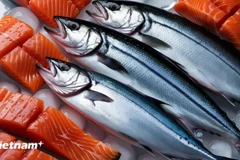
Tuna took the hardest hit, with June exports plunging 31% year-on-year, driven by impacts of the US tariffs. First-half tuna exports fell nearly 2%. Shrimp and tra fish, Vietnam’s key foreign currency earners, also faced US tariff pressures. Shrimp exports rose 26% to 2.07 billion USD, while tra fish grew 10% to 1 billion USD by June’s end.

VASEP Deputy Secretary-General Le Hang cautioned that US tariff policies, particularly on shrimp and tra fish, will shape the industry’s trajectory in the second half. Shrimp faces potential overlapping duties, including reciprocal, anti-dumping, and anti-subsidy ones.

However, a recent US Department of Commerce’s ruling offered some relief, granting seven Vietnamese tra fish exporters a 0% anti-dumping duty in its 20th review.

If the US imposes a 10% reciprocal duty after July 9, Vietnam’s aquatic exports could fall to 9.5 billion USD for 2025, down 500 million USD from earlier forecasts, Hang warned. Other markets like China, ASEAN, Japan, and the EU may partly cushion the blow, but their capacity is limited as global consumption has yet to fully recover.
pe.jpg
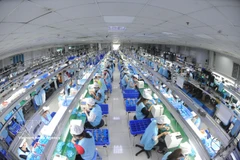
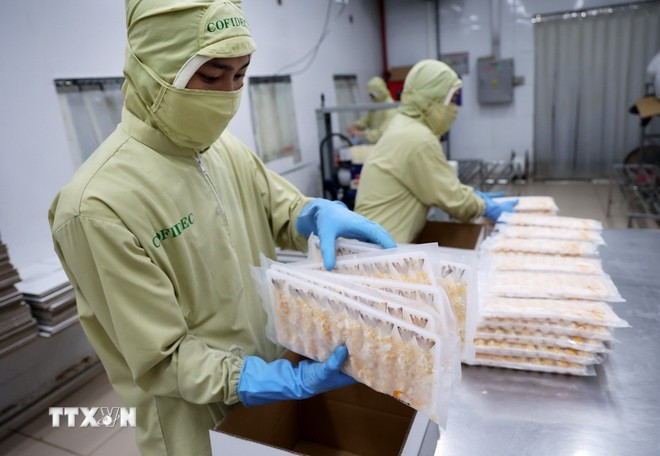
Packaging shrimp products for export (Photo: VNA)

A worst-case scenario with US tariffs exceeding 10%, potentially hitting 46%, could push exports below 9 billion USD, pitting Vietnam against low-tariff rivals like Ecuador, India, Thailand, and Indonesia.

Geopolitical risks add to the strain. Middle East tensions, particularly between Israel and Iran, threaten a market where Vietnam’s exports doubled from 198 million USD in 2020 to 366 million USD in 2024. Further growth now hangs in the balance.

Still, opportunities beckon. Market analyst Kim Thu urged firms to target emerging Muslim markets like Jordan, Libya, and Pakistan, while leveraging free trade pacts with Japan, the EU, and ASEAN.

She also recommended investments in Halal certification and value-added products like canned tuna, peeled shrimp, and frozen tra fish portions, eyeing demand in Saudi Arabia and the UAE.

To weather the storm, industry experts called for government-backed measures, including preferential credit, real-time market data, and stronger trade promotion in alternative markets amid geopolitical uncertainties./.

VNA

See more

The fruit and vegetable sector is also set to hit a record, with exports projected at around 8.5 billion USD in 2025. (Photo: VNA)

Agro-forestry-fishery exports poised to hit record high in 2025

Agro-forestry-aquatic exports totalled 64.01 billion USD in the first 11 months of 2025. If performance in the final month matches that of recent months, the figure could approach 70 billion USD, far exceeding the 65-billion-USD target set for the year.

A view of Dinh Vu port in Hai Phong city. (Photo: VNA)

Circular on domestic maritime transport permits for foreign vessels issued

Under the circular, which will take effect from February 1 next year, the Minister of Construction will grant the permits for cases such as transporting oversized or overweight cargo or other types of goods using specialised vessels; clearing congested cargo, passengers, and luggage at ports when Vietnamese ships are unable to handle them; and conducting disaster relief, disease control, or emergency humanitarian aid.

At a tax office in Hanoi (Photo: VNA)

Decree regulates corporate income tax incentives

A CIT rate of 15% applies to enterprises with a total revenue in the preceding year of not more than 3 billion VND (114,000 USD), while a CIT rate of 17% applies to enterprises with a total revenue in the preceding year of over 3 billion VND but not more than 50 billion VND.

Ho Chi Minh City’s downtown area and the Thu Thiem peninsula, where the International Financial Centre is being developed. (Photo: VNA)

GOE Alliance commits to partnering with HCM City IFC

The GOE Alliance was officially launched at the Autumn Economic Forum in November 2025, bringing together technology firms, financial institutions, policy experts and international partners, including Viettel Digital Services, Dragon Capital, Tether, Ava Labs, Sky Mavis, Republic and Onchain Academy. The alliance aims to pilot on-chain economic models within a policy-oriented legal framework.

Vietnam's foreign trade is projected to hit a record of over 900 billion USD in 2025, positioning the country among the top 15 global trade powers. - Illustrative image (Photo: dantri.vn)

Vietnam joins elite group of 15 largest trading countries

The country recorded its first trade surplus in 2012 and has maintained a continuous streak of surplus for 10 years since 2016. The surplus grew steadily, hitting 19.9 billion USD in 2020, a record of 28.3 billion USD in 2023, and 24.9 billion USD in 2024.

Officials visit a booth at the festival. (Photo: VNA)

Vietnam OCOP Festival 2025 opens in Hanoi

The festival functions as a space to bring together regional OCOP excellence, a forum connecting OCOP stakeholders with distributors, investors, experts and consumers, and a platform to spread pride in indigenous culture, local knowledge, and the aspiration for legitimate prosperity.

Prime Minister Pham Minh Chinh (third from right) and officials launch the Ministry of Construction’s new information technology systems at the conference on December 21. (Photo: VNA)

Modern, comprehensive infrastructure – a need for fast, sustainable development: PM

The Party and State continue to define infrastructure development as one of the three strategic breakthroughs, with priority given to building comprehensive and modern infrastructure, particularly transport facilities, technological infrastructure, and green – digital transition infrastructure, to help realise the national target of double-digit growth, the PM said.