Decree regulates corporate income tax incentives

A CIT rate of 15% applies to enterprises with a total revenue in the preceding year of not more than 3 billion VND (114,000 USD), while a CIT rate of 17% applies to enterprises with a total revenue in the preceding year of over 3 billion VND but not more than 50 billion VND.

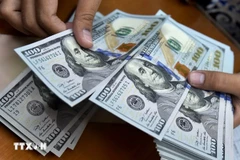
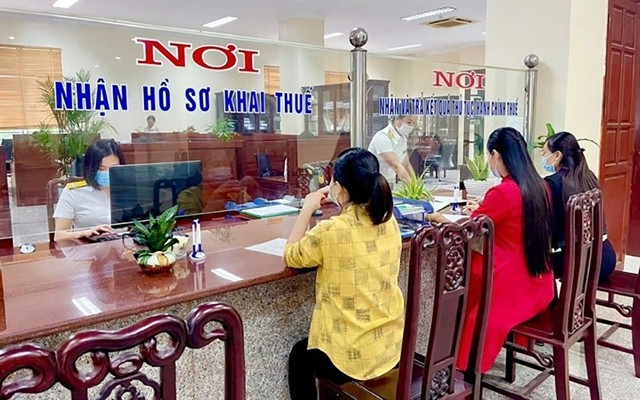
At a tax office in Hanoi (Photo: VNA)

Hanoi (VNS/VNA) - According to a newly-issued decree from the Government, a preferential corporate income tax is available for a number of businesses.

Under Decree 320/2025/ND-CP detailing the implementation of the Law on Corporate Income Tax, the standard corporate income tax (CIT) rate is 20%, except for specific cases and cases eligible for the preferential rates.

Specifically, a CIT rate of 15% applies to enterprises with a total revenue in the preceding year of not more than 3 billion VND (114,000 USD), while a CIT rate of 17% applies to enterprises with a total revenue in the preceding year of over 3 billion VND but not more than 50 billion VND.

Total revenue used as the basis for determining eligibility for the above-mentioned 15% and 17% tax rates includes total revenue from sales of goods and provision of services (excluding revenue deductions), revenue from financial activities and other income according to the enterprise’s business result statements.

The new decree also regulates deductible expenses in determining taxable income for CIT.

Deductible expenses in determining taxable income for CIT include expenses for the purchase of goods, services and other payments of 5 million VND or more per transaction with non-cash payment documents.

Expenses that can be deducted also include market research costs; research costs for products and services serving the development of new products and services; and investment costs for projects to develop new products and services that are unsuccessful or must be discontinued.

Deductible expenses are also recognised for output VAT on goods given as gifts to customers free of charge./.

VNA
See more

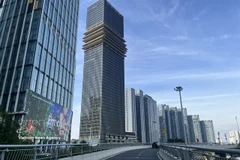
Ho Chi Minh City’s downtown area and the Thu Thiem peninsula, where the International Financial Centre is being developed. (Photo: VNA)

GOE Alliance commits to partnering with HCM City IFC

The GOE Alliance was officially launched at the Autumn Economic Forum in November 2025, bringing together technology firms, financial institutions, policy experts and international partners, including Viettel Digital Services, Dragon Capital, Tether, Ava Labs, Sky Mavis, Republic and Onchain Academy. The alliance aims to pilot on-chain economic models within a policy-oriented legal framework.

Vietnam's foreign trade is projected to hit a record of over 900 billion USD in 2025, positioning the country among the top 15 global trade powers. - Illustrative image (Photo: dantri.vn)

Vietnam joins elite group of 15 largest trading countries

The country recorded its first trade surplus in 2012 and has maintained a continuous streak of surplus for 10 years since 2016. The surplus grew steadily, hitting 19.9 billion USD in 2020, a record of 28.3 billion USD in 2023, and 24.9 billion USD in 2024.

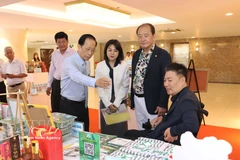
Officials visit a booth at the festival. (Photo: VNA)

Vietnam OCOP Festival 2025 opens in Hanoi

The festival functions as a space to bring together regional OCOP excellence, a forum connecting OCOP stakeholders with distributors, investors, experts and consumers, and a platform to spread pride in indigenous culture, local knowledge, and the aspiration for legitimate prosperity.

Prime Minister Pham Minh Chinh (third from right) and officials launch the Ministry of Construction’s new information technology systems at the conference on December 21. (Photo: VNA)

Modern, comprehensive infrastructure – a need for fast, sustainable development: PM

The Party and State continue to define infrastructure development as one of the three strategic breakthroughs, with priority given to building comprehensive and modern infrastructure, particularly transport facilities, technological infrastructure, and green – digital transition infrastructure, to help realise the national target of double-digit growth, the PM said.

Prime Minister Pham Minh Chinh addresses he third meeting of the National Steering Committee implementing the Politburo’s Resolution 68 in Hanoi on December 20. (Photo: VNA)

PM pushes trust, breakthroughs to accelerate private sector growth

Prime Minister Pham Minh Chinh noted that since the rollout of Resolution 68, alongside supporting resolutions from the National Assembly (NA) and Government, there has been a marked change in understanding the private sector’s critical position and role in Vietnam’s socialist-oriented market economy.

PM Pham Minh Chinh chairs the meeting (Photo: VNA)

Private sector thrives eight months after Resolution 68’s launch: PM

The private sector has shown marked progress eight months after the launch of Resolution 68, registering about 18,000 new enterprises monthly and pushing the nationwide total to nearly 1.1 million, Prime Minister Pham Minh Chinh told the third meeting of the National Steering Committee in Hanoi on December 20.

Phin Ho Tra – a national five-star OCOP product. (Illustrative photo: VNA)

Hanoi to host Vietnam OCOP Festival 2025

The festival is seen a practical activity celebrating the achievements made by the capital and the country in 2025, affirming OCOP’s role in rural economic development, contributing to realising Vietnam’s aspiration for strong economic growth in the context of deep integration.

The expanded Hoa Binh Hydropower Plant (Photo baochinhphu.vn)

EVN launches major power projects

Among the flagship projects inaugurated was the expanded Hoa Binh Hydropower Plant with a total installed capacity of 480MW per year and average annual output of about 488 million kWh.

An ultra-intensive shrimp farming model linked with environmental protection in Ca Mau province. (Photo: VNA)

Fisheries take the lead in the Mekong Delta’s green transition

Across the Mekong Delta, leading aquaculture producers, processors and exporters, along with suppliers of inputs, are transitioning to circular, high-tech and clean production models that cut greenhouse gas emissions and comply with international certification standards.