Vietnam eyes Israel as promising rice market under free trade deal

The Vietnam - Israel Free Trade Agreement (VIFTA), which took effect in late 2024, is poised to provide a fresh boost to agricultural exports, with rice at the forefront.

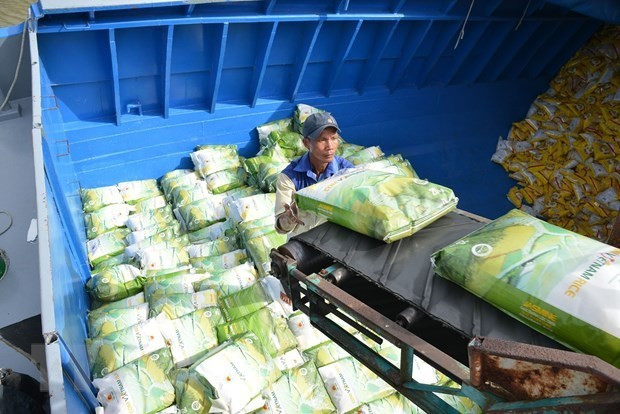
Vietnam is already among Israel’s rice suppliers, albeit with a modest share of 2.2–3% of total imports. (Illustrative photo: VNA)

Hanoi (VNA) – For Vietnam, one of the world’s top rice exporters, targeting mid-sized markets with stable demand, high quality standards and near-total reliance on imports such as Israel is proving to be a smart strategic play.

The Vietnam - Israel Free Trade Agreement (VIFTA), which took effect in late 2024, is poised to provide a fresh boost to agricultural exports, with rice at the forefront.

Israel’s arid climate, limited arable land and severe water constraints leave it with virtually no domestic rice production. While bread and wheat-based staples dominate the national diet, yet rice holds a steady place as a familiar food among Asian and African communities, Arabian citizens and migrant workers.

International data, drawn from Israeli customs and UN Food and Agriculture Organisation (FAO) figures, shows annual rice consumption in Israel at roughly 250,000 tonnes. With a population exceeding 10 million, per-capita intake averages about 25 kg per year. Demand is structurally steady and largely immune to economic fluctuations.

Domestic output is negligible, meaning Israel imports close to 100% of its rice needs. Annual import values typically range from 120-150 million USD, occasionally climbing toward 200 million USD. The market favours milled and polished rice, primarily 5% broken jasmine and japonica types. From January–July 2025 alone, rice imports surpassed 102 million USD, up more than 8% annually.

Australia, Thailand, India and the US are the leading suppliers. Australia and Thailand command large shares thanks to established quality reputations and efficient logistics, while India dominates the Basmati segment, which aligns well with Middle Eastern preferences.

Vietnam is already among Israel’s rice suppliers, albeit with a modest share of 2.2–3% of total imports. Though small, the foothold is meaningful in a market that enforces some of the world’s strictest quality, safety and regulatory standards.

Growing health consciousness is fueling demand for gluten-free, organic and specialty rice, including wild brown varieties. Ready-to-eat and convenience rice products are also gaining traction amid busy lifestyles and the popularity of vegan diets.

These trends open doors for Vietnamese exporters, particularly premium varieties such as jasmine, ST24 and ST25, which match Israeli tastes for soft, subtly aromatic rice. At the same time, Vietnamese rice remains competitively priced in the mid- to upper-mid tier, an important edge in an inflationary environment where value-conscious shoppers are increasingly selective.

Yet, challenges persist. Israel enforces some of the strictest global standards on food safety, traceability, hygiene, phytosanitary compliance and often Kosher certification. Long-distance shipping, elevated freight costs and entrenched competition from legacy suppliers add further pressure.

Against this backdrop, VIFTA is widely regarded as a game-changer for competitiveness. Signed in July 2023 and effective from November 17, 2024, the deal requires Israel to immediately eliminate tariffs on about 66% of tariff lines, with coverage expanding to roughly 93% in subsequent years.

Crucially, VIFTA provides a clear legal framework covering rules of origin, sanitary and phytosanitary measures, and technical barriers to trade, providing Vietnamese firms with a predictable and legally secure pathway into the market rather than reliance on ad-hoc shipments.

With structurally stable rice demand, overwhelming import reliance and tailwind from VIFTA, Israel is increasingly seen as a high-potential medium- to long-term destination for Vietnamese rice. While it is unlikely to emerge as a high-volume market, it offers an attractive platform to build premium, value-added brands and enhance global recognition.

To seize the opportunity, Vietnamese exporters must meet exacting technical standards, secure necessary certifications and forge lasting ties with Israeli importers and distributors. Enhanced support from trade promotion agencies, industry bodies and more targeted marketing across the Middle East will also be critical to solidify a lasting foothold./.

VNA

See more

PM Pham Minh Chinh speaks at the meeting (Photo: VNA)

PM pushes five strategic breakthroughs to fuel digital economy

Addressing the first meeting of the National Steering Committee on Data linked virtually with all 34 cities and provinces nationwide, PM Pham Minh Chinh, who is also head of the committee, stressed that the Party’s policies and guidelines and the State’s laws have long articulated a strategic vision for data development. He cited Resolution No. 57-NQ/TW and the recently enacted Law on Data, both of which designate data as a “new means of production” and a strategic resource that must be transformed into high-value assets.

A customer conducts transactions at the Vietnam Joint Stock Commercial Bank for Industry and Trade (VietinBank). (Photo: VNA)

Central bank aims for 15% credit growth in 2026

In 2026, monetary policy will continue to be implemented in a proactive, flexible, timely and effective manner to help stabilise the macroeconomy, keep inflation under control, support economic growth and advance the restructuring of banks under compulsory transfer.

Vietnam is emerging as a preferred destination for many foreign enterprises (Photo: hanoimoi.vn)

Vietnam emerges as bright spot of growth, trusted and responsible partner

Despite a volatile global environment, Vietnam recorded solid gains in 2025. With flexible and proactive policies under the leadership of the Communist Party of Vietnam and the Government, all 15 key socio-economic targets were met or exceeded, while GDP expanded by about 8.02%, surpassing expectations.

An image of a Vietnamese game. CIS region has potential for gaming developers from Viet Nam. (Photo: Courtesy of cellphones.com.vn_

CIS: Opportunity for game developers in Vietnam

The CIS region, which includes Eastern Europe and Central Asia, has potential for gaming developers from Vietnam as this market displays user behaviour patterns that are highly favourable for mobile gaming growth, particularly around major holiday periods.

Banks, including MB Bank, have issued alerts about scams conducted via social media platforms such as Zalo and Facebook, where criminals impersonate acquaintances. (Photo: The Courtesy of MBBank)

Financial scams surge ahead of Tet

As the Lunar New Year (Tet) approaches, financial and banking scams in Vietnam are showing a sharp upward trend, prompting banks and law enforcement agencies to issue repeated warnings.

Hai Phong targets 4.3 billion USD in FDI in 2026 (Photo: VNA)

Hai Phong city targets 4.3 billion USD in FDI in 2026

Hai Phong’s investment appeal is underpinned by a rapidly expanding development space, including the Southern Coastal Economic Zone covering more than 20,000 hectares, a planned free trade zone, deep-water ports at Lach Huyen, and 12 industrial parks newly established in 2025.

The relocation of check-in counters aims to better meet the travel needs of residents and visitors. (Photo: VNA)

Vietjet shifts domestic check-in at Tan Son Nhat from January 13

During the recent New Year 2026 holiday peak, Vietjet added 380 flights, equivalent to nearly 78,000 additional seats, on many key domestic routes linking Hanoi and Ho Chi Minh City with destinations such as Vinh, Thanh Hoa, Hai Phong, Da Nang, Phu Quoc, Nha Trang and Da Lat.

Commercial banks are providing approximately 88% of total green credit outstanding in Vietnam. (Photo: nhandan.vn)

Capital sources expanded for sustainable growth

According to the State Bank of Vietnam (SBV), by the end of November 2025, outstanding green credit was estimated at around 750 trillion VND (28.55 billion USD), with an average growth rate exceeding that of overall credit in the economy.

Customers select goods at a supermarket. (Photo: VNA)

Retail market expands sharply, sustainability challenges persist

According to a report on recently released by the Ministry of Industry and Trade’s Agency for Domestic Market Surveillance and Development, the size of the market reached more than 7 quadrillion VND (about 266 billion USD) in 2025, up around 10% compared with 2024.

Oil rigs at the Bach Ho oil field. (Photo: VNA)

Resolution 79: State economy to lead growth

Resolution 79 is described as a “clear action declaration” by the Politburo, saying the state economy is not only responsible for maintaining macroeconomic stability, but must also become the force leading a new growth model that is green and sustainable.

Workers at Garment 10 Corporation produce apparel for export. (Photo: Nhan Dan)

Vietnam leverages export advantages within RCEP region

In 2025, seafood exports to China alone exceeded 2.2 billion USD, up about 33% compared to 2024. Shipments to Japan fetched nearly 1.7 billion USD, a year-on-year increase of 14.6%, while those to the Republic of Korea and Australia grew by 9.6% and 3.2%, respectively.

Certificates of membership in the Vietnam International Financial Centre in Da Nang are awarded at the conference on January 9. (Photo: VNA)

Da Nang continues targeted investment promotion approaches

According to Chairman of the Da Nang People’s Committee Pham Duc An, the city prioritises building sustainable economic ecosystems and focuses on key breakthrough sectors with strong spillover effects, including high technology and digital transformation, logistics, urban infrastructure, finance, processing and manufacturing industries, high-tech agriculture, and the pharmaceutical and medicinal herb industry.