RCEP agreement marks three years of advancing regional trade cooperation

Currently, the agreement covers a market of approximately 2.3 billion people, representing around 30% of the global population and GDP. Notably, five of its 15 members are members of the G20.

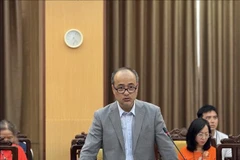
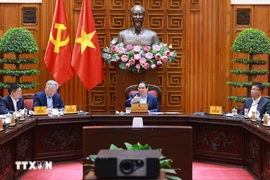
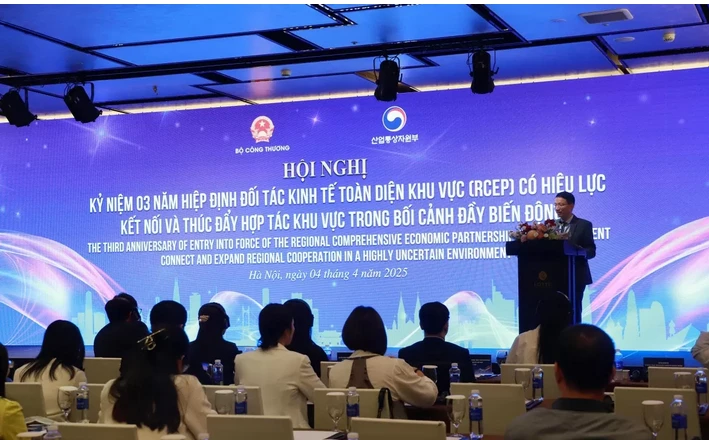
Director of the MoIT’s Department of Multilateral Trade Policy Le Trieu Dung speaks at the conference. (Photo: VNA)

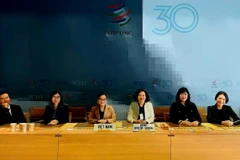
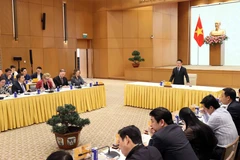
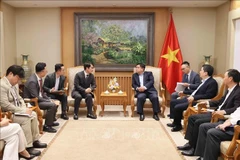
Hanoi (VNA) – The Ministry of Industry and Trade of Vietnam (MoIT) the Ministry of Trade, Industry and Energy of the Republic of Korea (RoK) held a conference in Hanoi on April 4 to mark the third anniversary of the Regional Comprehensive Economic Partnership (RCEP) Agreement’s entry into force.

The event themed “Connecting and Expanding Regional Cooperation in a Highly Uncertain Environment” served as a platform to reflect on three years of RCEP implementation, evaluate its impacts on businesses, and explore solutions to remaining trade barriers. Discussions focused on improving customs procedures to facilitate trade, introducing new frameworks for sustainable trade cooperation, and addressing both the opportunities and challenges of the RCEP enforcement.

Speaking at the event, Director of the MoIT’s Department of Multilateral Trade Policy Le Trieu Dung highlighted RCEP as the world’s largest free trade agreement by population and GDP. Signed in November 2020 by 10 ASEAN countries and five partners - China, Japan, the RoK, Australia, and New Zealand, the agreement came into effect on January 1, 2022, for six ASEAN members and four partners. It later entered into force for the RoK in February 2022, Malaysia in March 2022, Indonesia in January 2023, and most recently, the Philippines in June 2023.

The Vietnamese official said following eight years of negotiations, the RCEP took effects in 2022. Over the last three years, it has become a key driver of export growth, trade expansion, investment facilitation, and regional supply chain development, contributing significantly to global economic recovery and resilience.

Currently, the agreement covers a market of approximately 2.3 billion people, representing around 30% of the global population and GDP. Notably, five of its 15 members are members of the G20.

The RCEP’s open-access framework continues to draw interest from new economies seeking to join. Member countries have completed accession procedures and established an RCEP Support Unit (RSU) to enhance implementation, reflecting the agreement’s growing strategic importance.

Dung said that over the past three years, the RCEP has positively impacted Vietnam’s international economic integration and supported the broader economic and trade activities of ASEAN and participating countries. By providing a unified legal framework, the agreement enhances regional transparency and cements ASEAN’s role as an attractive investment destination, especially critical amid current global trade uncertainties.

He also emphasised the vital role of the RCEP in bolstering Vietnam–RoK economic relations. Since 2022, Vietnam has consistently ranked as the RoK’s third-largest trading partner. Both countries aim to raise bilateral trade to 100 billion USD in 2025 and 150 billion USD by 2030 in a balanced, sustainable manner.

Jinhyeok Choi, Director General of the FTA Policy Bureau of the Korean Ministry of Trade, Industry and Energy, underscored the RCEP’s value in enhancing not only the RoK–Vietnam ties but also regional trade cooperation as a whole./.

VNA

See more

Vietnamese Ambassador to the Republic of Korea Vu Ho speaks at the forum.(Photo: VNA)

Forum promotes Vietnam–RoK supply chain connectivity

Cao Thi Phi Van, Deputy Director of ITPC, said that after more than three decades of cooperation, Vietnam–RoK ties are shifting from traditional manufacturing cooperation towards mastering future-oriented technologies such as semiconductors, artificial intelligence (AI), digital finance, renewable energy and global supply chains.

Fitch Ratings gives positive assessment of Vietnam’s economic fundamentals (Illustrative image. Source: VNA)

Fitch Ratings gives positive assessment of Vietnam’s economic fundamentals

Deputy Minister Tran Quoc Phuong stressed that Fitch’s credit assessments have enhanced Vietnam’s image and credibility in international financial markets, and provided additional motivation for the country to continue improving institutions, strengthening policy management efficiency and increasing economic transparency.

Consumer purchases E10 biofuel at a PVOIL petrol station on Thai Thinh street in Hanoi. (Photo: VNA)

Hanoi strengthens oversight of transition to E10 biofuel

To ensure compliance with the transition roadmap, the Hanoi Market Surveillance Sub-Department has requested petrol traders to proactively review and upgrade storage tanks, fuel pumps and other technical conditions necessary for E10 distribution, thereby preventing disruptions to fuel supply serving consumption and production demands across the capital.

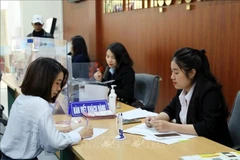
A Phu Tho civil servant guides a local how to switch from presumptive tax mechanism to tax sef-declaration. (Photo: VNA)

📝OP-ED: Vietnam’s tax reform: Fair play, not revenue squeeze

At a time when social media disinformation grows more sophisticated, transparency and public disclosure are the most potent counter to distortions. Facts, data and real-world results deliver the strongest rebuttal to attempts that twist reality and erode trust in tax administration reform.

Experts are expected to analyse opportunities for boosting exports and investment cooperation between Vietnam and South American countries at the coming seminar. (Illustrative photo: VNA)

Seminar on trade promotion in South American market to take place in Hanoi

A seminar on opportunities and challenges in developing the South American market will be held in Hanoi on May 28. It aims to provide updates on the economic outlook, market trends and import demand in South America, particularly in Argentina and Chile, amid continued fluctuations in global supply chains.

A view of the second Asia Agri Food International 2026 in Ho Chi Minh City on May 19 (Photo: VNA)

India pushes stronger agri-food cooperation with Vietnam

Experts noted that Vietnam has established itself as one of Southeast Asia’s leading agricultural product exporters, while India remains a major global supplier of agricultural and food products. By combining India’s production capacity and technological strengths with Vietnam’s dynamic processing and export ecosystem, the two countries can build more resilient supply chains in the region.

A panel discussion at the Meet Australia 2026 programme on May 19 (Photo: VNA)

Meet Australia 2026 promotes sustainable partnership opportunities

Meet Australia 2026 is not only a trade and investment promotion event but also a forum connecting trust, vision and action between Vietnam and Australia, as well as between national-level cooperation orientations and development needs of localities and businesses from both countries.

A customer purchases E10 biofuel petrol at a PVOIL station on Thai Thinh street in Hanoi. (Photo: VNA)

Authorities ordered to closely monitor rollout of E10 biofuel from June 1

According to the agency, the move is aimed at ensuring the effective and synchronised implementation of the E10 transition roadmap under Circular No. 50/2025/TT-BCT, issued by the Ministry of Industry and Trade on November 7, 2025. The plan seeks to avoid delays or supply disruptions that could affect the domestic fuel market.