Reference exchange rate kept unchanged on January 7

With the current trading band of +/- 5%, the ceiling rate applicable for commercial banks during the day is 26,378 VND/USD, and the floor rate 23,866 VND/USD.

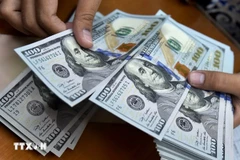
The daily reference exchange rate is kept at 25,122 VND/USD on January 7. (Photo: Xinhua/VNA)

Hanoi (VNA) – The State Bank of Vietnam set the daily reference exchange rate at 25,122 VND/USD on January 7, unchanged from the previous day.

With the current trading band of +/- 5%, the ceiling rate applicable for commercial banks during the day is 26,378 VND/USD, and the floor rate 23,866 VND/USD.

At 8:20am, the buying and selling rates at major commercial banks also remained stable.

Both Vietcombank and BIDV listed the buying rate at 26,078 VND/USD and the selling rate at 26,378 VND/USD, the same as those on the January 6 morning session./.

VNA

See more

Illustrative image (Photo: VNA)

Reference exchange rate up on January 8

With the current trading band of +/- 5%, the ceiling rate applicable for commercial banks during the day is 26,381 VND/USD, and the floor rate 23,869 VND/USD.

The first co-produced film Love in Vietnam was shot in different areas including Ba Na Hill in Da Nang city.

Vietnam–India co-production bridges cultures on screen

A sweeping cross-cultural romance set against Vietnam’s landscapes and cityscapes, the Vietnam–India co-production Love in Vietnam is positioning itself as both a cinematic crowd-pleaser and a soft-power showcase, aiming to elevate the country’s global image while sparking interest in its tourism, culture and people.

Production activities of Vinacomin at a mining site. (Photo: VNA)

Major firms face delisting risks due to shareholding concentration

Several billion-dollar companies in Vietnam are facing the imminent risk of losing public company status and being delisted from stock exchanges as highly concentrated shareholding structures squeeze out minority investors and raise fresh concerns over governance and market sustainability.

Processing pangasius for export at Caseamex Joint Stock Company, Tra Noc Industrial Park, Can Tho city. (Photo: VNA)

Seafood sector targets 11.5 billion USD in exports in 2026

In 2026, the sector aims for total seafood output of more than 10 million tonnes, up 0.6% from 2025. Of the total, capture fisheries are expected to reach about 3.75 million tonnes, down 2.1%, while aquaculture output is projected at 6.25 million tonnes, up 2.2%. Seafood export turnover is targeted at around 11.5 billion USD.

Vietnam's GDP expands by more than 8% in 2025. (Photo: VNA)

International financial institutions optimistic about Vietnam’s 2026 growth

As Vietnam enters 2026 - the first year of the 2026–2030 socio-economic development plan, international organisations stress that maintaining macroeconomic stability, improving growth quality and staying the course on fundamental reforms will be crucial in turning positive assessments into tangible outcomes and shaping a more sustainable development cycle ahead.

The application of Israeli technology in melon cultivation has delivered high economic efficiency (Photo: VNA)

VIFTA provides impetus for Vietnamese exports to Israel

The greatest benefit generated by the VIFTA lies in the immediate removal or phased deep reduction of many tariffs, significantly improving the price competitiveness of Vietnamese goods. At the same time, clearer provisions on rules of origin, customs procedures and trade remedies are helping foster long-term business partnerships.

Vegetables with a green tick at a supermarket in Ho Chi Minh City. (Photo: VNA)

“Green tick” products ready for Tet holiday

Products bearing the city’s “green tick of responsibility” label, which indicates clear origin and verified quality, are increasingly visible on shelves and drawing strong consumer attention.

Imports and exports at Lach Huyen container port in Hai Phong city (Photo: VNA)

2026 Economic Census kicks off on January 7

The 2026 census aims to fully, comprehensively and objectively assess the current situation of economic establishments nationwide, including enterprises, public service units, associations, religious institutions and individual business households.​