HCM City curbs pollution through transition to green transport
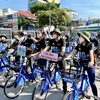
Together with metro expansion, HCM City will continue to enlarge its electric and green bus network, targeting a public transport share of 15–20% of travel demand.
With the harmonious combination of conservation, eco-tourism, and community participation, Con Dao could turn its potential into a strong driver for sustainable development. This not only protects its green lungs and blue carbon sinks but also reinforces Vietnam’s efforts in the fight against climate change.
The Con Dao National Park in Ho Chi Minh City has received five Nicobar pigeons (Caloenas nicobarica), a rare and endangered bird species, from the Con Dao Special Zone Economic Division after they were found injured and disoriented by local residents.
For many residents, the greatest expectation from LEZs is cleaner air. Vehicle exhaust has long been a pressing environmental issue for the city. Under current plans, by 2030 HCM City will have around 11.4 million motorcycles and 1.3 million cars.
The Dugong (sea cow) population in HCM City’s Con Dao Island, the only known habitat of the species in Vietnam, is facing an alarming decline and could disappear entirely without timely intervention, according to conservation experts and local authorities.
Cars in Hanoi and HCM City manufactured from 2017 will need to meet Level 4 emission standards by January 2027, under a draft roadmap proposed by the Ministry of Agriculture and Environment.
Transitioning to a circular economy not only offers a sustainable development path for Ho Chi Minh City but also serves as a pivotal step toward establishing a fully green economy.
An exhibition featuring 100 green, recycled, and circular economy models and products from 50 businesses and educational establishments took place in Ho Chi Minh City on July 31, as part of the local green transition forum and recycle day 2025.
Conservation efforts here have become a model, helping to save millions of turtle hatchlings and promoting Con Dao as a member of the Indian Ocean-Southeast Asia Turtle Site Network.
This initiative supports the city’s green growth strategy and aligns with the national action plan on green energy transition and carbon emissions reduction, as directed by the Prime Minister.
HCM City currently has 600 public charging points, meeting less than 10% of the projected demand of 350,000-400,000 electric two-wheel vehicles in the future. Therefore, it is necessary to build 3,000 public charging and battery swap stations before December 2028.
Saigon Hi-Tech Park’s ambitious 50% renewable energy goal far exceeds the city’s 15% target, positioning the park as a trailblazing “living lab” for sustainable energy solutions.
With many unique values, the Can Gio Island mangrove forest became Vietnam's first Biosphere Reserve recognised by UNESCO in 2000. Assessments have revealed a high level of biodiversity, rich in both quantity and species, and home to the largest and most beautiful concentrated mangrove forest in Southeast Asia.
Ho Chi Minh City has set a target of achieving at least one square metre of green space per capita and an additional ten hectares of public green areas by 2030.
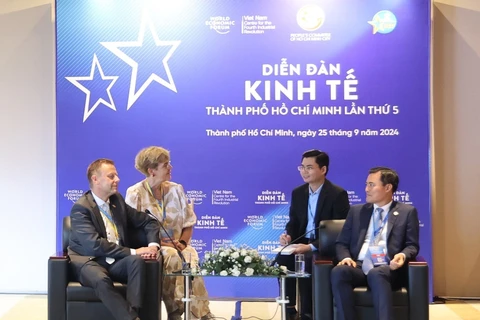
Vice Chairman of the Ho Chi Minh City People's Committee Bui Xuan Cuong on September 25 called on Leipzig city of Germany to share its experience with the southern metropolis in sustainable urban planning, enhancing resilience, and transferring environmentally friendly green technologies.
Vietnamese firms have ample opportunities to develop green and clean projects, particularly in renewable energy, heating, ventilation and air conditioning (HVAC), data centre and smart building construction, experts said at a series of seminars on energy held in Ho Chi Minh City on September 4.
The 2024 International Container Management Symposium (CMS 2024) is underway in Ho Chi Minh City, gathering over 50 leading global experts in packaging management and pesticide regulatory agencies from Southeast Asian countries.
The Ho Chi Minh City Department of Construction on August 30 held an inauguration ceremony for the expanded Binh Hung wastewater treatment plant and its collection system in Binh Chanh district, as part of Phase 2 of the southern metropolis’s water environment improvement project.
Construction of the Tam Sinh Nghia waste-to-energy plant, the first of its kind in Ho Chi Minh City, has begun in the outlying district of Cu Chi.
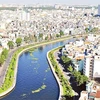
Construction of the Nhieu Loc - Thi Nghe wastewater treatment plant project in Ho Chi Minh City, which will be the largest in Southeast Asia, is around 41% complete and is expected to be put into use in June, 2025.
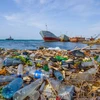
In order to address the growing issue of pollution, Ho Chi Minh City has been launching various joint dissemination campaigns and activities with businesses to encourage its dwellers to reduce the use of single-use or non-degradable plastic bags, and collect and recycle plastic waste.
France is ready to work with Vietnam to promote cooperative activities in the field of green development and reducing net emissions by providing advanced technical solutions, French Ambassador to Vietnam Olivier Brochet said on June 6.