Russian scholar highlights deep roots, strong future of Vietnam-Russia ties

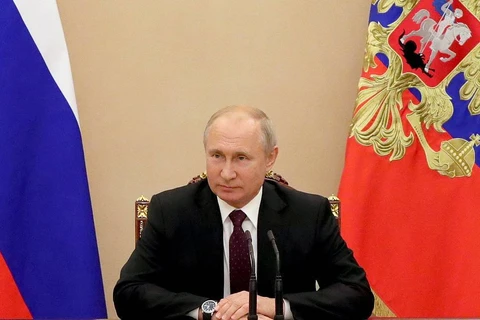
Asso. Prof Maxim Syunnerberg from the Institute of Asian and African Studies at the Lomonosov Moscow State University has offered insights into the upcoming Vietnam visit by Russian President Vladimir Putin, highlighting the long-standing and positive relationship between the two countries.

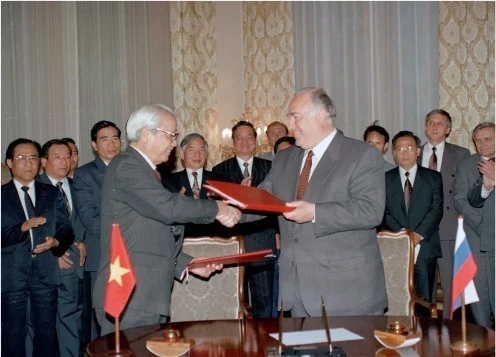
At the signing ceremony of the Treaty on Principles of Friendly Relations between Vietnam and Russia. (Photo: VNA)

Moscow (VNA) – Asso. Prof Maxim Syunnerberg from the Institute of Asian and African Studies at the Lomonosov Moscow State University has offered insights into the upcoming Vietnam visit by Russian President Vladimir Putin, highlighting the long-standing and positive relationship between the two countries.

Speaking to the Vietnam News Agency in Moscow, Syunnerberg said the year 2024 marks the 30th anniversary of the signing of the Treaty on Principles of Friendly Relations between Russia and Vietnam (June 16), laying a legal foundation for bilateral ties in the modern era. Vietnam, he said, is a crucial partner of Russia in Southeast Asia and a strategic one in Asia.

He pointed out that bilateral ties predate the formal establishment of diplomatic relations in 1950, citing the fact that Tsar Nicholas II, then heir apparent, visited Vietnam in 1891. He further noted the historical connections – Vietnamese revolutionaries like President Ho Chi Minh studied in Russia, and Vietnamese volunteers joined the Soviet Red Army to fight Nazi Germany and defend Moscow during the Great Patriotic War in 1941.

Acknowledging the Soviet Union's vital role at the 1954 Geneva Conference and its unwavering support for Vietnam during the war against American imperialists, the scholar said the 1978 Treaty of Friendship and Cooperation with the Soviet Union ushered in an era of peace, development, and global integration for Vietnam.

He called President Putin's 2001 visit to Vietnam a pivotal moment for bilateral relations in the 21st century. Syunnerberg, then an intern in Vietnam, personally witnessed the warmth offered by both Vietnamese leaders and the public to the Russian leader. This upcoming visit marks Putin's fifth to Vietnam, solidifying his focus on the relationship.

The scholar drew a parallel between Putin's first Vietnam visit shortly after assuming office in 2001 and this upcoming one at the start of his new term. He said he believed the new momentum to be created will be particularly significant in light of Putin's positive image in Vietnam and the overall strength of the Vietnam-Russia ties./.
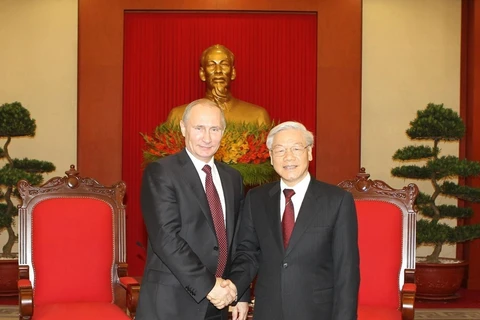
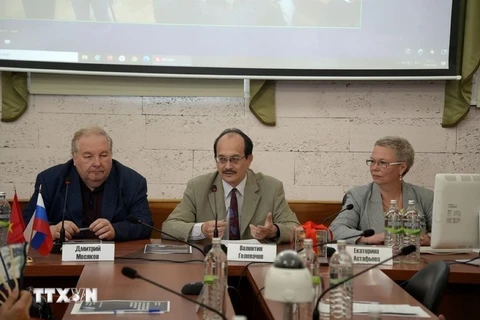
VNA

See more

Prof. George Toloraya, Director of the Centre for Russian Strategy in Asia at the Institute of Economics of the Russian Academy of Sciences. (Photo published by VNA)

Vietnam enters new development era: Russian scholar

Prof. George Toloraya noted that the 14th Party Congress represents a pivotal shift from Vietnam’s role as a “factory of the world” toward its ambition to become a high-tech powerhouse, with development quality reaching a higher level.

Participants pose for a group photo at the ceremony to mark the 76th founding anniversary of the diplomatic relations between Vietnam and China in Chongqing. (Photo: VNA)

Chongqing ceremony marks 76th anniversary of Vietnam – China ties

Consul General Bui Nguyen Long noted that the fruitful bilateral ties over the past 76 years have clearly demonstrated that the unceasing enhancement and development of Vietnam – China relations is fully consistent with the shared aspirations and long-term fundamental interests of the two peoples.

Delegates at the 14th National Party Congress vote on the list of candidates to the 14th Party Central Committee. (Photo: VNA)

14th National Party Congress: Enduring strength of people-centred path

Kyril Whittaker, a UK-based Vietnam specialist, that Vietnam’s 40-year Renewal (Doi Moi) process has succeeded thanks to three closely intertwined factors - a scientific and practical approach to reform, the Communist Party of Vietnam’s leadership role, and the principle of placing the people at the heart of all policies.

Party General Secretary To Lam speaks at an international press conference announcing the results of the 14th National Party Congress on the afternoon of January 23. (Photo: VNA)

Renewing mindset, setting development vision through 2045: Party General Secretary To Lam

The political report integrates three previously separate documents - the political report, the socio-economic report and the review of Party building - into a single, unified and comprehensive one, with clearer priorities. Designed to be concise, easy to understand, remember and implement, this integration stands out as a key hallmark of the Congress.

Communist Party of Vietnam General Secretary To Lam (right) and General Secretary of the Central Committee of the Lao People’s Revolutionary Party and President of Laos Thongloun Sisoulith during his visit to Vietnam on September 10, 2024 (Photo: VNA)

Top Lao leader to pay state visit to Vietnam

General Secretary of the Central Committee of the Lao People’s Revolutionary Party and President of Laos Thongloun Sisoulith and his spouse will pay a state visit to Vietnam from January 26 to 27.

The article titled “The 14th National Congress of the Communist Party of Vietnam and the Advance toward a New Era,” published on aladaainternacional.com, the website of the Latin American Center for Studies on Asia and Africa. (Photo: VNA)

14th National Party Congress: Vietnam’s strategic shift in new era

Vietnam now stands at the threshold of a new development era, driven by strong aspirations and substantial potential. The 14th Party Congress is, therefore, of decisive importance for the country’s future transformations, particularly amid an international environment marked by uncertainty and volatility. While this phase may be among the most complex of the renewal process, it also presents a critical opportunity for Vietnam to break through and evolve from an “Asian tiger” into a regional “dragon.”

Delegates vote to approve the Resolution of the 14th National Party Congress (Photo: VNA)

14th National Party Congress adopts Resolution

For the 2026–2030 period, key targets for Vietnam include average annual GDP growth of at least 10%; per-capita GDP of about 8,500 USD by 2030; manufacturing and processing accounting for roughly 28% of GDP; the digital economy contributing around 30% of GDP.