Southeast Asian nations striving to control inflation

Malaysia’s strategy to tackle inflation and rising cost of living has shown results, especially on chicken and egg issues, Domestic Trade and Consumer Affairs Minister Datuk Seri Alexander Nanta Linggi said.
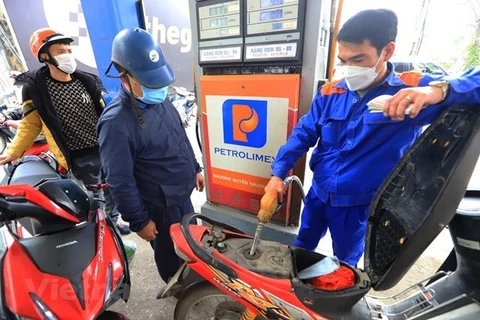
Southeast Asian nations striving to control inflation ảnh 1Malaysia’s strategy to tackle inflation and rising cost of living has shown results, especially on chicken and egg issues. (Photo: Bloomberg)
Hanoi (VNA) – Malaysia’s strategy to tackle inflation and rising cost ofliving has shown results, especially on chicken and egg issues, Domestic Tradeand Consumer Affairs Minister Datuk Seri Alexander Nanta Linggi said.

The minister told the press on July 21 that thefive-pronged strategy targets close cooperation with the special task force totackle inflation; the control of the price of necessities through targetedsubsidies; engagement with industry players to stabilise prices; collaborationwith all enforcement agencies to reduce leakages especially involvingsubsidised goods; and the expansion of the Keluarga Malaysia Sales Programme(PJKM) to 613 state constituencies to reduce the people’s burden by offeringessential goods at 20% cheaper than the local market prices.

Nanta said the ministry believed that the engagementsessions with industry players including the special task force to tackleinflation will have an impact on reducing the prices of cooking oil and otheressential goods.

The Philippines is also looking to strike importdeals with some of the world's biggest fertiliser suppliers, including Chinaand Russia, to help lower costs and increase food production amid highinflation, the government said.

President Ferdinand Marcos Jr. plans to reach out toChina, Russia, Indonesia, United Arab Emirates and Malaysia to securefertiliser supplies at favourable prices, according to a statement issued by hisoffice.

Marcos has vowed to boost agricultural output overthe next six months, saying he wants the Southeast Asian country to reduce itsreliance on food imports and avoid being hit hard by a food crisis looming overthe world.

Agriculture officials have warned of higher localprices of rice, the country's staple food, in the coming months partly due tosurging costs of fertiliser, supplies of which have been disrupted by theRussia-Ukraine war. The Philippines imports most of its fertiliser needs.

Partly driven by higher costs of some food items,Philippine inflation averaged 4.4% in the first half of this year, above theofficial 2%-4% target band, with the June rate of 6.1% being the highest innearly four years.

Meanwhile, Indonesia’s consumer price index (CPI)this year is expected to reach 4.5%-4.6%, surpassing the target of 2% to 4% setby Bank Indonesia, Governor Perry Warjiyo said.

The Bank Indonesia Governor told the press on July21 that the high inflation was due to unsubsidised food and energy prices. Moreover,supply pressure and global supply chain disruption are also pushing up theprices.

Indonesia's CPI rose 4.35% in June, the biggestyear-on-year climb since June 2017.

However, Warjiyo held that the inflation will returnto the set target next year, adding that the central bank will step up policy coordination withthe government through the Central and Regional Inflation Control Teams./.
VNA

See more

Thailand eyes major investment law reform

Thailand eyes major investment law reform

The Thai economy remains imbalanced, relying heavily on exports and services such as tourism, which together account for roughly 70% of GDP. Meanwhile, domestic investment aimed at strengthening the country’s production structure and keeping pace with global changes remains insufficient, said Finance Minister Ekniti Nitithanprapas.

Indonesia tightens management of forest resources

Indonesia tightens management of forest resources

The total value of recovered assets is equivalent to nearly 10% of Indonesia’s 2026 state budget, estimated at about 240 billion USD, highlighting the large scale of past violations in the forestry sector.

Thailand seeks to offset fertiliser supply shortfall

Thailand seeks to offset fertiliser supply shortfall

Thailand's Agriculture and Cooperatives Minister Suriya Juangroongruangkit reaffirmed the policy to suspend farmers' debts for three years, which was announced during his party's election campaign, though details of the measure will be finalised after consultations with state agencies, including the Finance Ministry.

 President Prabowo Subianto signs an inscription at the inauguration of PT VKTR Teknologi Mobilitas' electric commercial vehicle assembly plant in Magelang, Central Java, on Thursday, April 9, 2026. (Photo: Antara)

Indonesia targets ending fuel imports within three years

In addition to electrifying power plants, the Indonesian government is promoting electric vehicles and the utilisation of other renewable energy sources. Solutions include processing palm oil and used cooking oil into aviation fuel to further reduce reliance on fossil fuels.

A groundbreaking ceremony for Indonesia's first melamine project, invested by PT GEABH Joint Technology, is held in the Gresik Special Economic Zone, East Java Province, Indonesia, April 8 (Photo: Xinhua)

Indonesia develops strategic chemical industry

Indonesia's first melamine plant in the Gresik Special Economic Zone is seen as a strategic step to boost the development of the country’s chemical industry and enhance domestic value creation.

Illustrative image (Photo: thevibes.com)

Malaysia leads Southeast Asia in global investment appeal

The latest 2026 Global Opportunity Index (GOI) report by the Milken Institute ranked Malaysia 23rd globally, the highest among developing Southeast Asian economies, underpinned by strong institutional quality and solid economic fundamentals.

YouTube logo on a cellphone (Photo: ANTARA)

Indonesia warns Google over non-compliance with child protection rules

According to the results of an inspection conducted on April 7, YouTube has not fully fulfilled its obligations under Indonesian Government Regulation No. 17/2025 (PP Tunas), which took effect on March 28 and requires digital platforms to implement strict governance measures to protect underage users. The platform has also shown no indication of complying with the rules in the near future.

The Strait of Hormuz is the world's most important oil transit choke-point. (Photo: Reuters)

Malaysia reliant on Hormuz Strait for oil supply

Data from the Malaysian Finance Ministry shows that domestic oil consumption stands at about 700,000 barrels per day, nearly double Malaysia’s crude oil production of around 350,000 barrels daily.