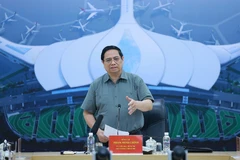
Hanoi (VNA) – In Vietnam’s sustainable development journey, the business community plays a core role, stated Deputy Prime Minister Ho Duc Phoc while addressing the 12th Vietnam Corporate Sustainability Forum (VCSF) held on August 22.
Deputy PM Phoc, Chairman of the National Council for Sustainable Development, described businesses as incubators of innovation, agents of technological transformation, and champions of ESG (environmental, social, governance) standards. Their contributions, he noted, are essential to the country’s progress toward the UN Sustainable Development Goals (SDGs), he said.
The Deputy PM reiterated the Government’s commitment to enabling a robust transition. The administration aims to create a solid foundation for development through four strategic pillars. These include institutional reform, infrastructure investment, especially in transportation, renewable energy, digital networks, and climate resilience. They also include the promotion of green finance and sustainable credit markets, and stronger mobilisation of domestic and international resources to support green and digital transformation. These reforms, he said, are designed to enhance competitiveness and prepare the country for the next phase of growth.
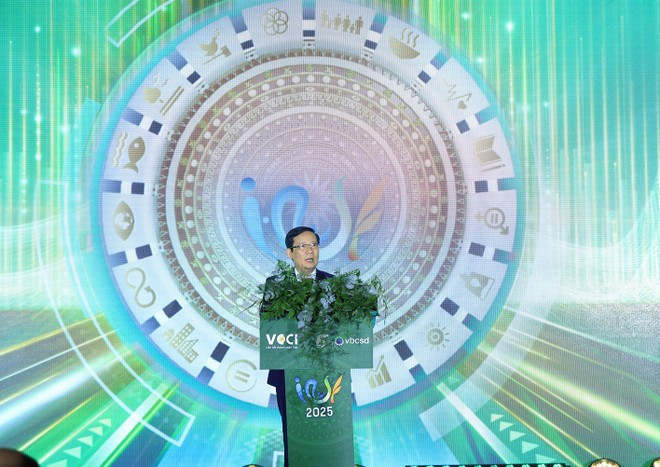
Looking ahead to 2025, it is a pivotal year for Vietnam as it concludes its 2021–2025 socio-economic development plan and prepares for the next party congress. There is a shared national ambition to build a more prosperous, civilised and globally integrated Vietnam. Across all sectors, Vietnamese businesses are being called upon to lead the charge in innovation and sustainable growth.
Pham Tan Cong, President of the Vietnam Chamber of Commerce and Industry (VCCI), likened Vietnamese entrepreneurs to “peacetime warriors,” playing a crucial role in building a resilient and inclusive economy. He affirmed VCSF’s mission over the past 12 years. It serves to bridge between policy and practice, spreading awareness, embedding sustainability into business models, and contributing to institutional reforms that enhance national competitiveness and create a more business-friendly environment.
(Photo: VNA)
Nguyen Quang Vinh, VCCI Vice President and Chairman of the Vietnam Business Council for Sustainable Development (VBCSD) called on businesses to treat sustainability not merely as a corporate responsibility, but as a matter of survival.
As the council enters its next phase after 15 years of activity, it plans to expand initiatives around communication, training, research, and partnerships to help firms commit to responsible, sustainable business practices and join hands in propelling Vietnam into a greener, more inclusive future.
Binu Jacob, CEO of Nestlé Vietnam and Co-Chair of VBCSD, emphasised the importance of human capital in advancing national sustainability. He outlined Nestlé’s commitment to nurturing young talent through initiatives such as Nestlé Needs YOUth and Nesternship, while supporting closer cooperation among the government, academia, and businesses to align training with labour market needs and innovation trends. These efforts, he said, reflect the company’s contribution to implementing the Politburo’s Resolution 57-NQ/TW and building a sustainable future.
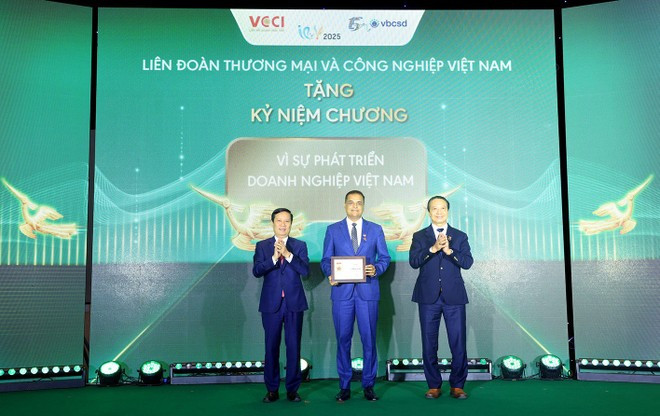
In recognition of these contributions, Pham Tan Cong awarded Jacob the “For the Development of Vietnamese Enterprises” medal.

Nguyen Hoang Giang, CEO of SABECO, echoed the sentiment that sustainability must go beyond vision - it requires concrete, measurable action. He shared that ESG principles are embedded in SABECO’s operational philosophy, guiding how the company defines value, measures success, and upholds social responsibility. In today’s uncertain world, Giang believes ESG helps build resilience—not just for the company, but for the entire community. He stressed that sustainable development should leave no one behind, and the value it generates must benefit both the enterprise and the nation.
During the forum’s plenary session, Deputy PM Phoc presented a floral tribute to VBCSD leadership to celebrate the Council’s 15th anniversary. Throughout the event, delegates heard policy updates from senior officials across ministries, including Finance, Agriculture, and Environment, along with insights into Vietnam’s strategic direction for private sector development as outlined in Resolution 68. International partners, including the UNDP, also shared recommendations for enhancing public-private collaboration and accelerating Vietnam’s path toward the 2045 Vision.
The forum’s conclusions and recommendations will be compiled by VBCSD and VCCI and submitted to the Government and the National Council for Sustainable Development. These insights are expected to inform future policymaking and help mainstream sustainable business practices, contributing to the realisation of the nation's long-term development goals./.