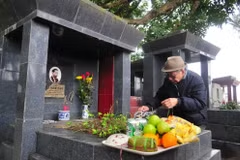
As the seventh lunar month and Vu Lan season return, Vietnamese families are taking time to remember their parents, grandparents and ancestors, keeping alive the tradition of filial piety and gratitude passed down through generations.
Vietnamese communities around the globe came together in heartfelt ceremonies to commemorate the Hung Kings, the legendary founders of Vietnam, reaffirming the enduring national tradition of honouring one’s roots and preserving cultural identity, no matter where life leads.
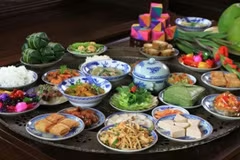
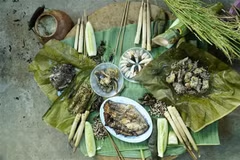
During the Lunar New Year (Tet) festival, each ethnic group in Vietnam has its own culinary specialties that reflect the culture of their people and are used as offerings to worship their ancestors.
The People’s Committee of Dien Bien Dong district, Dien Bien province, has worked with the provincial Department of Culture, Sports and Tourism to hold a ceremony recognising a local new rice festival as a national intangible cultural heritage in Vietnam.
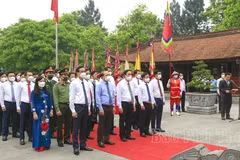
A ceremony was held in the northern mid-land province of Phu Tho on April 6 to commemorate the legendary ancestors of Vietnam, Father Lac Long Quan and Mother Au Co.
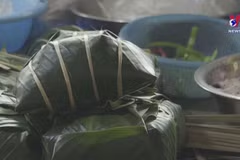
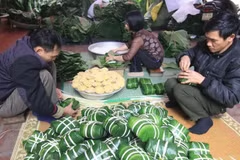
Despite having the same main ingredients as the “banh chung” cake made by the Kinh people, of glutinous rice, pork, and mung beans, the “banh chung gu den” (or black hunchback chung cake) made by ethnic people in the northern mountainous province of Lao Cai has its own taste and shape.
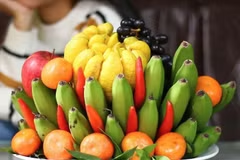
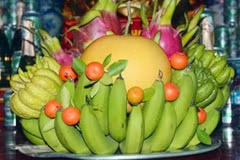
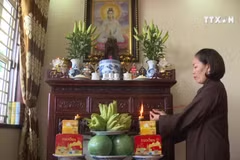
A “Mam Ngu Qua” or five-fruit tray is indispensable for each Vietnamese family as among the numerous offerings that are required to decorate ancestral altars during the traditional Lunar New Year (Tet) festival.
During the Lunar New Year (Tet) festival, each ethnic group in Vietnam has its own culinary specialties that reflect the culture of their people and are used as offerings to worship their ancestors.
The 15th day of the 7th lunar month is known as Vu Lan festival which is dedicated to both parents who living and those who have passed away. This year the festival falls on August 15.
Epics are stories describing the early days of an ethnic group. They talk about the valour of the group’s ancestors in fighting with adversaries and struggling to survive in the wild.
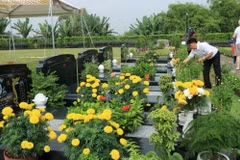
Whenever the Lunar New Year (Tet) comes, normally from the 23rd of the last month of the lunar year to the New Year eve, Vietnamese families visit their ancestors’ tombs and clean gravesites.
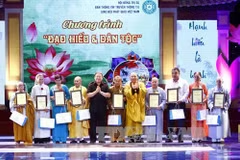
An event, entitled “Dao Hieu va Dan Toc” (Filial Piety and Nation), took place at the Hanoi Opera House on August 31 to celebrate the Buddhist festival of Vu Lan, or Ghost Festival, a time for Vietnamese people to show gratitude to their parents and the deceased.
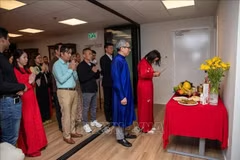
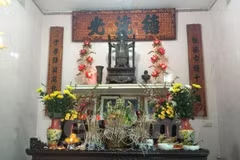
Worshipping ancestors, an ancient Vietnamese tradition, is a ritual practice paying tribute to deceased family members and reminding people of their roots.
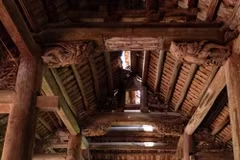
A 19th century communal house dedicated to Vietnamese people’s ancestors – the 18 Hung kings - in the northern province of Vinh Phuc is in poor condition.
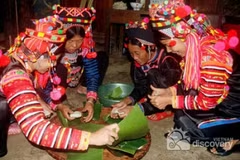
The Ha Nhi people in northern mountainous Dien Bien province celebrate their traditional New Year festival (Tet) on the first dragon day in December, which fell on December 11, 2015.
Whenever the Lunar New Year (Tet) comes, normally from the 23rd of the last month of the lunar year to the New Year eve, Vietnamese families visit their ancestors’ tombs and clean gravesites.