Thang Long Imperial Citadel to evoke Hanoi’s timeless Tet

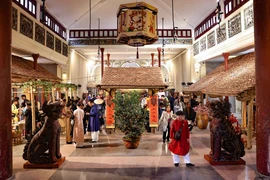
Sprawling across more than 7,000 sq.m, the event grounds will be artfully transformed into a living tableau of classic Tet scenes drawn from Hanoi and other regions.

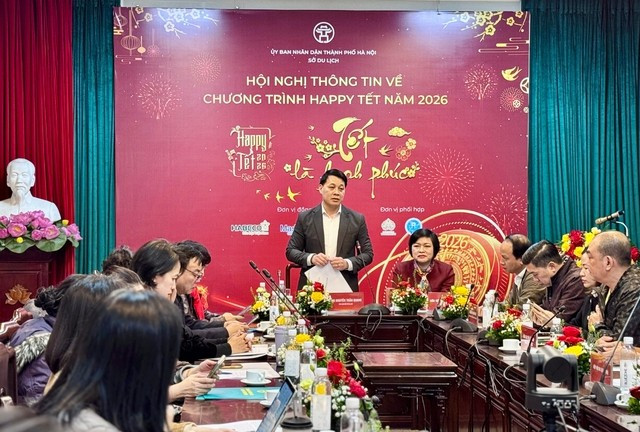
Deputy Director of the Hanoi Tourism Department Nguyen Tran Quang announces the event at a conference on January 21. (Photo: chinhphu.vn)

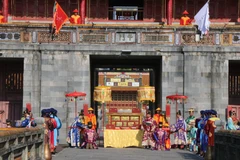
Hanoi (VNA) – Nestled in the heart of Hanoi and steeped in more than a millennium of history, the majestic Thang Long Imperial Citadel, a UNESCO World Heritage site, will once again become a stage for the city’s cherished annual Happy Tet festival, running from February 6 to 10, the 19th to 23rd day of the 12th lunar month.

Announced by the municipal Tourism Department on January 21, the event promises to envelop residents, domestic travellers and international visitors in the refined warmth and profound meaning of traditional Vietnamese Tet, said its Deputy Director Nguyen Tran Quang.

The organising board is extending welcome to foreign dignitaries, businesses, organisations, expatriate communities living in Hanoi, and international students to join the event. Through a wide range of immersive activities, Happy Tet 2026 aims to awaken, especially among the youth, a deeper appreciation for Vietnam’s irreplaceable cultural heritage while quietly advancing sustainable tourism.

Sprawling across more than 7,000 sq.m, the event grounds will be artfully transformed into a living tableau of classic Tet scenes drawn from Hanoi and other regions. Every corner marries authentic cultural elements with engaging moments and refined tourism experiences, creating an irresistible draw for both locals and visitors from afar.

The February 6 evening will see the grand opening ceremony, with distinctive art performances, a formal ritual, and guided journeys through beautifully curated spaces devoted to Vietnam’s Tet customs, festive cuisine, and cultural activities.

A rich array of experiential spaces awaits. The Spring Market will conjure the bustle of pre-Tet shopping with clouds of peach blossom, kumquat and apricot trees, artfully arranged holiday gifts, delicate handicrafts and treasures sourced directly from Vietnam’s traditional craft villages.

In the “Flavours of Tet” enclave, guests are invited to savour Hanoi’s distinctive food and regional variations, rolling up their sleeves to craft “banh chung” (square glutinous rice cake), compose traditional holiday trays, and receive auspicious New Year calligraphy.

The “Spring Convergence” zone, meanwhile, will turn the spotlight on Hanoi’s most captivating destinations, heritage locations, and time-honoured festivals, while offering encounters with living crafts, including Bat Trang ceramics, Ha Thai lacquerware, Phu Vinh bamboo and rattan weaving, Thuy Ung horn combs, and Xuan La folk figurines.

Elsewhere, areas dedicated to folk games and community activities such as tug of war, swinging, “con” throwing, human chess, and folk figurine molding will add to the vibrant spring atmosphere.

The event will blend digital innovations, including livestreams, digital check-ins, 360-degree VR experiences, and AI-guided explorations of Tet traditions and Hanoi, providing modern ways to engage with heritage and boost interactivity for younger visitors.

In partnership with the Thang Long – Hanoi Heritage Conservation Centre, the department will stage a reenactment of the traditional "neu" pole-erecting ceremony, one of Vietnam’s most symbolic rituals.

Further delights will await in workshops: preparing candied fruits, making traditional pork rolls, practicing the art of calligraphy, and learning about family Tet customs.

Happy Tet 2026 is to receive support from numerous businesses, organisations, artisans, and tourism associations./.
VNA

See more

Illustrative photo (Photo: VNA)

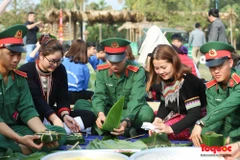
Tet gifts, chung cake made for disadvantaged people

Beyond its charitable significance, the programme also aims to introduce domestic and international visitors to the unique cultural values of Vietnam’s traditional Tet, while raising public awareness, particularly among younger generations, of the responsibility to preserve and promote the cultural identities of Vietnam’s ethnic groups.

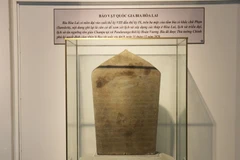
The Hoa Lai stele, a national treasure, is currently on display at the Khanh Hoa provincial Museum's Branch 2 in Phan Rang ward. (Photo: VNA)

Breathing new life into Cham cultural heritage in Khanh Hoa

With its ancient temple towers, lively festivals, craft villages, and rich cultural heritage, both tangible and intangible, Cham culture in the south central province of Khanh Hoa is not only a long-standing historical treasure but is also being actively promoted alongside tourism and community livelihoods, bringing fresh energy to Cham heritage in modern life.

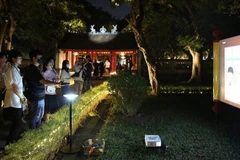
Visitors take part in a night tour at the Temple of Literature (Van Mieu – Quoc Tu Giam) in Hanoi. (Photo: nhandan.vn)

Heritage seen as economic driver through tourist attractions

Technology has opened up new approaches to heritage preservation and promotion. At sites such as the Temple of Literature, Hanoi’s Old Quarter and the Thang Long Imperial Citadel, night tours featuring creative lighting, immersive storytelling and extended reality (XR) applications have expanded visitors’ experiences and reimagined how heritage can be explored.

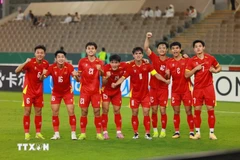
The joy of U23 Vietnam players after the victory. (Photo: Asian Football Confederation)

U23 Vietnam fuel Asian dream with dramatic semi-final run

Vietnam U23's hard-fought victory over UAE in the 2026 AFC U23 Asian Cup quarterfinals sent the Southeast Asian representative into the semi-finals and drew praise from the official fanpages of FIFA and the Asian Football Confederation (AFC).

Le Y Linh, a music researcher living and working in France (Photo: VNA)

14th National Party Congress expected to continue affirming culture as pillar of Vietnam’s soft power

Talking to a Vietnam News Agency correspondent in Paris, Le Y Linh, a music researcher living and working in France, said culture should be placed on an equal footing with other sectors in the country’s development strategy. According to her, investment in culture should go beyond preservation and be closely linked with creativity, so that cultural values are not only safeguarded but also continue to evolve in contemporary life.

A view of the international conference in Ninh Binh province, which sets course for UNESCO nomination of the Tam Chuc Pagoda Complex and the Van Long Wetland Nature Reserve. (Photo courtesy of Ninh Bình Provincial People’s Committee)

Vietnam advances UNESCO nomination of Tam Chuc – Van Long Complex

During the conference, delegates examined a wide range of themes, including geology, geomorphology and biodiversity; cultural values such as history, archaeology and intangible heritage; human adaptation; site integrity, boundaries and management challenges; and a roadmap for nominating the Van Long – Tam Chuc wetland karst area as a World Heritage Site.