Triumph of August Revolution inspires great hope among oppressed nations: Japanese scholar

Prof. Shimizu said he believes that the spirit of the August Revolution is not only a part of history but also a long-term “spiritual asset” guiding Vietnam in the era of globalisation. The August Revolution - marking the birth of an independent state - remains a powerful symbol of Vietnam’s enduring aspiration to advance through its intrinsic strength.

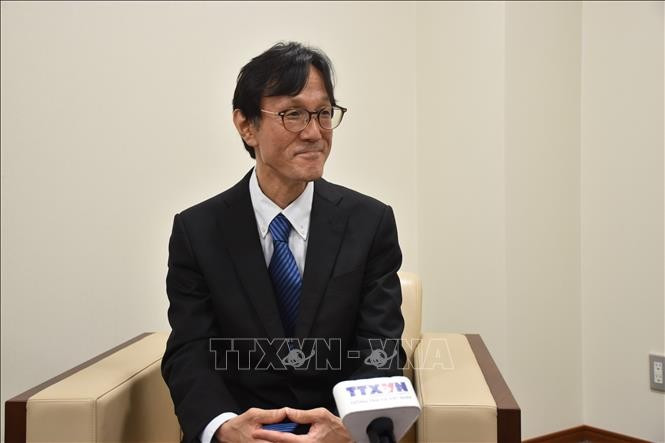
Prof. Shimizu from Japan’s Osaka University. (Photo: VNA)

Tokyo (VNA) - Prof. Shimizu from Japan’s Osaka University has highlighted the historical significance of the August Revolution and the establishment of the Democratic Republic of Vietnam in 1945, noting that the ability of a small nation to achieve independence from Western powers provided great hope and courage to other oppressed peoples.

Talking to Vietnam News Agency correspondents in Japan on the 80th anniversary of the August Revolution (August 19, 1945 – 2025) and Vietnam’s National Day (September 2, 1945), Shimizu highlighted his admiration for President Ho Chi Minh’s exceptional political talent and strategic vision, noting how skillfully he seized the international context after World War II, especially the “power vacuum” following Japan’s surrender and the weakening control of France, to unite the entire Vietnamese people.

He held that the success of the August Revolution and the establishment of the Democratic Republic of Vietnam hold immense and indisputable significance, as they instilled a spirit of national independence and the Vietnamese people’s aspiration for self-determination.

According to the expert, during this period, President Ho Chi Minh not only declared independence but also made a creative decision: adopting Quoc Ngu, a Latin-based script, as the primary written tool for Vietnamese instead of the complex Chinese characters or Nom scripts. At a time when literacy rates were low and Chinese and French languages dominated, this choice became a powerful tool for the Vietnamese people to understand revolutionary ideals and policies, enabling their active participation. By using writing to raise public awareness, President Ho Chi Minh successfully transformed the independence movement into a nationwide movement.

Regarding the impact of the August Revolution in the regional and international context, Prof. Shimizu stated that the Vietnamese people’s revolution sparked a wave of national liberation across Asia and other colonial countries, holding immense significance at the time. It symbolised the collapse of colonial regimes after World War II, demonstrating that a small nation could achieve independence from Western powers, inspiring hope and courage for other oppressed peoples across Asia.

This achievement conveyed a clear message to the global community that colonialism was over and signified a pivotal moment in shaping a new world order.

The August Revolution not only transformed Vietnam’s history but also played a key role in promoting the wave of decolonisation, becoming a pivotal moment in the world history, he said, noting its greatest legacy is the spirit of national independence and the people’s aspiration to determine their destiny — an enduring principle in Vietnam’s nation-building and preservation from 1945 to the present.

Notably, over the past 80 years, despite war, blockades, the “Doi moi” (renewal) process and international integration, Vietnam has maintained a foreign policy of independence and self-reliance, reflecting the spirit of “daring to rise”, which helped the country evolve from a poor and post-colonial nation into an active member of ASEAN, the UN, and the World Trade Organisation, and many new-generation free trade agreements.

Prof. Shimizu said he believes that the spirit of the August Revolution is not only a part of history but also a long-term “spiritual asset” guiding Vietnam in the era of globalisation.

The August Revolution - marking the birth of an independent state - remains a powerful symbol of Vietnam’s enduring aspiration to advance through its intrinsic strength, the expert said./.
VNA

See more

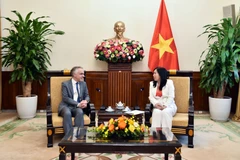
Minister of Foreign Affairs Le Hoai Trung (R) and outgoing Mongolian Ambassador Jigjee Sereejav. (Photo: VNA)

Foreign Minister hosts outgoing Mongolian Ambassador

Affirming Vietnam’s high regard for Mongolia and their longstanding friendship, Minister of Foreign Affairs Le Hoai Trung called for closer coordination to further develop the Comprehensive Partnership.

Deputy Minister of Foreign Affairs Le Thi Thu Hang (R) meets with Irish Ambassador to Vietnam Deirdre Ní Fhallúin in Hanoi on April 21. (Photo: baoquocte.vn)

Vietnam, Ireland seek ways to step up bilateral cooperation

Hang proposed the two sides further strengthen political trust, increase high-level and all-level exchanges, and organise youth, student and cultural activities to mark the upcoming anniversary. The Deputy Minister also called on Ireland to soon ratify the EU–Vietnam Investment Protection Agreement (EVIPA), which would create fresh momentum for economic cooperation.

Vietnamese Ambassador to the Czech Republic Duong Hoai Nam speaks at the event. (Photo: VNA)

Foreign policy drives Vietnam’s development momentum in new era: Diplomat

The ambassador highlighted that after four decades of Doi Moi, Vietnam now ranks among the world’s 35 fastest-growing economies. The country has signed and implemented 17 free trade agreements, positioning itself as an important economic hub in the Asia-Pacific, while attracting 38.42 billion USD in registered foreign direct investment.

President of the Republic of Korea (RoK) Lee Jae Myung and his spouse arrive in Hanoi on April 21 afternoon. (Photo: VNA)

Korean President arrives in Hanoi, beginning state visit to Vietnam

The visit is expected to become a special milestone in the 34-year history of diplomatic relations between the two countries, marking the starting point for a strategic leap forward in the bilateral ties amid evolving global dynamics, according to Korean Ambassador to Vietnam Choi Young Sam.

Vietnamese Ambassador to Thailand Pham Viet Hung (middle) at the discussion. (Photo: VNA)

Vietnam pushes people-centred priorities for Asia-Pacific at UNESCAP

Vietnam remains firmly committed to multilateralism and the United Nations’ central role in global governance. It appreciates UNESCAP’s role in translating global commitments into concrete regional action and cooperation, sharing best practices, supporting evidence-based policymaking and tackling emerging challenges.

Vietnamese Ambassador to New Zealand Phan Minh Giang (L), who is concurrently in charge of Samoa, presents his credentials to Head of the Independent State of Samoa Tuimalealiifano Va’aletoa Sualauvi II in Apia on April 21. (Photo: VNA)

Vietnam seeks to deepen ties with South Pacific partners

The diplomat voiced his confidence that with joint efforts, bilateral relations will continue to grow, particularly in areas of shared interest and strength. He also underscored the importance of enhancing coordination and mutual support at regional and international multilateral forums.

Party General Secretary and State President To Lam, and leaders of Ha Tinh province. (Photo: VNA)

Ha Tinh must leverage advantages, ignite growth aspiration: Top leader

During a local working session with the standing board of the provincial Party Committee on April 21, Party General Secretary and State President To Lam urged Ha Tinh to fully recognise both the responsibility and honour of a land rich in tradition, thereby fueling an even stronger development drive.

A high-ranking military delegation from the Vietnamese Ministry of National Defence visits an exhibition booth (Photo: Ministry of National Defence)

Vietnam attends defence services, security exhibitions in Malaysia

This year’s exhibitions feature 15 thematic categories, highlighting modern military products such as aircraft, warships, armoured vehicles, man-portable low-range missile systems, anti-aircraft gun systems, laser weapons, as well as various types of ammunition, military uniforms, and logistics equipment serving defence purposes.

A view of the 16th National Assembly's first session (Photo: VNA)

16th NA reviews amendments to four tax-related laws on April 21

Lawmakers are expected to discuss the supplementary assessment of the implementation of the 2025 socio-economic development plan and state budget, as well as performance in the early months of 2026. They will also review the five-year socio-economic development plan for 2026–2030, thrift practices and anti-wastefulness efforts in 2025, and progress in achieving national gender equality targets. The session is broadcast live on radio and television, enabling voters and the public to follow proceedings.