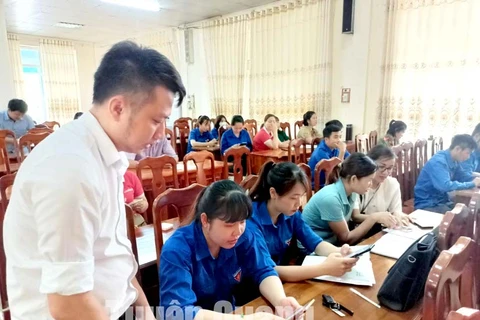
At the conference (Photo: https://tuyenquang.dcs.vn)
 Tuyen Quang (VNA) - A conference to review the implementation of Resolution No.29-ND/TW of the 11th Party Central Committee on fundamental and comprehensive innovation in education and training, serving industrialisation and modernisation in the socialist-oriented market economy during international integration in the northern province of Tuyen Quang over the last ten years was held recently by the provincial Party Committee.
Delegates highlighted achievements during the scheme, clarified the existing shortcomings and limitations, and lessons and experience in implementing the resolution.
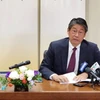
Secretary of the provincial Party Committee Chau Van Lam asked for more measures to further improve the quality of education and training in association with high-quality human resources development to serve the locality’s socio-economic development.
 Secretary of the provincial Party Committee Chau Van Lam speaks at the conference (Photo: https://tuyenquang.dcs.vn/)
 He underlined the need to continue maintaining and improving the quality of education at all levels associated with effectively implementing the human resources development plan for the 2021-2025 period, with a vision to 2030.
Attention should be paid to developing high-quality human resources in connection with promoting application of science and technology; enhancing linkages between vocational training institutions and enterprises; linking vocational training with socio-economic development projects and programmes of the province, he stressed.
The local authorities will continue to promote the socialisation of education and increase autonomy in education and training institutions; mobilise the participation of the whole society to increase investment in developing infrastructure facilities and support the operation of education and training institutions, Lam said.
The locality has always encouraged and promptly praised education managers and teachers, especially teachers working in difficult, remote and isolated areas, he added.
After 10 years of implementing the resolution, the system of all-level education and training institutions in Tuyen Quang has been completed, especially semi-boarding and boarding schools for students from ethnic minority groups.
Tuyen Quang is home to 461 preschools and high schools and 40 semi-boarding and boarding schools for ethnic minorities, with 257 ones (or 55.7%) meeting national standards.
Non-public education has developed and operated effectively in line with the educational development trend.
From 2013-2023, as many as 3,384 local students won prizes at the provincial Excellent Student Competition, while 232 others were honoured in the National Excellent Student Competition.
In 2023, Tuyen Quang ranked 23rd nationwide in terms of quality at the National Excellent Student Competition. One project of local students participated in the International Science Technology Engineering Competition in the US.
On this occasion, the Chairman of the provincial People's Committee presented certificates of merit to 26 organisations and 30 individuals in recognition of their achievements in implementing the resolution./.