UNFPA calls for prioritizing sexual and reproductive health and rights for all (Source: UNFPA)
Hanoi (VNA) - UNFPA Representative in Vietnam Naomi Kitahara has granted an interview to the Vietnam News Agency on the occasion of the World Population Day (July 11).
The following is the full text of the interview.
Q1: Please share with us the key message of the World Population Day this year?
A1: In this second year of COVID-19, we are in an in-between state, where parts of the world are emerging with a relief and a hope to go back to the normalcy, while others are still in a battle with the coronavirus.
The COVID-19 pandemic has overwhelmed health care systems, affecting the availability of information and services in sexual and reproductive health. While those with access to sexual and reproductive health services historically delay childbearing in times of fiscal uncertainty or crisis, disruptions in the supply of contraceptives coupled with lockdowns are predicted to result in a sharp rise in unplanned pregnancies for the most vulnerable populations. According to UNFPA research in March, an estimated 12 million women globally experienced disruptions to family planning services.
The pandemic also exposed and exacerbated gender-based inequalities in the world: gender-based violence increased under lockdown, as did the risk of child marriage and harmful practices against women and girls. Significant numbers of women left the labour force – their often low-paying jobs were eliminated or caregiving responsibilities for children learning remotely or for homebound older people increased – destabilizing their finances, not just for now but in the long run.
This year, to mark the World Population Day on 11 July, UNFPA globally calls for prioritizing sexual and reproductive health and rights for all through access to information and services in the face of fertility and demographic shifts. During the pandemic, disruptions in sexual and reproductive health services are aggravated where such services are deemed inessential. There are fears that the crisis could be exploited as an excuse for restricting or failing to support women’s and girls’ decision making, freedom of movement or access to health services. At this critical juncture, we celebrate the World Population Day with the theme “Rights and Choices are the answer: Whether baby boom or bust, the solution lies in prioritizing the reproductive health and rights of all people.”
Since the onset of the pandemic, UNFPA has effectively worked with government partners such as the Ministry of Health, the Ministry of Labour-Invalid and Social Affairs, the Ministry of Home Affair, mass organizations and civil society organizations as well as the private sector to support the ongoing provision and utilization of SRH services for vulnerable populations, particularly amid humanitarian crisis such as serial floods and landslides in central provinces last year. In the coming years, we will continue our innovative interventions aiming at reducing maternal mortality and unmet need for family planning for ethnic minorities, migrant workers, vulnerable youths and people with disabilities.
The following is the full text of the interview.
Q1: Please share with us the key message of the World Population Day this year?
A1: In this second year of COVID-19, we are in an in-between state, where parts of the world are emerging with a relief and a hope to go back to the normalcy, while others are still in a battle with the coronavirus.
The COVID-19 pandemic has overwhelmed health care systems, affecting the availability of information and services in sexual and reproductive health. While those with access to sexual and reproductive health services historically delay childbearing in times of fiscal uncertainty or crisis, disruptions in the supply of contraceptives coupled with lockdowns are predicted to result in a sharp rise in unplanned pregnancies for the most vulnerable populations. According to UNFPA research in March, an estimated 12 million women globally experienced disruptions to family planning services.
The pandemic also exposed and exacerbated gender-based inequalities in the world: gender-based violence increased under lockdown, as did the risk of child marriage and harmful practices against women and girls. Significant numbers of women left the labour force – their often low-paying jobs were eliminated or caregiving responsibilities for children learning remotely or for homebound older people increased – destabilizing their finances, not just for now but in the long run.
This year, to mark the World Population Day on 11 July, UNFPA globally calls for prioritizing sexual and reproductive health and rights for all through access to information and services in the face of fertility and demographic shifts. During the pandemic, disruptions in sexual and reproductive health services are aggravated where such services are deemed inessential. There are fears that the crisis could be exploited as an excuse for restricting or failing to support women’s and girls’ decision making, freedom of movement or access to health services. At this critical juncture, we celebrate the World Population Day with the theme “Rights and Choices are the answer: Whether baby boom or bust, the solution lies in prioritizing the reproductive health and rights of all people.”
Since the onset of the pandemic, UNFPA has effectively worked with government partners such as the Ministry of Health, the Ministry of Labour-Invalid and Social Affairs, the Ministry of Home Affair, mass organizations and civil society organizations as well as the private sector to support the ongoing provision and utilization of SRH services for vulnerable populations, particularly amid humanitarian crisis such as serial floods and landslides in central provinces last year. In the coming years, we will continue our innovative interventions aiming at reducing maternal mortality and unmet need for family planning for ethnic minorities, migrant workers, vulnerable youths and people with disabilities.

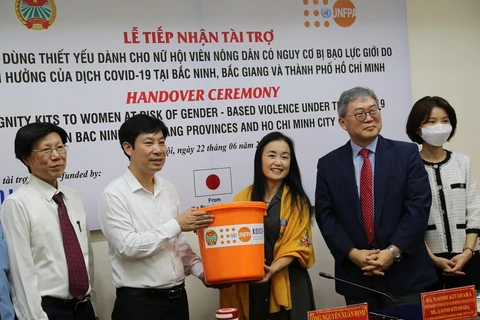
Dignity kits handover: UNFPA supports women and girls who are at high risk of gender-based violence.(Source: UNFPA)
Q2: According to the 2019 Population and Housing Census, the Sex Ratio at Birth in 2019 is 111.5 boys/100 girls. This shows the serious imbalance in Vietnam. What are UNFPA interventions and recommendations to Vietnam to overcome this status?
A2: The 2019 Population and Housing Census has confirmed the presence of considerable sex imbalance at birth in Viet Nam, which was first detected 15 years ago. The sex ratio at birth in Viet Nam is estimated at 111.5 boys per 100 girls in 2019, against the naturally and biologically “normal” level of 105 boys per 100 girls. Viet Nam’s SRB is the third highest in Asia following China and India. The current situation even points to the estimation that about 45,900 female births are missing per year. Pre-natal sex selection is largely compounded with the concept of son preference, which is deeply rooted in the traditional culture in many countries in the world including Viet Nam.
Therefore, one of the key UNFPA interventions in Viet Nam is to support relevant Government Ministries and agencies as well as the civil society organisations to launch nation-wide behaviour-change communications campaigns to challenge the socio-cultural norms, promote the value of girls, and engage men and boys, religious and local leaders, and mass organisations in communication activities.
Changing people’s behaviours and attitudes cannot be achieved overnight. UNFPA calls for more policy agenda and interventions to address gender inequality, especially gender-based discrimination within the family. It is also necessary to promote women’s empowerment and value of girls in the eyes of parents and communities, improve women’s access to legal assistance, engage men to establish new family practices, and stop discrimination against women and girls.
UNFPA also calls for continued enforcement of the regulation on penalties for gender-biased sex determination and gender-biased sex selection. Currently, Viet Nam is one of the countries implementing the Global Programme on Addressing Gender Biased Sex Selection and related harmful practices in Asia (2020-2022), which is co-funded by the Norwegian Agency for Development Cooperation (Norad) and UNFPA. This programme aims at building on and strengthening evidence-based national policies and programmes to address son preference, low value of girls and gender inequality resulting in gender-biased sex selection.
It is clear that gender-biased sex selection happens when fertility declines and fertility is limited. As a guardian of the International Conference on Population and Development (ICPD), UNFPA thinks it important that policies be fully in line with the ICPD principles where “individuals and couples are able to choose freely and responsibly the number, spacing and timing of having children (ICPD Principle 8 and ICPD PoA para 7.3)”. While Viet Nam’s population programmes have been successful and yielded exceptional results in the past decades, now is the time to introduce flexibility in reproductive choices, particularly given the fact that Viet Nam has been successful in achieving socio-economic growth and gained a Middle-Income Country (MIC) status.
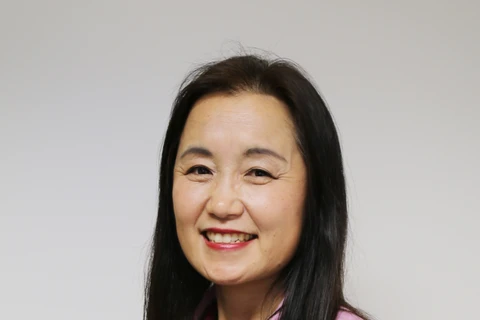
 UNFPA Representative in Vietnam Naomi Kitahara (Source: UNFPA)
 Q3: The older persons are the most vulnerable population groups in the context of COVID-19. What are UNFPA recommendations and support to help Vietnam protect more than 11 million older persons, accounting for 11.95% of the population?
A3: The older persons, particularly the elderly women and those with disabilities, are most at risk to, and disproportionately affected by a crisis and emergency situations such as COVID-19. About 95% of older people have underlying, and chronic, health conditions, which make them susceptible to the negative effect of the COVID-19 pandemic. Social distancing and other COVID-19 prevention and protection measures could interrupt the health and care services for older people, posing particular challenges for those elderly people with disabilities. Social distancing also means reduced staff availability in institutional care facilities for older persons and the isolation of the elderly, making it more difficult to obtain essential information, goods and services.
The population ageing is progressing fast in Viet Nam. In 2020, the Vietnam’s population was estimated at over 97.2 million in which older people aged 65 and above accounted for 8.0% (7.78 million people). It is estimated that by 2036, Vietnam will become an aged country where those aged 65 and above will be 14% of the total population.
In this context, it is critical that social protection and essential services for older people are to be extended and not interrupted in times of crisis. UNFPA urges for the development of the legal and policy framework adopting a life-cycle and gender transformative approach for the protection of individuals from youth to old age, and their empowerment and social inclusion in development and humanitarian settings, particularly with regard to access to high quality health care, prevention and response to domestic violence, employment opportunities, and financial security.
We also recommend to develop an elderly care ecosystem at the communities which could provide a range of options for each stage of elderly care suitable to meet the special and individual needs of older people, with focus attention to vulnerable groups such as ethnic minorities, people with disabilities, and survivors of domestic violence.
It is important to promote a life-cycle approach to ageing, facilitating integrational linkages in supporting older people, and encouraging the involvement of both the public and private sectors in the provision of care services for the elderly, applying digital technology. This would include empowering older persons and ensuring older people’s access to digital technology. As part of the life-cycle approach, young people also require support for a long-term life planning in preparation for old-age./.
VNA