Urban development must adapt, help combat climate change: experts

It is necessary to increase tree coverage to reduce the effect of heat-induced problems and increase the absorption of greenhouse gas emissions in urban areas in order to contribute to realising the target of net-zero emissions by 2050, according to Nguyen Tuan Quang from the Ministry of Natural Resources and Environment (MoNRE).
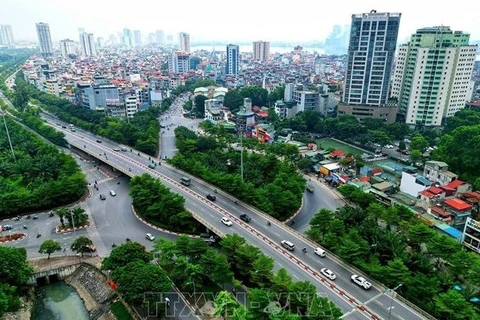
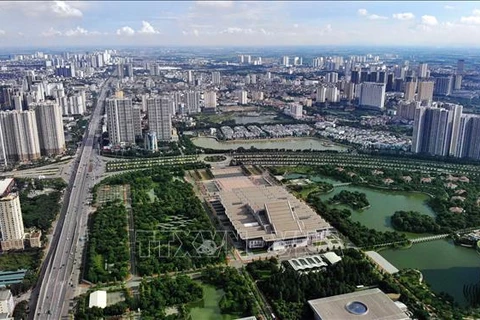
Urban development must adapt, help combat climate change: experts ảnh 1Illustrative image (Photo: VNA)
HCM City (VNS/VNA) - It is necessary to increase tree coverage toreduce the effect of heat-induced problems and increase the absorption ofgreenhouse gas emissions in urban areas in order to contribute to realising thetarget of net-zero emissions by 2050, according to Nguyen Tuan Quang from theMinistry of Natural Resources and Environment (MoNRE).

Reports showed that Vietnam has more than 860 urban areas, and the urbanisationrate increased to nearly 40% in 2021.

Urban areas are an important driving force for socio-economic development,speeding up economic restructuring towards industrialisation and modernisation.

However, the rapid development of urban areas leads to overpopulation, anincrease of economic development activities, high traffic density and energyconsumption, and is consequently a huge source of greenhouse gas emissionswhich is the cause of climate change.

Cities account for two-thirds of total energy consumption and 70% of greenhousegas emissions, so they play a vital role in efforts to reduce global greenhousegas emissions and protect the environment, experts said.

Quang, deputy head of MoNRE’s Department of Climate Change, said coastal citiesare often affected by storms, high tides, extreme rain, floods and risingsea-levels.

Cities near high mountains face risks of landslides and flash floods afterheavy rains.

For urban areas combined with industrial parks and economic zones, the impactof climate change and natural disasters can disrupt the circulation of goodsand materials, affecting the overall economy.

Sharing the same view, Ngo Minh Hung and Le Thi Kim Oanh from Van LangUniversity said the strong urbanisation process in developing countries has ledto worsening environmental pollution, adding that the impact of climate changemake urban governance more difficult.

Scarcity of water supply, heat, urban flooding and wastewater-related issueshave been affecting lives and socio-economic conditions in urban areas.

The solution of a carbon-neutral urban model is a new trend to promotesustainable environmental development in the country, they said.

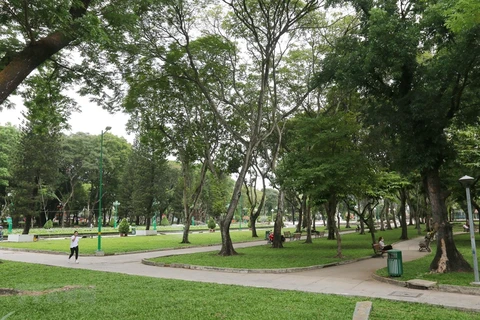
It is necessary to prioritise the implementation of a number of governancepolicies to reduce greenhouse gas emissions in urban areas, such as promotingthe use of public transport and limiting the use of private vehicles, usingland resources economically and efficiently, developing ecological parks, andcreating more urban green spaces and landscapes.

Duong Thi Thuy Nga from the University of Science under Vietnam NationalUniversity-HCM City said tall buildings that block wind, a large population, ahigh number of vehicles and carbon emissions are also contributing to theincrease of the urban heat island effect in HCM City and other large cities in Vietnam.

They are causing heat waves with some of the highest recorded temperatures everin the country, affecting public health.

Mai Quoc Buu from Van Lang University said green projects and buildings inurban areas not only have green trees on the roof, but also use eco-friendlyconstruction materials.

“They must be designed in the direction of reducing energy and intensifying theadoption of clean and green energy,” he said.

Quang said that sectors and localities should promote the efficient use ofenergy, apply renewable energy solutions in production, traffic and urbanlighting as well as recycling waste and wastewater in line with the circularmodel, and produce energy from waste, while ensuring urban developmentassociated with environmental protection and climate change adaptation.

Upgrading traffic works in areas vulnerable to climate change, constructing buildingsand urban areas in accordance with green standards and close to nature, andapplying energy efficiency standards in buildings are also needed, he added./.
VNA
See more

Illustrative photo (Photo: VNA)

Vietnam accelerates adoption of sustainable aviation fuel

In Vietnam, airlines, fuel suppliers and energy companies have begun collaborating to deploy SAF on commercial flights, demonstrating that key links in the fuel value chain—from production and supply to operation—are gradually taking shape.

Vietnam's 12 world biosphere reserves underscore commitment to environmental protection and sustainable development (Photo: VNA)

Vietnam's 12 world biosphere reserves showcase commitment to environmental protection, sustainable development

On June 5, 2026, the 38th session of the International Coordinating Council of UNESCO's Man and the Biosphere Programme (MAB-ICC 38) officially designated Vietnam's Phong Nha–Ke Bang National Park as a member of the World Network of Biosphere Reserves (WNBR). The recognition marks another milestone in the country's conservation efforts, bringing its total number of UNESCO-designated World Biosphere Reserves to 12.

The rare spot-billed pelicans reappear at Tram Chim National Park in Dong Thap province after a six-year absence. (Photo: VNA)

Wildlife protection drive delivers encouraging conservation gains

Implemented under Plan 628, a joint initiative between the Ministry of Public Security and the Ministry of Agriculture and Environment, the campaign marks a shift towards a more coordinated and long-term approach to protecting wildlife and natural resources.

Recognising the maritime economy as one of its strategic pillars, Da Nang city aims to develop into a world-class coastal megacity (Photo: VNA)

Strong maritime nation takes shape through blue future

The vision of a strong maritime nation will be reflected in green ports, offshore wind farms, thriving coastal communities, restored mangrove forests, sustainable coastal cities, resilient island outposts and generations of Vietnamese equipped with ocean knowledge and a deep sense of responsibility for the nation’s maritime future.

A Vietnamese pheasant chick born at Pairi Daiza Zoo in Belgium (Photo: published by VNA)

Vietnamese pheasants successfully hatched at Belgian zoo

The chicks were born at Pairi Daiza’s Oasis greenhouse following a carefully monitored breeding and care programme. According to the International Union for Conservation of Nature (IUCN), the Vietnamese pheasant is classified as Critically Endangered and may already be extinct in the wild.

An endangered Asian elephant in the wild in the Central Highlands region in Vietnam. (Photo courtesy of Animals Asia)

Conservation project set to protect endangered elephant herds

WWF VN said the non-refundable grant worth 23.9 billion VND (908,000 USD) will help provide conservation and protection solutions for the wild elephant community, including by creating safe migratory corridors, improving habitat and reducing conflict between humans and wildlife.

The national campaign launched to mobilise public action for a greener, cleaner and more beautiful Vietnam. (Photo: VNA)

National environmental protection campaign calls for public action

Hoai stressed that protecting the environment is a shared responsibility of authorities, businesses, organisations and citizens, calling on the public to adopt practical measures such as reducing litter, limiting single-use plastics, conserving resources, planting trees and sorting waste at source.

Members of the “Kindness for Sa Can” project collect plastic waste at the Sa Can estuary in Quang Ngai province. (Photo: VNA)

Front calls on entire people to join hands in environmental protection campaign

In the appeal, the VFF Central Committee's Presidium noted that environmental protection has been identified by the Party and State as a strategic priority. The 14th National Party Congress highlighted the need to harmonise economic, cultural and social development with environmental protection and improvements in living standards.

Officers release the rare elongated tortoise (Indotestudo elongata) back into its natural habitat in the Ta Thiet historical forest area. (Photo: VNA)

Rare elongated tortoise released into the wild in Dong Nai

The elongated tortoise is one of the most beautiful and rare terrestrial tortoise species, listed in both the Vietnam Red Data Book and the International Union for Conservation of Nature (IUCN) Red List of Threatened Species. It typically inhabits tropical and subtropical forests and plays an important role in maintaining ecological balance. However, due to illegal trade and habitat loss, its wild population has been declining sharply.

Cai Khe ward of Can Tho city is under water after a storm (Photo: VNA)

Can Tho pushes JICA-funded drainage project to deliver results in 18 months

The Japan International Cooperation Agency (JICA)-funded technical cooperation project on drainage management for climate resilience in Can Tho aims to improve planning capacity for wastewater collection, enhance operations and management of existing treatment plants, and the city’s ability to run public awareness campaigns.

Plastic waste poses a growing challenge to communities and societies around the world, including Vietnam. (Illustrative photo: VNA)

Wide range of activities planned for 2026 environment and marine awareness campaign

A series of environmental and marine-related events to held in the central province of Nghe An from June 4-6 will generate a broad social impact, helping transform awareness into action and commitments into concrete results, and contributing to Vietnam’s goals of green growth, circular economy development, net-zero emissions and harmonious coexistence between people and nature.