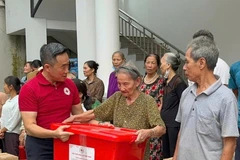
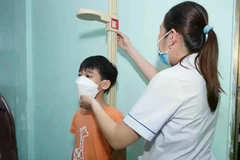
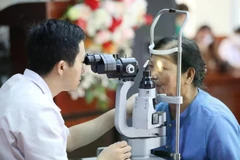
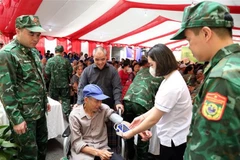
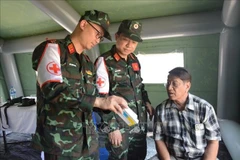
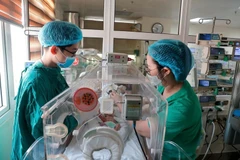
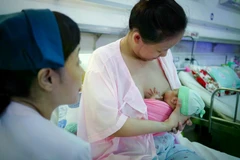
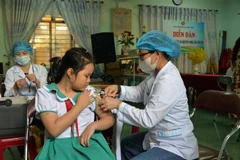
A mobile COVID-19 vaccination site in Dak Lak province. (Photo: VNA)
Hanoi (VNA) – With the initial experience gained during the fourth wave of COVID-19 infections, the healthcare system’s response capacity has been increasingly improved. Particularly, the vaccine strategy has proved effective. Vietnam now can take more proactive moves to shift its anti-pandemic strategy, Minister of Health Nguyen Thanh Long said.
Speeding up efforts to seek vaccine supplies
Given the complex and unpredictable developments of COVID-19, Vietnam identified the vaccine strategy as the key to curb the pandemic and revive the economy.
Since the start of the pandemic, the Politburo, the Party Central Committee’s Secretariat, the Government, the Prime Minister, and the National Steering Committee for COVID-19 Prevention and Control have comprehensively directed the fight against the disease, including the implementation of a vaccination campaign nationwide. The vaccine strategy is viewed as a decisive “front.”
To extend vaccine coverage, vaccine diplomacy is identified as a spearhead that capitalises on bilateral and multilateral relations to enhance people’s access to vaccines.
An unprecedented diplomatic campaign has been promoted at all levels, involving leaders of the Party, State, Government, National Assembly, Ministry of Foreign Affairs, Ministry of Health, relevant agencies, and more than 90 diplomatic representative offices of Vietnam abroad.
An important milestone of vaccine diplomacy was reached when Prime Minister Pham Minh Chinh signed a decision on the establishment of the Government’s working group on vaccine diplomacy on August 13, 2021.
The Party General Secretary, State President, Prime Minister, and National Assembly Chairman have paid attention to and directly engaged in bilateral and multilateral diplomatic activities. These include holding phone talks and sending letters to leaders of other countries, international organisations, and vaccine producers, so as to secure vaccine supplies for Vietnam as soon as possible.
Efforts have been strengthened since the very beginning of the pandemic. Vaccine diplomacy is opening up a direction for international health cooperation to safely live with the pandemic.
During a tour of Europe, National Assembly Chairman Vuong Dinh Hue attended the Fifth World Conference of Speakers of Parliament in Austria from September 5 to 11. He paid working visits to the European Parliament and Belgium, and made an official trip to Finland. Belgium and Slovakia provided Vietnam with 200,000 vaccine doses and pledged to provide or sell millions more.
Vietnam also secured strong commitments and support in terms of COVID-19 vaccines from other countries, international partners, and foreign companies. President Nguyen Xuan Phuc visited Cuba, attended the general high-level debate of the 76th session of the UN General Assembly, and carried out bilateral activities in New York City from September 18 to 24.
Aside from 1.05 million doses of Abdala vaccine presented by Cuba, other countries and partners vowed to supply 1.5 million vaccine doses to Vietnam. The US agreed to provide the country with a large amount of vaccine doses via the COVAX Facility in the coming time.
In a short period of time, vaccine diplomacy has helped Vietnam secure about 60 million doses of COVID-19 vaccines as well as a number of medical supplies and medicine from bilateral and multilateral partners and overseas Vietnamese.
As of October 18, the country had received 92.5 million doses of COVID-19 vaccines and administered over 64 million doses. More than 62 percent of people aged 18 and above have received at least one shot of the vaccine, and 25 percent had been fully vaccinated.
Vaccination speed decisive to the return to normal
The fourth wave of COVID-19 infections has taken a heavy toll on people’s lives, health, and livelihoods. It has impacted every socio-economic aspect. In particular, the pandemic has caused production stagnation and has negatively affected people’s livelihoods and psychology.
Thanks to timely directions from administrations at all levels and people’s support, the outbreaks in Ho Chi Minh City and the nearby provinces of Binh Duong, Dong Nai, and Long An have gradually come under control.
The synchronous and effective combination of different treatment measures has helped reduce fatalities and has prevented the kind of health and social crisis that has happened in some other countries. The combined effect of social distancing, widespread testing, early treatment, vaccination, and social welfare assurance has generated encouraging outcomes, according to Minister of Health Nguyen Thanh Long.
Although Vietnam began its vaccination drive later than many other countries, the number of people with at least one shot of COVID-19 vaccine has risen dramatically, even faster than other countries in the region and the global average pace. This is thanks to the effective organisation of the largest inoculation campaign the country has ever seen.
The daily number of doses administered often exceeds one million, and that number is expected to increase, Long said.
Notably, more than 1.5 million shots were administered on October 17.
Vaccines have been prioritised for localities with heavy outbreaks, high risk, many industrial parks, and arterial roads. The inoculation campaign covered high-risk groups first before being expanded to expectant mothers from the 13th week of pregnancy and children. Fixed and mobile vaccination sites have been set up to accelerate the drive.
Minister Long said, as the vaccination speed is decisive to reopening the economy and bringing life back to normal, localities should hasten vaccinations in order to boost the coverage of the first dose and give the second dose to those due for it./.