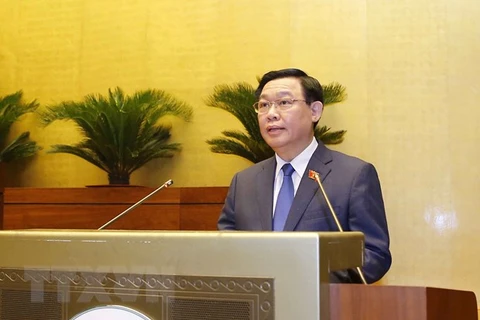
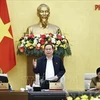
NA Chairman Vuong Dinh Hue speaks at the event (Photo: VNA)
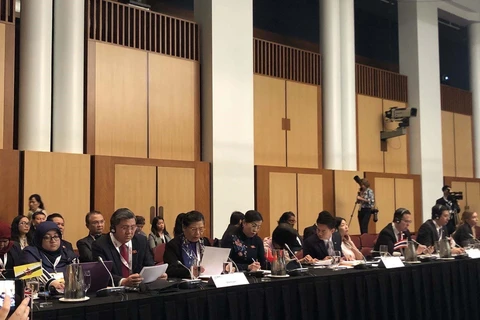
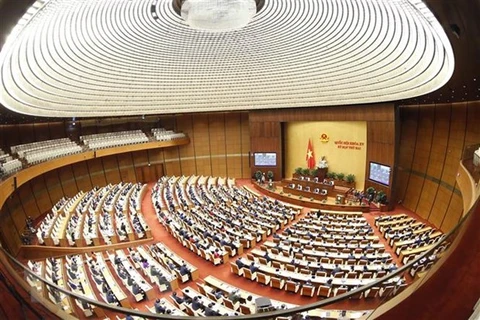
 Hanoi (VNA) – The Vietnamese National Assembly delegation attended the second session of the 29th Annual Meeting of the Asia-Pacific Parliamentary Forum (APPF-29) via video conference on December 14.
Participants focused their discussions on the theme of parliaments’ role in promoting the digital economy in the region.
In a recorded speech, Vietnamese NA Chairman Vuong Dinh Hue hailed the Asia-Pacific region, with the Asia-Pacific Economic Cooperation (APEC) forum at the core, for taking the lead in ensuring a free, open, non-discriminatory and transparent trade and investment environment; strengthening economic and supply chain connectivity; promoting cooperation in digital economy and innovation; and reforming structure to create new driving forces for economic recovery as well as sustainable and inclusive development.
In the above fields, parliaments have played an important role in promoting recovery measures on a large scale, as demonstrated via their functions of law building, supervision and adoption of important national policies.
In such a spirit, Hue agreed with the APPF-29’s economic and trade agenda, saying that they show member parliaments’ determination to foster cooperation and accelerate sustainable economic recovery following the pandemic.
He highlighted Vietnam’s consistent policy of optimising the human factor, considering people the centre, the subject and the most important resource and target in socio-economic development till 2030, as well as in the fight against the pandemic.
According to him, Vietnam considers digital economy and e-commerce as one of the driving forces and priorities in its growth recovery and COVID-19 adaptation policies, in parallel with green, circular, sustainable and eco-friendly growth.
The Vietnamese NA leader suggested APPF member parliaments continue fine-tuning legal framework and national institutions, enhance the sharing of law building and supervision experience in e-commerce in line with relevant national laws and policies and international commitments.
He called on them to approve mutual recognition agreements on vaccination when necessary, cooperate in the production and sharing of vaccines and medicines, facilitate travelling among nations, ensure smooth supply chains and promote economic connectivity, particularly digital connectivity./.