Vietnam, Canada have opportunity to cooperate in nuclear power: former Canadian Deputy PM

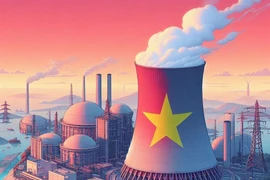
Nuclear power is one of the priority areas where Canada and Vietnam can cooperate, and both sides have a good opportunity to share this technology and build nuclear reactors to provide their economies with clean, zero-emission energy, according to Jean Charest, former Deputy Prime Minister of Canada and former Premier of Québec.

Ottawa (VNA) - Nuclear power is one of the priority areas where Canada and Vietnam can cooperate, and both sides have a good opportunity to share this technology and build nuclear reactors to provide their economies with clean, zero-emission energy, according to Jean Charest, former Deputy Prime Minister of Canada and former Premier of Québec.

In his interview granted to the Vietnam News Agency’s reporters in Canada, Charest asserted his country now possesses the unique CANDU (Canada Deuterium Uranium) technology, adding that this is the safest nuclear reactor and this technology has now evolved into a new generation called CANDU MONARK.

According to him, to achieve the goal of reducing emissions, nuclear power can be one of the right choices.

He took Ontario as a typical example of the effort to reduce emissions when successfully applying nuclear energy. This province used to be the most polluted place due to the use of coal power, but by 2014, Ontario completely eliminated this energy source, helping to reduce emissions by 45 million tonnes of carbon dioxide (CO2) per year.

The nuclear industry also contributes to creating many high-paying jobs for Ontario, contributing about 17 billion CAD (about 11.8 billion USD) per year to the Gross Domestic Product (GDP) and is one of the province's key technology export sectors. Ontario currently has 18 operating nuclear reactors, accounting for 13% of Canada's total electricity production, contributing to making this province one of the cleanest and leading localities in clean technology in the North American country.

Candu Energy Senior Vice-President Carl Marcotte said the CANDU small modular reactor (SMR) is what Canada is investing in for the next generation of nuclear technology.

The Candu SMR is a very small reactor, with a lower power output, and also has a simpler structure, with the core prefabricated at the factory so it can be transported to the installation site. Canada is pioneering the development of small and even micro reactors, suitable for many requirements such as a small town or a small business. These are suitable for Vietnam, where small and micro reactors can be deployed, he added.

Wayne Farmer, President of the Canada-ASEAN Business Council, said that Canada is keen to play a bigger role in nuclear power technology, both with Vietnam and other ASEAN countries interested in carbon emission reduction goals, as well as collaborating with the country on cleaner fuel supplies./.

VNA

See more

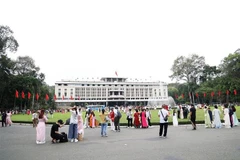
Ben Thanh Market in Ho Chi Minh City attracts a large numbers of domestic and international visitor.( Photo: VNA)

Vietnam targets 50 million international visitors by 2030

The Ministry of Culture, Sports and Tourism has outlined three scenarios for 2027–2030. Under the high-growth scenario, international arrivals would rise 15–18 percent annually to reach 45–50 million, while domestic tourism would reach around 160 million trips. Total tourism revenue is projected at 80–90 billion USD.

Factories and production facilities in the Chu Lai Open Economic Zone, Da Nang city, are equipped with modern production lines. (Photo: VNA)

Ready-built factories gain from new manufacturing FDI wave

Ready-built factories attracted 73% of new manufacturing FDI in northern Vietnam over the past two quarters, as foreign investment continued to surge at the region's industrial hubs during the first eight months of 2026. The trend points to growing demand for premises that can be put into operation quickly.

Vietnamese durian industry pivots from volume to value

Vietnamese durian industry pivots from volume to value

Durian has morphed from a high-value crop into a strategic Vietnamese export. But as output climbs and importing markets tighten rules on quality, food safety and traceability, the industry must pivot from volume growth to sustainable value chains, better quality and diversified markets.

A display area for Mid-Autumn Festival cakes at a supermarket (Photo: VNA)

Mid-Autumn Festival cake market heats up at affordable end

Industry insiders say competition is no longer just about the cake itself. Product quality, packaging, brand reputation, delivery services and personalisation are increasingly shaping consumer choices in a market crowded with both domestic and foreign players.

Minister of Foreign Affairs Le Hoai Trung (Photo published by VNA)

Vietnam, India set 25 billion USD trade goal

Vietnam and India agreed to make better use of complementary strengths, ease market access difficulties and facilitate business activities toward achieving the 25 billion USD bilateral trade target.

Delegates at the meeting between Vietnamese businesses operating in Cambodia and the Council for the Development of Cambodia (CDC) on September 14. (Photo: VNA)

Vietnamese businesses seek to expand investment in Cambodia

Vietnam currently has 223 investment projects in Cambodia with total registered capital of nearly 3.4 billion USD. Vietnamese companies operate in agriculture, particularly large-scale farming, finance and banking, telecommunications, aviation, processing, trade and services.

Children visit President Ho Chi Minh's hometown and learn about his childhood. (Photo: VNA)

Vietnam's tourism sector faces labour shortage

A 2026 survey by Hoteljob.vn found that nearly 90% of tourism businesses planned to recruit. In Ho Chi Minh City alone, 89.7% of businesses were hiring, while 71.8% said recruitment was difficult or very difficult. The biggest shortages were among frontline workers, particularly in housekeeping, engineering, food service, front-office operations, and kitchens.