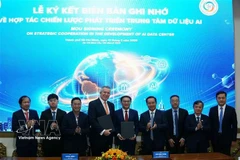
Hanoi (VNA) - The Vietnam Trade Promotion Agency (Vietrade) under the Ministry of Industry and Trade, in collaboration with the Korea Trade-Investment Promotion Agency (KOTRA), on December 18 organised a workshop announcing a value chain map of the electronics and electrical sector.
This marks the first time that the entire supply chain of one of Vietnam’s most prominent industries has been systematised, visualised, and officially published in a structured manner, aiming to promote trade, attract investment, and support sustainable industrial development.
Bui Quang Hung, Vietrade Deputy Director, highlighted that over the past decade, Vietnam's electronics and electrical industry has become a key driver of economic growth. It has attracted significant foreign investment from major multinational companies like Samsung, LG, and Intel, and has fostered the development of thousands of local businesses in the supply chain.
Vietnam has made impressive progress in this sector, evolving from a manufacturing hub to an essential link in the global value chain. Exports from the sector reached 126.5 billion USD in 2024, and 143 billion USD in the first 11 months of this year, making up about one-third of the country’s total export revenue, turning the country into among the world’s top 10 largest electronics exporters and a strategic production hub for many global corporations.
However, despite this growth, challenges remain, such as a fragmented supply chain, limited information across key stages (components, assembly, logistics, R&D), and low domestic participation. Many local companies still focus on basic segments, with limited localisation, and rely heavily on imports. Additionally, a lack of communication between Vietnamese firms and foreign-invested companies hinders partnerships, while management agencies and investment promotion organisations lack the tools to pinpoint gaps in the supply chain.
Therefore, the value chain pap is not just a technical tool, but a strategic asset for Vietnam's sustainable industrial growth, Hung stated, explaining that the map clarifies the entire supply chain structure, helping businesses identify their roles, the components they produce, and their capabilities. By closing the information gap, it fosters better connections between local businesses and foreign investors.
Moreover, it highlights gaps in the value chain, identifies priority investment areas, and shows where Vietnamese companies can expand, thus enabling more targeted trade and investment efforts that align with market needs and industry development goals.
According to Vietrade, the map was created by analysing 742 companies across seven key electronics and electrical sectors. These companies are organised by each step in the value chain and integrated into a detailed directory.
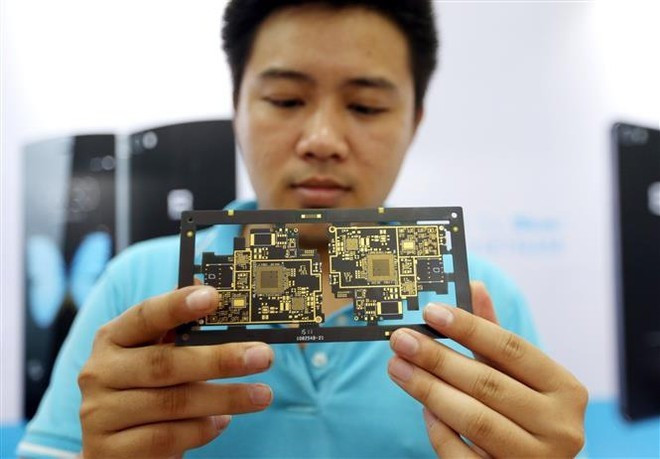
The document is visually designed and easily accessible, even for non-experts. The value chain map spans over 100 pages, featuring images of specific components and products, combined with a comprehensive business directory, making it a substantial resource of 913 pages. This is not just a database, but an information infrastructure supporting policy development, investment promotion, and industrial growth.
Cho Sang-jae, Director of KOTRA Hanoi, praised the close cooperation between the two parties and stated that the map and directory will help Korean companies, as well as foreign small- and medium-sized enterprises, easily identify potential partners in Vietnam, thereby fostering long-term investment decisions./.
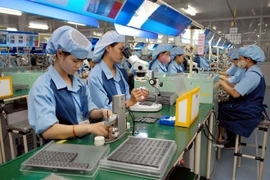
Electronics exports hit record high despite global trade headwinds
Vietnam’s electronics industry has set a new export record this year despite rising tariffs and trade barriers in major markets.