Vietnam emerges as typical case of Asia’s FDI success

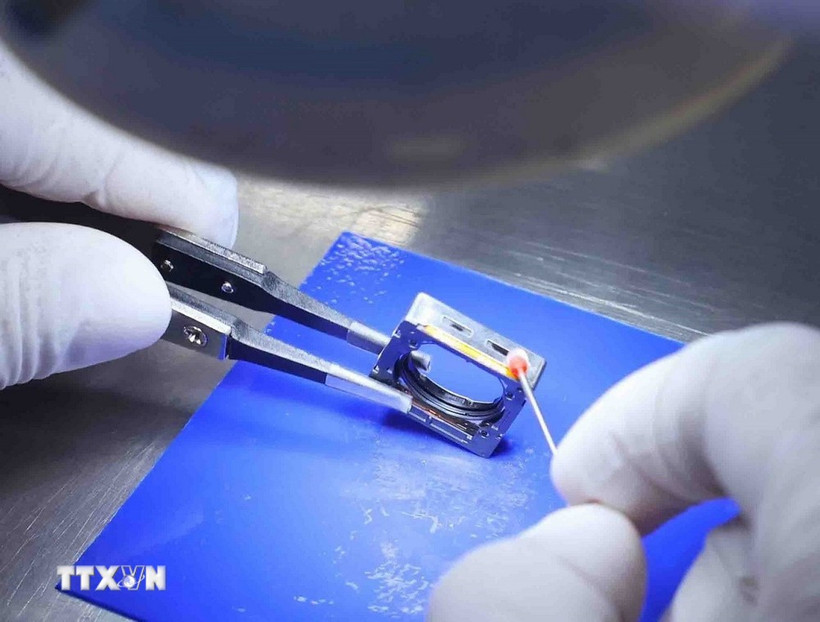
Vietnam stands out as a representative example. The article cites US technology group Intel as a case in point. Since establishing its testing and assembly facility at the Saigon Hi-Tech Park in 2010, Intel has expanded operations through total investments of 1.5 billion USD.

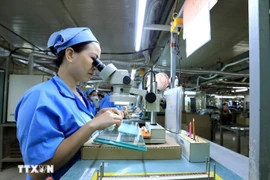
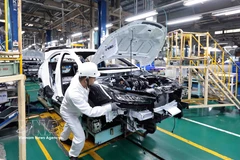
With many advantages, Vietnam has opportunities to integrate more deeply into the global technology value chain. (Photo: VNA)

Hanoi (VNA) – Many Asian economies have tapped into foreign direct investment (FDI) to fuel economic growth, with Vietnam standing out as a notable success, while others still face challenges in turning capital inflows into lasting development.

According to an analysis published by fdiintelligence.com, the performance of FDI in Asia, as in other regions, depends on individual projects.

Broader factors like geopolitics, economic trends, the business climate, and cultural context play a big role in shaping how investment flows develop across the region. Of these, political and economic stability stand out as major drivers of FDI success.

The article notes that countries including Singapore, the Republic of Korea, and Vietnam have strengthened investor confidence through consistent governance, transparent legal frameworks and business-friendly reforms.

In addition, high-quality infrastructure, such as special economic zones and efficient logistics networks, together with a skilled and cost-competitive workforce, has contributed significantly to their attractiveness as investment destinations.

Vietnam stands out as a representative example. The article cites US technology group Intel as a case in point. Since establishing its testing and assembly facility at the Saigon Hi-Tech Park in 2010, Intel has expanded operations through total investments of 1.5 billion USD. This expansion has been underpinned by Vietnam’s rapidly developing semiconductor ecosystem, an experienced workforce and the country’s role as a lower-cost link in global electronics supply chains.

In October, Intel Vietnam’s General Director Kenneth Tse discussed with government representatives the possibility of bringing additional production lines to Vietnam in the near future.

The analysis further highlights that geopolitical positioning and participation in regional trade frameworks, notably the 15-member Regional Comprehensive Economic Partnership (RCEP), help reinforce investor confidence.

At a time when many Western governments are moving toward protectionist policies under the banner of security and strategic autonomy, Asia’s ability to maintain open trade and investment flows is seen as an important factor in sustaining FDI momentum./.
VNA

See more

The Song Khoai Industrial Park (Quang Ninh province) attracts numerous enterprises for investment and production, creating jobs for local workers. (Photo: VNA)

Quang Ninh removes bottlenecks to attract 3 billion USD in FDI

Chairman of the provincial People’s Committee Bui Van Khang said that Quang Ninh aims to draw 101 non-state budget domestic investment projects with total registered capital of nearly 569 trillion VND (21.6 billion USD), and 3 billion USD in FDI capital in 2026.

Average economic growth of 6.3% per year, together with an estimated 8.02% expansion in 2025, has placed Vietnam among the world’s most dynamic economies. (Photo: VNA)

Indonesian scholar praises Vietnam as model of sustainable, inclusive growth

These achievements so far stem from the consistent leadership of the Communist Party of Vietnam, the spirit of self-reliance and resilience, and strong national solidarity, laying a solid foundation for the country’s strategic development goals towards 2030 and the vision to 2045, according to a senior researcher at the Centre for Southeast Asian Studies.

Vietnam – India trade hit historic high of nearly 16.46 billion USD in 2025. (Illustrative photo: VNA)

Vietnam – India trade sets new record at nearly 16.5 billion USD

India supplies key inputs such as iron and steel, chemicals, pharmaceuticals, textiles and garments, animal feed and aquatic products, while Vietnam exports technology-intensive goods, electronics, textiles and garments, chemicals, wood products, footwear, spices, coffee and pepper.

Experts discuss at the event (Photo courtesy of the organiser)

Venture capital falls for fifth straight year in 2025

This downturn continues the trend of decline that began in 2021 amid tighter global liquidity and a structural reset in investor risk appetite, according to the 'Vietnam Tech & Venture Capital Outlook 2025' report published by VinVentures.

Vietnamese, Chinese enterprises exchange experience at the networking and exchange programme in Da Nang city on January 13, 2026 (Photo: VNA)

Da Nang promotes logistics cooperation with Chinese businesses

With the goodwill and active engagement of partners, particularly the Chinese business community, the cooperation is expected to generate concrete and long-term opportunities, contributing to the development, deeper integration and sustainability of Da Nang’s startup and innovation ecosystem, said Le Son Phong, Deputy Director of the municipal Department of Science and Technology.

SCAVI Hue Co., Ltd. (100% invested by Financière B’Lao Group, France), specialising in garment manufacturing at Phong Dien Industrial Park in Hue. (Photo: VNA)

Business Confidence Index reaches seven-year high: EuroCham Vietnam

After several years affected by global volatility and disruptions, the Q4/2025 BCI indicates that European business sentiment in Vietnam has returned firmly to positive growth territory, surpassing levels seen prior to US tariff announcements and even before the COVID-19 pandemic. Specifically, 65% of surveyed companies assessed their current business conditions as positive in Q4/2025, with the figure rising to 69% when looking ahead to Q1/2026, suggesting that optimism is set to strengthen further as the new year begins.

Prime Minister Pham Minh Chinh chairs the 5th meeting of the Central Steering Committee on Housing Policy and the Real Estate Market in Hanoi on January 13, 2026. Photo: VNA

PM chairs meeting on housing policy, real estate market

The right to housing is a fundamental right of citizens, and housing is an essential need of every person. Housing development is an important pillar of social welfare policy, while also serving as a driving force for economic growth, labor market stability, and sustainable socio-economic development, said Prime Minister Pham Minh Chinh.