Vietnam enjoys robust recovery amidst global challenges

Both the IMF and OECD believe that with solid macroeconomic fundamentals, a clear reform agenda, and active involvement from the private sector, Vietnam is well-positioned to maintain stable growth and enhance its position in global value chains.

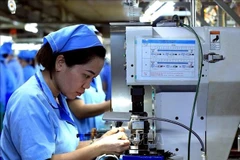
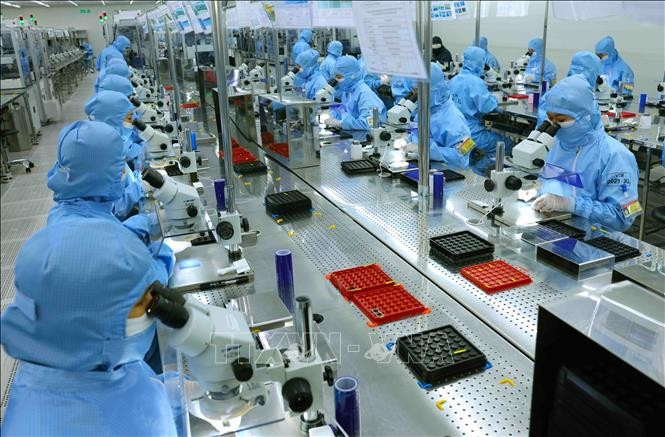
A production line of camera modules and electronic components for export at the factory of MCNEX VINA Co., Ltd of the Republic of Korea in Phuc Son Industrial Park, Ninh Binh province. (Photo: VNA)

Hanoi (VNA) – The Vietnamese economy is demonstrating remarkable recovery amidst global turbulence, earning positive endorsements from major international organisations like the Intenrational Monetary Fund (IMF), Organisation for Economic Co-operation and Development (OECD), World Economic Forum (WEF), and Singapore-based United Overseas Bank (UOB).

However, proactive adaptation and strong reform will be the keys for the Southeast Asian country to maintain its sustainable economic growth as external challenges intensify, they suggested.

Strong growth trajectory captures international attention

Vietnam kicked off 2025 with GDP growth of 6.93% in Quarter 1, building on 2024's stellar 7.09% expansion. These figures reflected the country's flexible economic management and adaptability in navigating external headwinds.

At a meeting with Prime Minister Pham Minh Chinh on the sidelines of the 16th Annual Meeting of WEF in China’s Tianjin city, WEF Interim Chairman Peter Brabeck-Letmathe affirmed Vietnam’s increasingly prominent role in global economic networks. He stressed how its flexible management ability and independent foreign policy have created powerful magnetism for international business communities.

The Memorandum of Understanding signed with WEF in Tianjin in 2023 contributed to connecting Vietnam with multiple global corporations, providing the country with various opportunities to lure high-quality foreign investments, he said.

WEF President and CEO Borge Brende shared this optimism, praising Vietnam's ambitious double-digit growth targets for the coming decade, which are possible if current momentum continues.

The OECD, in its Vietnam 2025 report released mid-June, recognised the country’s significant long-term progress. Chief economist Alvaro Pereira expressed confidence that Vietnam could achieve high-income status by 2045 or even sooner with sustained reform efforts and integration.

From the perspective of the private economic sector, the UOB identified clear signals of recovery in Vietnam's economy in the second quarter. Their latest forecast projected Q2 GDP growth at 6.1%, bolstered by US tax policy deferrals and proactive responses from the Vietnamese Government and businesses. According to UOB surveys, 60% of Vietnamese enterprises are optimistic about their growth prospects over the next year, and nearly half are planning to expand into international markets.

External risks on the horizon

Despite positive growth indicators, Vietnam's economy currently faces significant challenges, particularly from external factors. The IMF warns that Vietnam's growth outlook remains heavily reliant on the outcomes of trade negotiations, while global uncertainty remains high.

The Head of the IMF mission to Vietnam, Paulo Medas, noted that escalating trade tensions will pose significant hurdles to exporters, and domestic financial pressure may intensify due to tightening credit conditions and high corporate debt levels.

Both UOB and IMF mentioned the US trade policy, with the April announcement of reciprocal tariffs of 46% on several Vietnamese exports having triggered concerns across the global market. However, the American country subsequently delayed its implementation for 90 days for negotiation time. According to the UOB, Vietnamese exports heavily depend on key sectors including electronics, furniture, textiles, and footwear, which comprise approximately 80% of export value to the US; therefore, any trade policy changes could leave substantial impacts.

Proactive adaptability, reforms seen as foundation stones

Against the backdrop of multiple risks, international organisations have recognised Vietnam’s efforts in maintaining its macro-economy and promoting reforms. The IMF held that fiscal policy plays a leading role in economic management, particularly in the context of Vietnam’s low public debt levels. Accelerating public investment timelines and expanding social safety networks will boost short-term growth.

The IMF suggested Vietnam focus on stabilising inflation expectations while allowing greater exchange rate flexibility to adapt to external shocks. Simultaneously, modernising monetary management frameworks by replacing credit growth ceilings with prudential policy frameworks will enhance management effectiveness.

The OECD, in the meantime, underscored the significance of institutional reform, including expanding the tax base, improving social welfare systems, and promoting renewable energy. Attracting high-quality FDI must accompany enhanced domestic capacity building, intellectual property protection, and human resources development.

The bank reported that 80% of surveyed export-oriented enterprises have proactively addressed tariff risks through multiple solutions, including supply chain diversification, increased localisation, and investments in digitalisation and sustainable development. Many companies are targeting ASEAN and European markets as potential destinations to reduce dependence on traditional markets.

Despite experiencing short-term fluctuations, international organisations are optimistic about Vietnam's medium- and long-term prospects. Both the IMF and OECD believe that with solid macroeconomic fundamentals, a clear reform agenda, and active involvement from the private sector, Vietnam is well-positioned to maintain stable growth and enhance its position in global value chains.

UOB forecasts Vietnam's GDP growth at 6% for 2025 and 6.3% in the following year. Since the global economy is turbulent, maintaining reforms, enhancing productivity, and strengthening competitiveness will enable Vietnam to seize opportunities for breakthrough development./.

source
See more

A customer purchases E10 biofuel petrol at a PVOIL station on Thai Thinh street in Hanoi. (Photo: VNA)

Authorities ordered to closely monitor rollout of E10 biofuel from June 1

According to the agency, the move is aimed at ensuring the effective and synchronised implementation of the E10 transition roadmap under Circular No. 50/2025/TT-BCT, issued by the Ministry of Industry and Trade on November 7, 2025. The plan seeks to avoid delays or supply disruptions that could affect the domestic fuel market.

Vietnamese Trade Counsellor in India Bui Trung Thuong speaks at the forum. (Photo: VNA)

Vietnam, India promote digital economy cooperation towards 25 bln USD trade target

With the strengthened Comprehensive Strategic Partnership, the rapid growth of digital economies in both countries and complementary strengths in technology, manufacturing and markets, Vietnam and India are well positioned to build a deeply connected digital trade ecosystem and enhance their participation in global value chains.

“Vietnam Economic Day” in St. Petersburg attracts crowds (Photo: VNA)

Vietnam showcases economic potential, investment opportunities in St. Petersburg

Vietnamese Ambassador to Russia Dang Minh Khoi stressed that economic cooperation between Vietnam and Russia is entering a new phase with promising opportunities for growth. He praised this year’s programme for combining a business roundtable, a youth business forum and traditional cultural and culinary activities, creating both an academic platform for dialogue and an opportunity to deepen mutual understanding between the two countries' people.

Lien Minh Agricultural Cooperative in Thai Nguyen province, provides stable employment for hundreds of its members. (Photo: VNA)

Private economic sector poised for breakthrough growth

More than a year after the Politburo's Resolution No. 68-NQ/TW on private sector development came into effect, expectations now extend beyond increasing the number of enterprises. The goal is to build a stronger business community with greater resilience, larger ambitions and the capacity to compete in global supply chains.

Milk collection at a dairy farm operated by Vinamilk at the Nhon Tan concentrated farming zone in An Nhon Tay commune, Gia Lai province. (Photo: VNA)

Self-reliance in raw materials fuels Vietnam’s dairy growth

The strategy targets annual industry growth of 12-14% by 2030, with processed liquid milk output reaching 4.2 billion litres annually. Domestic fresh milk production is projected to hit 2.6 billion litres per year, meeting 60-65% of processing demand, while milk powder output is expected to reach 245,000 tonnes annually. Per capita milk consumption is targeted at 40 litres per year.

Quang Ninh gives in principle approval to first offshore wind power plant

Quang Ninh gives in principle approval to first offshore wind power plant

Covering an area of 11.95 ha of land and water surface, the project is expected to have a designed capacity of 50 MW and will be implemented in nearshore waters of the Co To special zone. Its key components include wind turbines, a substation, a 110kV transmission line, and related auxiliary facilities.

At Nghi Son 2 thermal power plant in Thanh Hoa province. (Photo: VNA)

Vietnam’s national standards strategy for 2026–2035 approved

The strategy envisions a modern, open standards system welded to international norms, serving as a piece of soft institutional infrastructure, a policy tool and a technical backbone for state governance. It also casts standards as an engine of innovation, digital transformation, green transition and sustainable development.

Shrimp harvesting in Ca Mau province (Photo: VNA)

Vietnamese shrimp sector seeks distinct path in global race

Nguyen Duy Hoa, Deputy Technical Director of Cargill Vietnam, said Vietnam cannot compete with Ecuador on costs nor match India in scale. Instead, the country should focus on value rather than volume or price competition, prioritising quality improvement, technology adoption and value-added products.

Wind turbine No. 3 at the V1-3 site of the Duyen Hai Wind Power Plant in Truong Long Hoa ward, Vinh Long province.(Photo: VNA)

Retail market seen driving double-digit growth

Domestic consumption is being regarded as one of the key drivers for sustaining economic growth. Following the Government’s Resolution No. 88/NQ-CP on promoting the domestic market and stimulating consumption, many retailers have accelerated the expansion of distribution systems, invested in technology and improved supply chains.

Cargo containers are handled at Gemalink International Port, Ho Chi Minh City. (Illustrative photo: VNA)

Government delegation for international economic, trade negotiations established

The delegation is tasked with assisting the Prime Minister in directing ministries, sectors and localities in the negotiation, signing, coordination of ratification and approval, as well as implementation of international treaties and agreements on economic and trade matters involving the Vietnamese State and Government.

Lotte Mart Vietnam is currently distributing around 900 private-label products manufactured in Vietnam under the retailer’s strict quality control. (Photo: VNA)

RoK steps up trade cooperation with Vietnam, Malaysia

The Korean business delegation's trip aims to provide Korean firms with information on import – export trends across the ASEAN region and developments in local markets, while also offering opportunities to explore the latest industry trends and technologies.

An overview of the Vietnam-China Green Industry Cooperation and Exchange Programme held in Beijing.(Photo: VNA)

Vietnam, China boost cooperation in green industry development

The Vietnamese Embassy in China, in coordination with the International Cooperation Centre under China’s National Development and Reform Commission (NDRC), on May 18 organised the Vietnam–China Green Industry Cooperation and Exchange Programme in Beijing to strengthen policy exchanges, share experience, and promote substantive cooperation in green industry amid climate change and growing global environmental challenges.