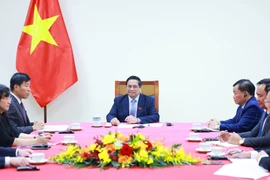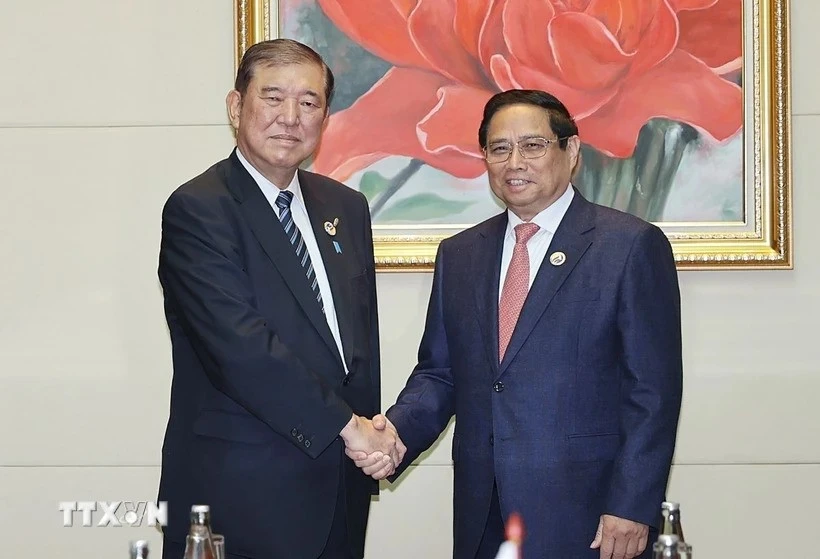
Hanoi (VNA) – Japanese Prime Minister Ishiba Shigeru and his spouse will pay an official visit to Vietnam from April 27 to 29, expected to further consolidate the deep-rooted friendship between people of the two nations while laying a solid foundation for the sustainable and strong development of Vietnam – Japan relations.
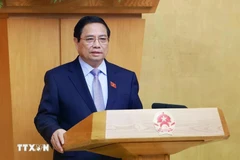
Made at the invitation of his Vietnamese counterpart Pham Minh Chinh, this marks PM Shigeru’s first visit to Vietnam since assuming office, and the first by a Japanese Government leader since the two countries elevated their ties to a "Comprehensive Strategic Partnership for Peace and Prosperity in Asia and the World" in November 2023, reflecting the importance the Japanese Government attaches to Vietnam’s growing role and stature in the region.
Close and trusted political – diplomatic ties
Since establishing diplomatic ties on September 21, 1973, Vietnam and Japan have nurtured a comprehensive and dynamic relationship, exemplifying Vietnam’s foreign policy of independence, self-reliance, and diversification and multilateralisation of international relations.
The bilateral framework has steadily evolved, progressing from a "Reliable, Long-term Stable Partnership" in 2002 to a "Strategic Partnership for Peace and Prosperity in Asia" in 2009, then an "Extensive Strategic Partnership for Peace and Prosperity in Asia" in 2014, and most recently, a "Comprehensive Strategic Partnership for Peace and Prosperity in Asia and the World" in November 2023.
The establishment of the "Comprehensive Strategic Partnership for Peace and Prosperity in Asia and the World" reflected the high political trust and maturity of bilateral relations, heralding a new cooperation phase that is more substantive and effective in all areas, meeting the aspirations and demand of the two peoples and contributing to peace, stability, development, and prosperity in the region and the world.
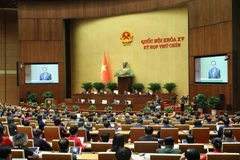
High-level exchanges, all-level engagements and dialogue mechanisms have been maintained regularly and effectively. Legislative ties have grown increasingly substantive and effective, with frequent mutual visits between parliamentary delegations facilitating the sharing of expertise across specialised committees and among lawmakers. These interactions have supported the implementation of bilateral agreements, bolstered government initiatives, and enhanced people-to-people diplomacy. The Vietnam – Japan Parliamentary Friendship Group and the Japan – Vietnam Parliamentary Friendship Alliance have been instrumental in promoting substantive cooperation among lawmakers and localities.
On the global stage, Vietnam and Japan have sustained close and effective coordination at international and regional forums such as the United Nations, ASEAN-related summits, the Asia-Pacific Economic Cooperation (APEC), and the Asia-Europe Meeting (ASEM). These have made increasingly active contributions to peace, stability, and development in the Asia-Pacific, aligning with Vietnam’s consistent foreign policy of independence, self-reliance, diversification and multilateralisation.
Top important, long-term partners
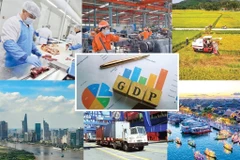
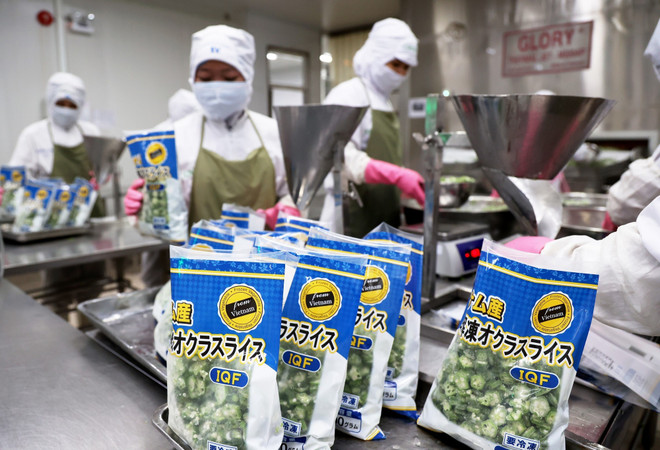
Japan stands as Vietnam’s largest bilateral supplier of official development assistance (ODA), the top partner in labour cooperation, the third largest foreign investor, and the fourth largest partner in trade and tourism. Bilateral trade reached 47.6 billion USD in 2022, 44.98 billion USD in 2023, and 46.2 billion USD in 2024, and 12 billion USD in the first quarter of 2025 alone. Vietnam’s key exports to Japan include seafood, apparel, footwear, electrical and mechanical equipment, wooden furniture, and plastic products, while Japan supplies machinery, tools, spare parts, electronics, auto components, chemicals, and steel.
As of March, Japan ranked as Vietnam’s third largest foreign investor, behind the Republic of Korea and Singapore, with 5,557 valid projects worth over 78.6 billion USD. In the first quarter of this year alone, it invested 1.13 billion USD in 77 new projects, up 20.6% annually in value, retaining its third place among 73 countries and territories investing in Vietnam. Conversely, Vietnam had 126 projects valued at 20.6 million USD in Japan, primarily in manufacturing and processing, power production and distribution, real estate, and utilities.
Japan’s ODA contributions, totalling around 2.55 trillion JPY (over 23 billion USD) by the end of fiscal year 2024, account for more than 26% of Vietnam’s foreign loan commitments. These funds have driven large-scale infrastructure projects, including Nhat Tan Bridge, Terminal T2 of Noi Bai International Airport, and Ho Chi Minh City’s Metro Line No. 1, which began commercial operations in December 2024.
Japan is also supporting Vietnam’s ambition to become a developed country by 2045, particularly through cooperation in digital transformation, green transition, innovation, and science - technology. Under the Asia Zero Emission Community (AZEC) initiative, the two countries are working on 15 renewable energy projects worth up to 20 billion USD.
Cultural, educational, healthcare, tourism, and locality-to-locality exchanges have also flourished. Vietnam pioneered Japanese language education globally, introducing it at the junior high school level in 2003 and primary level in 2019. Japan has been a major supporter of Vietnam’s education sector through ODA projects and cooperation agreements. Over 51,000 Vietnamese students are currently studying in Japan, and Japan has aided the upgrade of four Vietnamese universities to meet international standards. The Vietnam–Japan University, established in Hanoi’s Hoa Lac Hi-Tech Park in October 2014, continues to train quality manpower in science - technology, management, and services.
Cultural events such as the Vietnam Festival in Japan, the Japan Festival in Vietnam, and the Japanese Cherry Blossom Festival have become cherished annual traditions, fostering strong people-to-people ties.
Labour cooperation also forms part of bilateral cooperation, with agreements facilitating Vietnamese nurses, caregivers, technical interns, and specified skilled workers in Japan. Around 310,000 Vietnamese workers are employed in Japan, making Vietnam the leading source of guest workers there among 15 nations. Japan is committed to improving working conditions and expanding Japanese language training in Vietnam in the medium and long terms.
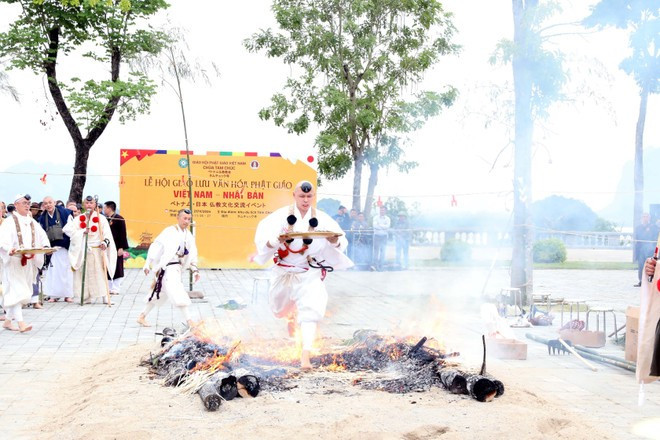
Local-level partnerships are vibrant, with over 110 cooperation agreements signed between Vietnamese and Japanese localities. Notable collaborations include Ho Chi Minh City with Osaka (2007) and Nagano (2017), Hanoi with Fukuoka (2008) and Tokyo (2013), Da Nang with Sakai (2009) and Yokohama (2013), and others across provinces like Phu Tho, Hue, Quang Nam, Hung Yen, and Hai Phong.
The Vietnamese people in Japan, exceeding 600,000, is the second-largest overseas Vietnamese community globally and also the second-largest among foreigner communities in Japan. Vietnamese citizens live, work, and study across all 47 Japanese prefectures, with big populations in Aichi, Tokyo, Osaka, Saitama, Chiba, and Kyushu.
Vietnam, Japan advance comprehensive strategic partnership
Vietnamese Ambassador to Japan Pham Quang Hieu said that during the coming visit, the two countries’ leaders will delve into strategic areas, with Japan continuing to support Vietnam’s pursuit of its three strategic breakthroughs: institutional reform, infrastructure development, and human resource training – essential pillars in Vietnam’s path toward industrialisation and modernisation.
Economic cooperation will be a central focus, with both sides aiming to improve the investment environment, strengthen supply chain resilience, and expand market access. Key discussions will include opening the Japanese market to Vietnamese pomelo and the Vietnamese market to Japanese grapes, with potential for further trade in fruits such as Vietnamese passion fruit and Japanese peach.
Both sides are looking to build new pillars of cooperation, including science - technology, digital transformation, green transition, and new energy. A high-level cooperation forum co-chaired by the two PMs is expected drive progress in these emerging sectors.
They will also work towards greater coordination in other potential fields such as disaster prevention, climate change adaptation, environmental protection, and emissions reduction.
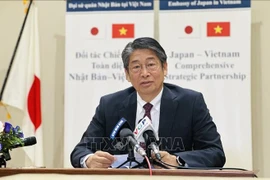
Japanese Ambassador to Vietnam Ito Naoki highlighted Southeast Asia's role as a dynamic growth hub, with Vietnam’s vibrant economy and population of over 100 million making it a priority in Japan's diplomatic strategy. The visit is also meant to reinforce Japan’s commitment to a free and open Indo-Pacific grounded in international law, he said./.