Vietnam reaffirms commitment to peaceful use of outer space

Vietnam’s national strategy for space technology development until 2030 underscores the peaceful use of outer space for socio-economic development, technological innovation, and environmental monitoring.

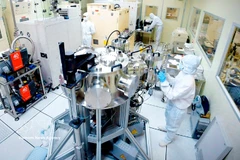
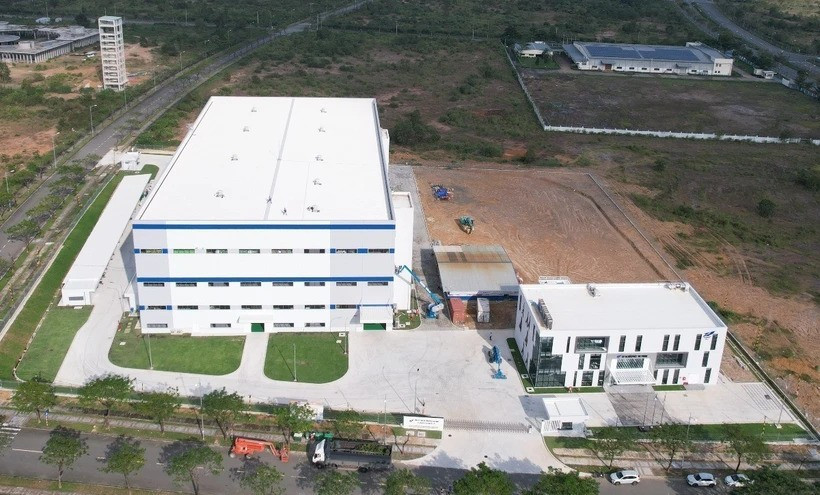
KP Vina aerospace components manufacturing plant is inaugurated in Da Nang city in December 2024 (Photo: VNA)

Hanoi (VNA) – As an active and responsible member of the United Nations and the Committee on the Peaceful Uses of Outer Space (COPUOS), Vietnam has continued to uphold and committed to fulfilling its international obligations under the United Nations space treaties, including the Outer Space Treaty and the Rescue Agreement, said Ambassador Vu Le Thai Hoang, Permanent Representative of Vietnam to the UN and international organisations in Vienna, Austria.

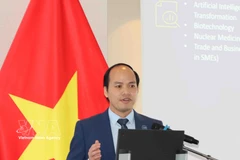
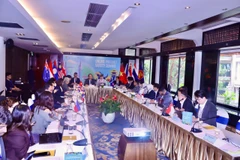
Hoang made the statement while delivering a speech at the opening of the 64th meeting of the COPUOS Legal Subcommittee at the UN Office for Outer Space Affairs (UNOOSA) on May 5. The meeting was attended by representatives from over 100 UN member states, as well as international, regional and non-governmental organisations.

He highly valued the role and efforts of the Legal Subcommittee in promoting the peaceful, safe, and sustainable use of outer space through the building of international legal regulations.

According to the ambassador, Vietnam has made steady progress in building a national legal and policy framework to advance space activities over the past decade. The country’s national strategy for space technology development until 2030 underscores the peaceful use of outer space for socio-economic development, technological innovation, and environmental monitoring. Aware of the importance of a strong legal foundation to regulate and facilitate these emerging activities, Vietnam is drafting a national space law fully aligned with its international commitments and best practices.

Vietnam is also intensifying cooperation with UNOOSA and regional partners to share expertise in law-making, policy development, and capacity building for the peaceful use of outer space, Hoang noted.

On the sidelines of the meeting, Hoang held a working session with UNOOSA Director Aarti Holla-Mani, during which he highlighted Vietnam's recent achievements in space technology, including the development and launch of Earth observation satellites.

He thanked and spoke highly of the effective cooperation among UNOOSA, COPUOS, the Vietnam Space Centre (VNSC), and the Hanoi University of Science and Technology in bolstering technical capacity and training. He also praised the UN-SPIDER programme for facilitating satellite data sharing in disaster management and emergency response, as well as the "Access to Space for All" initiative, which supports the fulfillment of the UN Sustainable Development Goals.

Holla-Mani congratulated Vietnam on its overall socio-economic achievements and impressive progress in space technology. She committed to continuing to support Vietnam, along with partner countries, in the peaceful use of outer space and satellite applications for sustainable development through training projects, capacity building, climate change adaptation, disaster management, environmental protection, smart urban development, and lawmaking./.
VNA

See more

Sucker-mouthed minnow (Supradiscus varidiscus). (Photo: researchgate.net)

Vietnamese fish, bee named among 70 species newly identified in 2025

One of the most notable “hidden” finds is a small sucker-mouthed minnow endemic to Vietnam’s highlands, discovered in the Lo River. Scientifically named Supradiscus varidiscus, the specimen was collected and shelved some 25 years ago but has only now been studied and formally described.

The Ministry of Science and Technology launches a centralised one-stop-shop unit on December 19. (Photo: VNA)

Vietnam pushes sci-tech, innovation as growth drivers under Resolution 57

The Ministry of Science and Technology (MoST) bears the responsibility of “paving the way”, guided by a consistent spirit of transitioning from a management-oriented mindset to a facilitative one, from “input-based management” to “output-based evaluation”, and from fragmented investment to a focused approach centred on strategic technologies.

Prime Minister Pham Minh Chinh visits a display of science and technology development, innovation and digital transformation. (Photo: VNA)

Gov't leader requests greater efforts to step up development of sci-tech, innovation

Emphasising three strategic digital breakthroughs - digital institutions, digital infrastructure and digital human resources - PM Chinh called for close integration of science and technology development, innovation, administrative reforms, digital transformation and Project 06 with efforts to streamline the organisational apparatus and modernise leadership, management and working styles.

Doctors from Cho Ray Hospital (Ho Chi Minh City) and Vinh Long General Hospital (Vinh Long province) test the operation of a linear accelerator radiotherapy system for cancer treatment (Photo: VNA)

Vietnam sets orientations for applying nuclear energy across sectors

The plan aims to ensure the effective implementation of Decision No. 245/QD-TTg dated February 5, 2025, which approved the national master plan, while concretising objectives, orientations, solutions and resources for applying radiation and radioisotopes across sectors. It also assigns responsibilities to ministries, sectors and localities, and sets roadmaps and priorities for key programmes and projects.

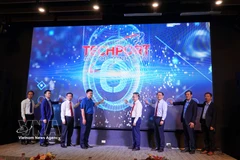
Prime Minister Pham Minh Chinh and delegates visit booths showcasing products at TechFest Vietnam 2025. Photo: VNA

Vietnam to become attractive destination for tech talent, innovative startups: PM

TechFest Vietnam 2025, held from December 12 to 14, is expected to attract more than 60,000 participants both in person and online, with the participation of over 20 corporations, 50 investment funds, more than 100 supporting organisations and incubators, and delegates from Southeast Asia, Northeast Asia, Central Asia, the Middle East, North America, and Europe.

Police offiers mornitor the traffic through AI camera (Photo: VNA)

Applying the Internet of Things in smart transport

The project aims to build a unified, safe and efficient IoT platform to support the management, operation and exploitation of smart transport systems under the Ministry of Construction, with data shared across ministries and localities.