Viettel partners with NVIDIA to build sovereign AI ecosystem

Viettel aims to strengthen domestic capabilities by building and operating advanced AI systems based on NVIDIA’s computing platforms.

Viettel is developing large language models in Vietnam by mastering and customising the NVIDIA Nemotron platform. (Photo courtesy of Viettel)

Hanoi (VNS/VNA) – Viettel Group has partnered with NVIDIA to develop a sovereign artificial intelligence (AI) ecosystem in Vietnam, focusing on high-performance computing infrastructure and the development of Vietnamese AI foundation models.

As AI increasingly shapes the global economy, the ability to develop core AI technologies is becoming essential for national competitiveness. Viettel aims to strengthen domestic capabilities by building and operating advanced AI systems based on NVIDIA’s computing platforms.

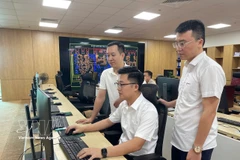
One key element of the strategy is the deployment of the NVIDIA DGX B200, one of the world’s most powerful AI computing platforms. Viettel currently operates a cluster of 22 DGX B200 systems capable of delivering up to 1.5 exaFLOPs, or 1.5 quintillion calculations per second.

The high-performance system enables the processing of massive datasets and significantly shortens AI model training time. Operating the infrastructure at domestic data centres also allows Viettel to manage the full AI development cycle while ensuring sensitive data are processed securely within the country.

Building on this computing capacity, Viettel is developing Vietnamese large language models designed to better understand the country’s language, culture and regulatory environment.

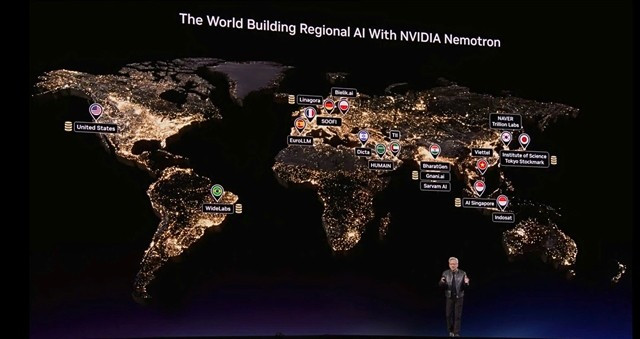
These models are developed by adapting the architecture of NVIDIA Nemotron. The Nemotron-3 model features more than 30 billion parameters and can process context windows of up to one million tokens, enabling AI systems to retain large volumes of information and generate more accurate and context-aware responses in Vietnamese.

According to Viettel, the models are trained on carefully curated Vietnamese datasets, allowing them to capture linguistic nuances and real-world contexts specific to local users.

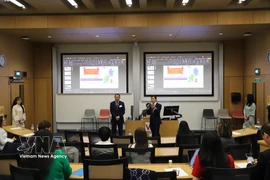
The collaboration also includes technical workshops between Viettel engineers and NVIDIA’s Nemotron team to optimise model training, fine-tuning and deployment, helping accelerate research and improve system performance.

Nguyen Manh Quy, director of the Data Services and Artificial Intelligence Centre at Viettel AI, said the partnership marks an important step in developing sovereign AI capabilities in Vietnam.

“AI is becoming an essential infrastructure similar to telecommunications. Working with NVIDIA gives us access to advanced technology while enabling Vietnamese engineers to develop and master AI models tailored to local needs,” Quy said.

The combination of NVIDIA’s AI infrastructure and Viettel’s understanding of local users has already produced practical applications, including AI assistants for legal services and public administration.

Viettel also plans to share its AI infrastructure and platforms with research institutes, businesses and start-ups, contributing to the development of a broader domestic AI ecosystem that can support the country’s digital transformation./.

VNA
See more

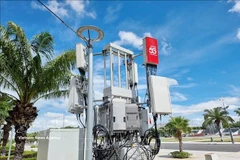
A Viettel 5G base station provides coverage at the April 16 Square area in Dong Hai ward, Khanh Hoa province. (Photo: VNA)

Conquering 6G networks helps Vietnamese businesses master strategic technologies

The global 6G alliance marks not only a technological milestone but also an opportunity for Vietnamese enterprises to strengthen their position on the global technology landscape. With the involvement of FPT, Viettel and VNG, Vietnam is gradually emerging as an early mover in the development and application of 6G technology.

At the Online Product Safety Summit in Hanoi on March 18. (Photo: dms.gov.vn)

Hanoi summit advances operation of ASEAN product safety portal

The Online Product Safety Summit in Hanoi on March 18 focused on practical enforcement solutions for identifying and removing non-compliant goods from online marketplaces, thereby strengthening consumer protection amid the rapid growth of e-commerce.

Illustrative image (Photo: VNA)

Resolution 57 charts directions for Vietnam’s technology ecosystem

Vietnam's sci-tech sector must evolve from a manufacturing base toward mastering technologies and ultimately developing original products independently, which requires shifting away from outsourcing and assembly models to one where domestic scientists lead in design, development and ownership of core technologies.

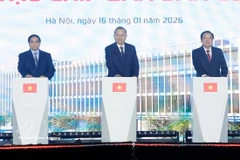
Party General Secretary To Lam (centre), Prime Minister Pham Minh Chinh (left), and Chairman of the Party Central Committee’s Commission for Internal Affairs Phan Dinh Trac mark the start of work on a high-tech semiconductor manufacturing plant in Hanoi on January 16, 2026. (Photo: VNA)

Resolution 57 refines technology priorities for new growth phase

The Ministry of Science and Technology is seeking feedback on a draft Prime Minister decision outlining four key categories: priority high technologies for investment, encouraged high-tech products, strategic technologies, and strategic tech products. The move is intended to capture emerging technology trends while strengthening the policy framework for high-tech development.

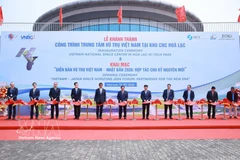
Prime Minister Pham Minh Chinh (C) and delegates cut a ribbon to innaugurate the Vietnam National Space Centre (VNSC) at Hoa Lac Hi-Tech Park in Hanoi on March 13 (Photo: VNA)

PM calls for accelerated space technology development in Vietnam

Vietnam aims by 2030 to achieve a mid-level position in space science and technology development within Southeast Asia, and after 2030 to build national capabilities to independently develop satellite technologies and apply space data to address global challenges and national security needs.

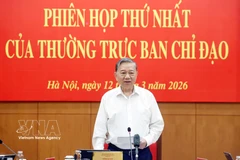
Party General Secretary To Lam speaks at the first meeting in 2026 of the Central Steering Committee for the Development of Science, Technology, Innovation and Digital Transformation on March 12. (Photo: VNA)

Party chief urges stronger, result-oriented implementation of Resolution 57

Turning science, technology, innovation and digital transformation into the main drivers of a new growth model requires substantial efforts. In the coming period, the focus must shift from merely carrying out tasks to delivering tangible and measurable outcomes, while concentrating resources on addressing strategic national challenges, said Party General Secretary To Lam.

Vietnamese Ambassador to the US Nguyen Quoc Dung addresses the forum. (Photo: VNA)

High-level forum advances Vietnam–US technological cooperation

The ambassador highlighted that Vietnam and the US are highly complementary. Vietnam offers a dynamic economy, a young and increasingly skilled workforce and rapidly growing innovation ecosystem, while the US offers frontier technologies, world class research institutions, capital and leading global companies.

Participants at the first meeting of the National Steering Committee on Semiconductor Industry Development in 2026 (Photo: VNA)

Vietnam becomes vital player in global semiconductor value chain: Deputy PM

Vietnamese companies have also gradually joined the global value chain by improving their capabilities in chip design, production and related services. Notably, a semiconductor chip manufacturing plant project developed by the Viettel Military Industry and Telecoms Group (Viettel) has already commenced.

Young voters in Ho Chi Minh City scan an QR code to participate in an online quiz about the Election Law. (Photo: VNA)

Digital technology helps enhance transparency, trust in elections

The use of technology in this election is not merely a short-term measure but reflects Ho Chi Minh City’s broader commitment to comprehensive digital transformation and smart urban governance, reinforcing public trust in the democratic process and administration.