Resolution 57 delivers tangible outcomes from local practice

In the course of implementing this resolution, the northern province of Quang Ninh has emerged as one of the early movers in translating strategic orientations into comprehensive development models linked to innovation and digital transformation.

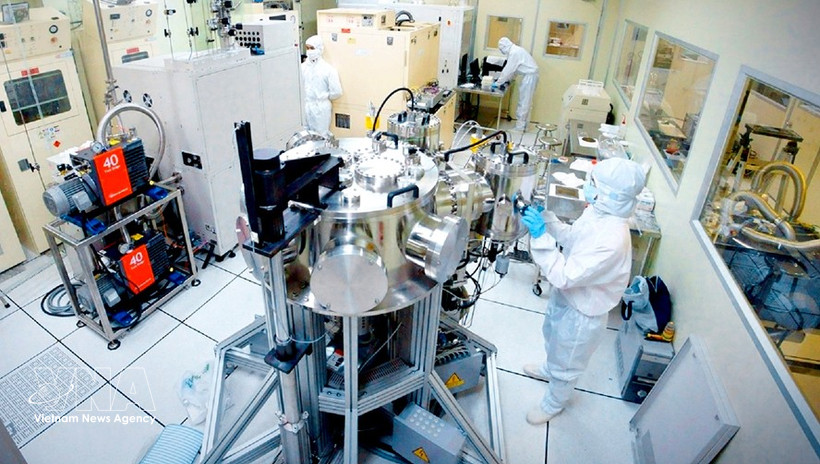
The modern nanotechnology research laboratory of Vietnam National University, Ho Chi Minh City. (Photo: VNA)

Hanoi (VNA) – The Politburo’s Resolution No. 57-NQ/TW on breakthroughs in science and technology development, innovation, and national digital transformation is being proactively implemented across localities through increasingly concrete and context-specific approaches.

From designing new development models and refining policy frameworks to organising task implementation aligned with clear timelines and targets, initial results point to a shift toward practical effectiveness tailored to local conditions.

Creating new development spaces


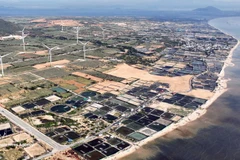
In the course of implementing this resolution, the northern province of Quang Ninh has emerged as one of the early movers in translating strategic orientations into comprehensive development models linked to innovation and digital transformation. The province is currently studying a proposal to establish a Free Digital and Knowledge Economic Zone as a new development space. The proposed zone will span nearly 26,400 hectares across 10 communes and wards, structured into three functional subzones.

The first subzone, covering 5,770 hectares, is envisioned as a hub for artificial intelligence (AI) research and development, high-quality human resources training, and the establishment of an international university cluster alongside a smart urban area. The second, at 19,380 hectares, will focus on smart governance based on the “Digital Twin” model, while hosting an administrative centre for testing, backup data centres, and industrial and logistics services, while the third, covering 1,230 hectares, will prioritise high-tech manufacturing, including semiconductors and electronic components.

This model is being developed in tandem with special policy mechanisms aimed at mobilising resources, particularly from global technology corporations and international experts, thereby fostering a technology- and knowledge-based development ecosystem. In parallel, Quang Ninh is implementing its Digital Transformation Strategy to 2030, built on three pillars: digital government, digital economy, and digital society, supported by foundational elements such as digital infrastructure, data, platforms, cybersecurity, digital human resources, and an innovation ecosystem.

Notably, in the first quarter of 2026 alone, the province has approved an allocation of 1.089 trillion VND (41.4 million USD) for science, technology, innovation, and digital transformation, underscoring its prioritisation of the sector.

Linking outcomes to specific tasks

In Ho Chi Minh City, the implementation of Resolution 57 takes place against a backdrop of strong scientific and technological capacity, yet persistent constraints in the commercialisation of research outcomes.

Data from the municipal Department of Science and Technology indicate that only about 5% of completed research projects have been successfully commercialised. Approximately 10% of domestic research outputs have been integrated into projects at the Saigon Hi-Tech Park, while around 20% of startups have secured connections with venture capital or major enterprises. These limitations stem from several factors, including complicated procedures for valuing intellectual assets, difficulties in transferring rights, risk-averse attitudes in implementation, and weak coordination between the stakeholders involved.

To address these challenges, Ho Chi Minh City has introduced a pilot scheme aimed at encouraging the commercialisation of research results and intellectual property. The programme is expected to create a strong policy push to bring research products from laboratories to the market.

Under the scheme, the State may provide financial support covering up to 50% of the cost of completing and commercialising research products, thereby sharing risks with enterprises. To date, the scheme has attracted 29 organisations registering for the first round with 54 science and technology products. The total projected funding for this round exceeds 500 billion VND (19 million USD), including more than 200 billion VND from the State budget.
hanh-chinh.jpg
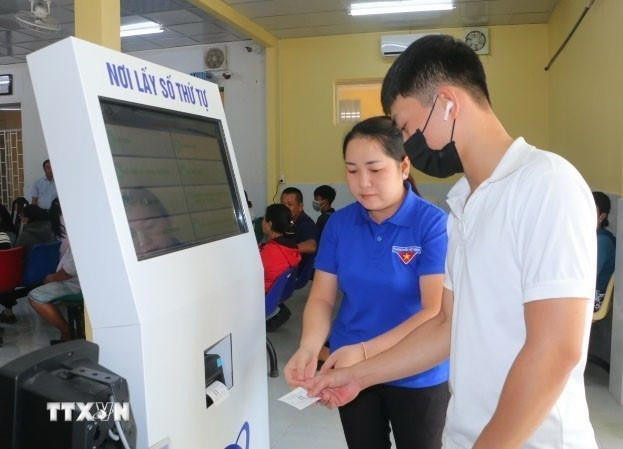
Civil servants at the Public Administrative Service Centre of Cu Lao Dung commune, Can Tho city, process administrative dossiers. (Photo: VNA)

Meanwhile, in the Mekong Delta city of Can Tho, the implementation of Resolution 57 has been identified as a key task in advancing science, technology, innovation, and digital transformation in tandem with local economic growth objectives. As of March 17, the city had completed 132 out of 244 assigned tasks, while the remaining 112 tasks, including 80 regular ones, are being implemented on schedule.

The implementation of Resolution 57 across localities demonstrates a clear trend toward translating policy directions into actionable tasks and solutions grounded in practical conditions. The proactive and dynamic role of local authorities is helping to bring science, technology, innovation, and digital transformation more deeply into socio-economic life, generating tangible contributions to both local and national development in the years ahead./.

VNA

See more

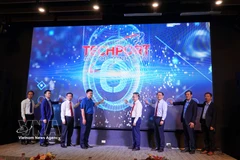
Delegates at the launch of the new version of Ho Chi Minh City technology exchange platform. (Photo: VNA)

Ho Chi Minh City launches upgraded technology exchange platform

The upgraded platform represents a comprehensive shift from a simple information-sharing model to a managed online technology trading system, enabling monitoring and measurement of real transaction outcomes. It is built on three pillars, namely new tradable technology products, a modern digital platform, and an improved operational model.

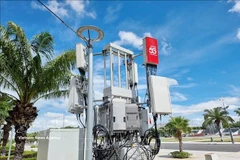
A Viettel 5G base station provides coverage at the April 16 Square area in Dong Hai ward, Khanh Hoa province. (Photo: VNA)

Conquering 6G networks helps Vietnamese businesses master strategic technologies

The global 6G alliance marks not only a technological milestone but also an opportunity for Vietnamese enterprises to strengthen their position on the global technology landscape. With the involvement of FPT, Viettel and VNG, Vietnam is gradually emerging as an early mover in the development and application of 6G technology.

At the Online Product Safety Summit in Hanoi on March 18. (Photo: dms.gov.vn)

Hanoi summit advances operation of ASEAN product safety portal

The Online Product Safety Summit in Hanoi on March 18 focused on practical enforcement solutions for identifying and removing non-compliant goods from online marketplaces, thereby strengthening consumer protection amid the rapid growth of e-commerce.

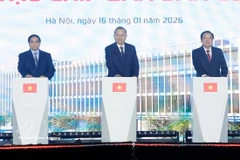
Party General Secretary To Lam (centre), Prime Minister Pham Minh Chinh (left), and Chairman of the Party Central Committee’s Commission for Internal Affairs Phan Dinh Trac mark the start of work on a high-tech semiconductor manufacturing plant in Hanoi on January 16, 2026. (Photo: VNA)

Resolution 57 refines technology priorities for new growth phase

The Ministry of Science and Technology is seeking feedback on a draft Prime Minister decision outlining four key categories: priority high technologies for investment, encouraged high-tech products, strategic technologies, and strategic tech products. The move is intended to capture emerging technology trends while strengthening the policy framework for high-tech development.

Professor Geert Angenon of Vrije Universiteit Brussel (Photo: VNA)

European experts highlight potential for AI cooperation with Vietnam

Experts believe that as demand for technological innovation grows and international partnerships expand, Vietnam has big opportunities to deepen cooperation with European partners in high-tech agriculture, healthcare, digital transformation and artificial intelligence.

A seminar on AI use hosted by the Vietnam Intellectual Association in the UK and Ireland in February 2026. (Photo: VNA)

AI – unmissable opportunity for Vietnam: Experts

AI also emerges as a key enabler for Vietnam's ambition to build financial and technology hubs. Applications can boost efficiency, automate workflows, cut costs, and sharpen data analytics, which are essential pillars of a modern financial system.

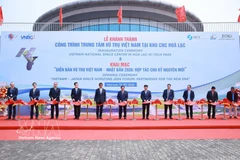
Prime Minister Pham Minh Chinh (C) and delegates cut a ribbon to innaugurate the Vietnam National Space Centre (VNSC) at Hoa Lac Hi-Tech Park in Hanoi on March 13 (Photo: VNA)

PM calls for accelerated space technology development in Vietnam

Vietnam aims by 2030 to achieve a mid-level position in space science and technology development within Southeast Asia, and after 2030 to build national capabilities to independently develop satellite technologies and apply space data to address global challenges and national security needs.

Students control robots at the FPT Schools AI & Robotics Challenge (Photo: VNA)

National AI ethics framework issued to guide safe, responsible rollout

According to the circular taking effect on March 10, the framework imposes specific obligations on entities and individuals involved in AI activities. In particular, the AI use must ensure safety, reliability, while preventing harm to human life, health, dignity, honour, and mental well-being.

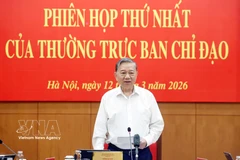
Party General Secretary To Lam speaks at the first meeting in 2026 of the Central Steering Committee for the Development of Science, Technology, Innovation and Digital Transformation on March 12. (Photo: VNA)

Party chief urges stronger, result-oriented implementation of Resolution 57

Turning science, technology, innovation and digital transformation into the main drivers of a new growth model requires substantial efforts. In the coming period, the focus must shift from merely carrying out tasks to delivering tangible and measurable outcomes, while concentrating resources on addressing strategic national challenges, said Party General Secretary To Lam.

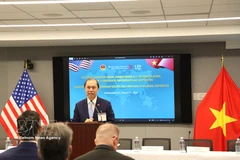
Vietnamese Ambassador to the US Nguyen Quoc Dung addresses the forum. (Photo: VNA)

High-level forum advances Vietnam–US technological cooperation

The ambassador highlighted that Vietnam and the US are highly complementary. Vietnam offers a dynamic economy, a young and increasingly skilled workforce and rapidly growing innovation ecosystem, while the US offers frontier technologies, world class research institutions, capital and leading global companies.

Participants at the first meeting of the National Steering Committee on Semiconductor Industry Development in 2026 (Photo: VNA)

Vietnam becomes vital player in global semiconductor value chain: Deputy PM

Vietnamese companies have also gradually joined the global value chain by improving their capabilities in chip design, production and related services. Notably, a semiconductor chip manufacturing plant project developed by the Viettel Military Industry and Telecoms Group (Viettel) has already commenced.