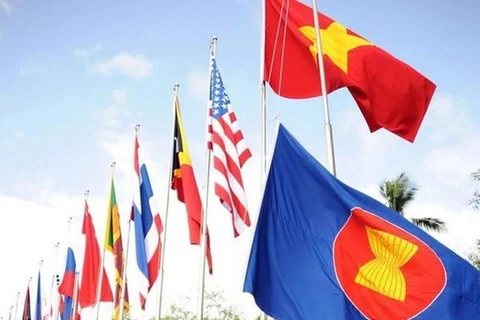
The flags of ASEAN and the member states (Photo: VNA)
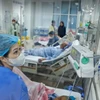
 Hanoi (VNA) – All member countries of the Association of Southeast Asian Nations (ASEAN) have recorded COVID-19 infections. In the face of the pandemic’s complex developments, Vietnam, in its capacity as ASEAN Chair in 2020, has been actively promoting the bloc’s common efforts and cooperating with partners in the fight against the disease.
Promoting ASEAN’s cohesion and responsiveness
As ASEAN Chair this year, Vietnam has been working closely with other members to promote the group’s readiness to respond and mitigate the outbreak’s impacts, reflecting a truly “cohesive and responsive” ASEAN.
On February 14, after consulting with other ASEAN leaders, Vietnamese Prime Minister Nguyen Xuan Phuc issued the ASEAN Chairman’s Statement on ASEAN Collective Response to the Outbreak of COVID-19, in which regional leaders highlighted the association’s priority to deal with the disease and urge the international community to support ASEAN in this effort.
Aside from this statement, the countries’ defence, economic and tourism ministers also issued statements that specify measures to coordinate their actions and effectively respond to the pandemic. They affirmed that ASEAN will continue stepping up concrete and practical actions while enhancing information exchange and coordination at all levels within the bloc and with partners.
In her letter sent to heads of the member parliaments of the ASEAN Inter-Parliamentary Assembly (AIPA) on March 30, Chairwoman of the Vietnamese National Assembly Nguyen Thi Kim Ngan, who also chairs the 41st AIPA General Assembly, called on each AIPA member parliament to stand side by side and join hands with the governments of the ASEAN member countries in response to the pandemic by strongly promoting their roles, adopting measures and policies proposed by their governments to curb the disease, facilitating resources allocation and enhancing connections with the public.
She said as parliamentarians, they need to continue to spread messages of love, solidarity and encouragement to all people, particularly those on the front line of the fight against the COVID-19 pandemic.
In reply, President of the National Assembly and Speaker of the House of Representatives of Thailand Chuan Leekpai affirmed his support for the appeal and said that regional cooperation is essential at this time to jointly protect ASEAN against the COVID-19 pandemic.
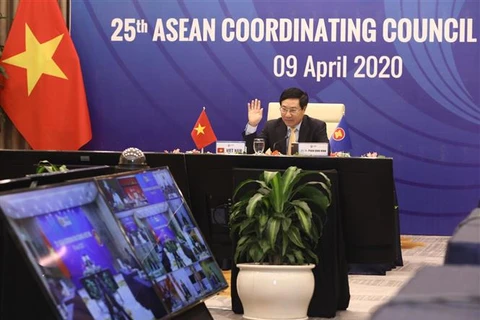
To discuss ways to implement the ASEAN Chairman’s Statement on ASEAN Collective Response to the Outbreak of COVID-19, at the request of Vietnam as ASEAN Chair, the ASEAN Coordinating Council (ACC) held a special meeting with the participation of all foreign ministers of the member nations in Vientiane, Laos, on February 20.
At the event, Vietnam proposed the next steps for the bloc to bolster common efforts and actions, including sharing information in a transparent manner, boosting effective coordination among relevant agencies at national and regional levels, strengthening international cooperation to effectively respond and control the pandemic, increasing support for citizens of the member countries when necessary, and trusting and supporting one another in their response efforts.
Following a proposal by Vietnam, the ACC Working Group on Public Health Emergencies was set up to promote concerted and inter-sectoral coordination of the whole ASEAN Community in response to the complex developments of the COVID-19 outbreak.
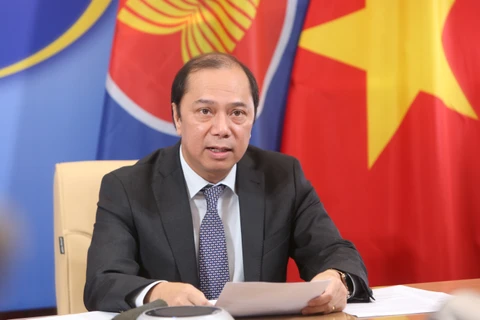
This working group’s first teleconference, chaired by Vietnamese Deputy Foreign Minister Nguyen Quoc Dung – head of the ASEAN Senior Officials’ Meeting (SOM) Vietnam, took place on March 31. It discussed recommendations on cooperation orientations in the COVID-19 fight which will be submitted to the ACC and regional ministers for feedback before they are reported to ASEAN leaders.
Enhancing ties with partners to cope with pandemic-caused challenges
Strengthening cooperation within ASEAN as well as between the bloc and its partners to effectively deal with challenges caused by the COVID-19 outbreak is of critical importance.
As leading organisations in their respective regions, the European Union (EU) and ASEAN have been working together to overcome such challenges.
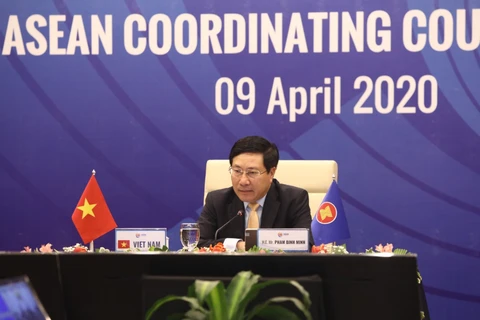
Speaking at the ASEAN-EU ministerial teleconference on COVID-19 held on March 20, Vietnamese Deputy Prime Minister and Foreign Minister Pham Binh Minh noted that as ASEAN Chair in 2020, Vietnam has been coordinating closely with other member countries to promote a synchronous and overall approach for the whole ASEAN Community to improve readiness, gear up active response measures and mitigate the pandemic’s impacts.
He asked the EU for technical assistance and cooperation in scientific research to control and treat infection cases, while ensuring the interests and equal treatment of ASEAN citizens in the EU, and for coordination to minimise the outbreak’s socio-economic impacts.
Highly valuing ASEAN’s efforts and achievements in the COVID-19 battle, Vice President of the European Commission and High Representative of the European Union for Foreign Affairs and Security Policy Josep Borrell Fontelles also asked ASEAN countries to create conditions for the repatriation of EU citizens from the Southeast Asian region.
Meanwhile, a teleconference between ASEAN and US senior officials was also organised with a view to fostering bilateral cooperation in response to COVID-19 and public health challenges.
At this session, the Vietnamese representative proposed orientations for cooperation between the US and ASEAN to contain the disease, deal with negative socio-economic impacts, and ensure a stable life for people. The official also affirmed that Vietnam will actively coordinate ASEAN’s efforts to that end.
US Assistant Secretary of State David Stilwell spoke highly of the group’s efforts and achievements and thanked the countries for helping US citizens to return home from coronavirus-hit areas. He also pledged assistance for ASEAN citizens in the US.
Additionally, acting Australian Deputy Foreign Minister and head of the SOM Australia on ASEAN and East Asia Summit Justin Hayhurst applauded Vietnam’s role and efforts as ASEAN Chair. He said his country will continue supporting and working closely with Vietnam to promote disease prevention and control via regional cooperation mechanisms, including the ASEAN-Australia Cooperation and the East Asia Summit./.
VNA