Vietnam, Laos eye long-term, sustainable trade ties

Prime Minister Pham Minh Chinh’s working trip to visit Laos and co-chair the 47th meeting of the Vietnam-Laos Inter-Governmental Committee is expected to help create a breakthrough in the two countries’ economic, trade and investment cooperation.

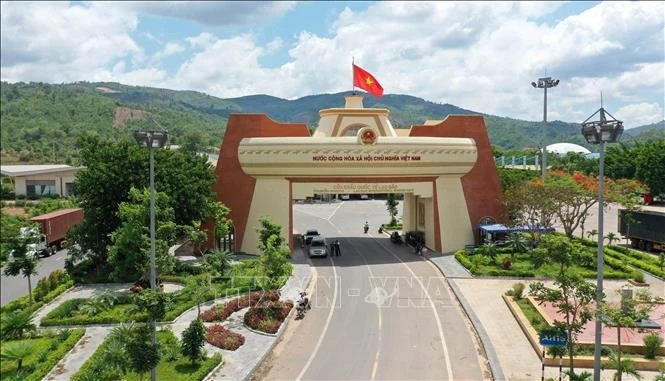
Lao Bao International Border Gate in the central province of Quang Tri is among nine international border gates along Vietnam-Laos borderline. (Photo: VNA)

Hanoi (VNA) – Prime Minister Pham Minh Chinh’s working trip to visit Laos and co-chair the 47th meeting of the Vietnam-Laos Inter-Governmental Committee is expected to help create a breakthrough in the two countries’ economic, trade and investment cooperation.

Vietnam and Laos share a borderline of more than 2,300 km passing through the administrative boundaries of 10 provinces and cities of each side, which is an area with development potential and strategical location on the East-West Economic Corridor. There are nine international border gates, six main border gates, 18 auxiliary border gates, 27 crossings, and nine border-gate economic zones along the borderline.

Thriving trade relations

The two countries’ trade benefits from the reduction of tariff rates to 0% for most of their goods under the ASEAN Trade in Goods Agreement, the Vietnam-Laos Bilateral Trade Agreement, and the Vietnam-Laos Border Trade Agreement. Moreover, the Lao market does not set strict requirements for product quality, and most Lao consumers have a good assessment of Vietnamese products.

In addition, Laos almost accepts all standard certifications from exporting countries including Vietnam. Businesses can also take advantage of Laos' connections with Thailand and China to expand exports to these two countries.

At a recent meeting with Lao Ambassador to Vietnam Khamphao Ernthvanh, Minister of Industry and Trade Nguyen Hong Dien Dien highlighted the outstanding results in Vietnam-Laos trade relations in 2024, particularly bilateral trade turnover was estimated to reach 2.2 billion USD, an increase of nearly 34% compared to 2023.

This is the first time the bilateral trade turnover has exceeded the 2 billion USD mark, far surpassing the target set by the two governments, Dien said, noting that this achievement is a clear testament to the efforts of the governments, authorities, and businesses of both nations, including those made by the ministry and the embassy.

Regarding the Vietnam-Laos trade agreement, he emphasised that the Ministries of Industry and Trade of Vietnam and Laos have completed necessary procedures for the two governments to approve the new agreement that was signed on April 8, 2024 and are ready for implementation.

The minister called on the ambassador to assist in expediting necessary internal procedures with Lao authorities, and promptly inform Vietnam of the official date of effect so that the agreement can be implemented soon and the benefits it brings can be utilised as soon as possible.

Regarding cooperation in the energy and mineral sectors, Dien noted the key role of these two pillars in Vietnam-Laos economic relations. Cooperation in the purchase and sale of coal and electricity between Vietnam and Laos in 2024 has achieved very positive results.

The import of electricity and coal from Laos not only aims to meet Vietnam’s needs in socio-economic development but also helps to exploit Laos's potential, thereby contributing to its socio-economic development.

For her part, Khamphao shared the view with the minister regarding the impressive achievements that the two countries have attained in recent times. She expressed her impression of the growth of Vietnam's import-export turnover and industrial sector.

The goods of the two countries are not only competitive but complementary to each other. Currently, Vietnam exports to Laos chemicals, petroleum, machinery, equipment and tools, means of transport, iron and steel products; while importing rubber, coal, wood and wood products, fertilizers, ores and minerals from its neighbour.

According to the Lao Ministry of Planning and Investment, as of December 2024, there were 417 Vietnamese projects in Laos with a total approved value of more than 4.9 billion USD. In particular, wholly Vietnamese-invested projects registered a total capital of 4.6 billion USD; most of them in the fields of agricultural (680 million USD), electricity (980 million USD), and mineral exploitation (1 billion USD).

Notably, many investment projects of Vietnamese enterprises in Laos have operated effectively, contributing positively to local socio-economic development, creating jobs and raising incomes for thousands of workers, supplementing revenue sources for the Lao state budget, especially in the field of telecommunications, banking, rubber plantation and processing, and food production.

Further boosting trade cooperation

Deputy Director of the Import-Export Department of the Vietnamese Ministry of Industry and Trade Tran Quoc Toan acknowledged that trade between Vietnam and Laos still lags behind its potential, with various limitations remaining. To achieve a breakthrough in economic, trade, and investment cooperation, leaders of both countries have planned to strengthen economic connectivity and support, and develop a Laos-Vietnam industrial park.

Vietnamese Ambassador to Laos Nguyen Minh Tam emphasised that the establishment of such an industrial park would play a vital role in attracting investment, creating jobs, promoting exports, and modernising infrastructure. It would also foster the development of new urban areas in both countries./.
VNA

See more

Pham Van Cong, Chairman of the Vietnam Cashew Association, speaks in a conference reviewing the industry’s 2025 performance and deploying procurement plans for 2026 in HCM City on March 13. (Photo: VNA)

Cashew sector braces for challenges in 2026 amid global uncertainties

Vietnam’s cashew industry recorded export turnover of about 5.5 billion USD in 2025, the highest level ever. He noted that the result reflects the industry’s remarkable development, dynamism and timely adaptation to complex and unpredictable challenges both domestically and globally.

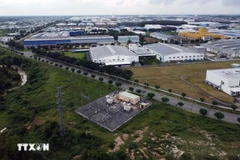
An Phát Complex Industrial Park in Hai Phong City is one of the eco-friendly industrial parks. (Photo: VNA)

Green industrial parks become new magnet for FDI

Statistics show that about 80% of FDI enterprises prioritise investing in industrial parks with green energy infrastructure, reflecting a growing shift in investment preferences amid tightening global environmental standards.

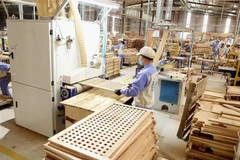
Wood panel production at the Thuan An Wood JSC in Ho Chi Minh City (Photo: VNA)

Vietnamese businesses ride wave of investment in green manufacturing

Recent developments in private investment show that as confidence in the private sector has grown and is a key driver of economic development, investors are strengthening support for enterprises not only through capital but also management expertise and market connectivity.

Officers and soldiers of Son Tra Border Guard Station, Da Nang City Border Guard Command tell local fishermen about IUU fishing. (Photo: VNA)

Fishing solidarity groups help Vietnam with IUU “yellow card” warning removal

Over the years, coastal authorities in Da Nang have intensified efforts to educate fishermen about regulations, particularly the need to avoid illegal fishing in foreign waters. Local administrations and competent forces have also strengthened vessel registration and inspection procedures, installed vessel monitoring systems and ensured transparent declarations of catches at ports.

Representatives of Central Retail Vietnam and Lotte Plaza Market sign a distribution cooperation agreement at the networking event in Ho Chi Minh City on March 13. (Photo: VNA)

Vietnamese firms step up cooperation with international distribution chains

Connecting Vietnamese businesses with international distribution networks has been a key component of government-led trade promotion programmes for many years, which are designed to help domestic companies place goods directly into global retail systems rather than exporting solely through intermediaries.

Direct Hanoi–Amsterdam flights by Vietnam Airlines to begin on June 16. (Photo: Vietnam Airlines)

Vietnam Airlines to launch direct Hanoi–Amsterdam service on June 16

Under the plan, the Hanoi–Amsterdam route will commence operations on June 16, 2026, with an expected frequency of three return flights per week using modern wide-body Airbus A350 aircraft. This will be the first direct air link between Vietnam and the Netherlands, helping to shorten travel time and enhance connectivity between Vietnam and one of Europe’s key economic, logistics and aviation transit hubs.

Farmers harvest the 2025 Winter–Spring rice crop in An Giang province. (Photo: VNA)

An Giang accelerates export shift to meet green consumption trends

To enhance competitiveness, authorities are assisting businesses in obtaining globally recognised certifications such as GlobalG.A.P., Organic and HACCP, enabling key exports including rice, seafood and clean agricultural products to strengthen their position in global markets, according to Quang Xuan Lua, Director of the An Giang Centre for Trade and Investment Promotion.

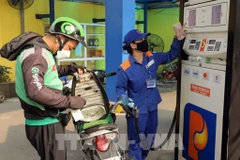
Motorcycle riders refill their vehicles at a petrol station in Hanoi (Photo: VNA)

E5 RON92 biofuel price falls in latest adjustment

Since the beginning of this year, domestic fuel prices have undergone 14 adjustments, including five decreases and nine increases for RON95 and six declines and eight hikes for E5 RON92. Meanwhile, diesel price has fallen three times and risen 11 times.

A French customer is tasting Vietnamese lychee. (Photo: VNA)

Vietnamese agricultural products boost global brand recognition

Vietnam aims to achieve about 74 billion USD in agro-forestry-fishery export turnover this year. Expanding value-added products, improving quality standards and strengthening brand building, especially through international supermarket systems, will be key to enhancing the competitiveness and global recognition of Vietnamese agricultural products.

An apartment building developed by BCONS in Binh Duong (Photo: VNA)

Resolution 68 boosts businesses entering market

By the end of 2025, Vietnam had more than one million active enterprises. In the first two months of 2026, about 64,500 enterprises entered or re-entered the market, up 29.4% year-on-year, averaging 32,200 newly established or returning businesses per month.