Vietnam leads transition to clean energy in Southeast Asia

Vietnam is leading the transition to clean energy in Southeast Asia and is a bright spot on an otherwise soot-black map, according to an article published recently on The Economist.
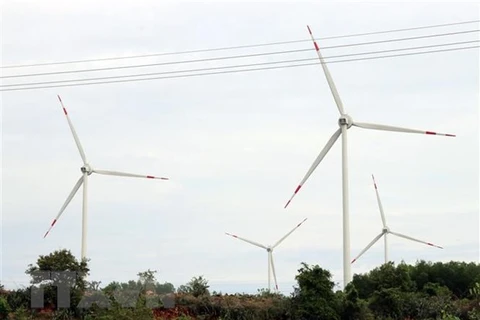
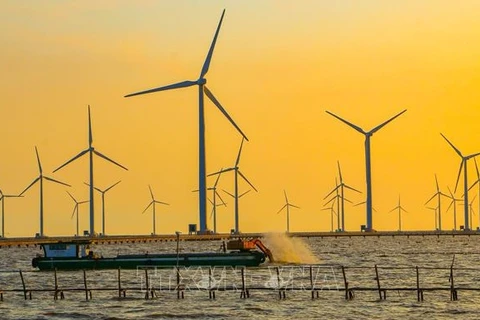
Vietnam leads transition to clean energy in Southeast Asia ảnh 1Illustrative image (Photo: VNA) 
London (VNA) - Vietnam is leading the transition to clean energy in Southeast Asia and is a bright spot on an otherwise soot-black map, according to an  article published recently on The Economist.

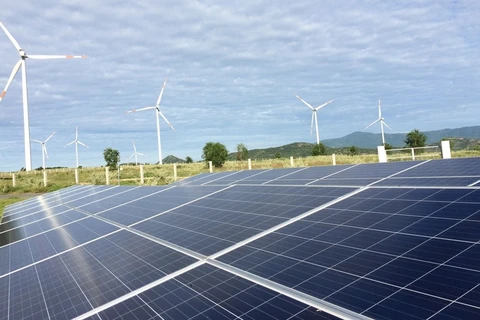
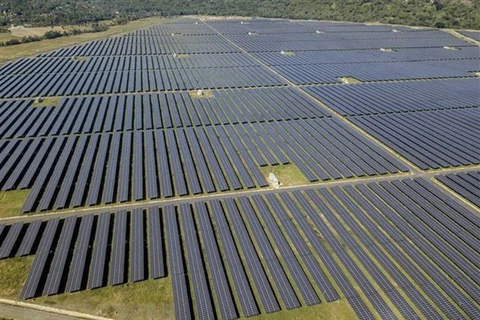
In the four years to 2021, the portion of electricity generated by solar in Vietnam increased from practically nothing to nearly 11 percent, the article said, noting it is not only a faster rate of increase than almost anywhere else in the world, but also a bigger share than larger economies such as France or Japan have managed. 

It said Vietnam had become the world’s tenth-biggest producer of solar power last year and recalled that ưhile underlining Vietnam’s commitment to the energy transition, Prime Minister Pham Minh Chinh vowed in November last year to stop building new coal-fired power plants and to reduce Vietnam’s  emissions to net zero by 2050.

The article said that other Southeast Asian countries hoping to up their game can learn a few lessons from Vietnam - the country has quadrupled its wind and solar power capacity compared to 2019.

It attributed the "extraordinary achievement"  to Vietnam’s political will and market incentives.

As many as 100,000 rooftop solar panels were installed in 2019 and 2020, lifting Vietnam's solar output to 16GW.

Reforms have made it easier for foreign investors to do business in Vietnam, the article said, noting that the Southeast Asian country will have to make greater efforts if it hopes to achieve net zero emissions by 2050./.
VNA
See more

UNESCO Representative to Vietnam Jonathan Wallace Baker and Japanese Ambassador Ito Naoki at the signing ceremony (Photo: baoquocte.vn)

UNESCO, Japan sign deal to bolster Vietnam’s disaster early warning

Climate change adaptation remains a top priority in Vietnam’s development strategy and national security outlook through 2050. Vietnam will maintain close cooperation with Japan, UNESCO and other partners to guarantee the project’s effectiveness and advance common goals.

The German Agency for International Cooperation (GIZ)'s Managing Director Thorsten Schäfer-Gümbel speaks at the working session with the Vietnamese-German University. (Photo: VNA)

Vietnam, Germany step up collaboration on energy transition, green hydrogen

Schäfer-Gümbel praised the strong commitment of Vietnamese partners to sustainable energy goals. He noted that the long-standing development cooperation between Germany and Vietnam is evolving, with energy transition emerging as a strategic area of collaboration in addressing global challenges.

Cat Ba langur is an extremely rare primate species found exclusively in the humid tropical forests of Cat Ba island (Photo: VNA)

Belgian TV spotlight: Vietnam's wild nature reborn

Through the lens of “Le Jardin Extraordinaire”, Vietnam was portrayed not simply as a travel destination but as a still-emerging realm of discovery: a nation whose nature, though heavily wounded in the past, demonstrates extraordinary powers of recovery, quietly upholding its pristine essence against the pressures of time.

The macaque, scientifically known as Macaca arctoides. (Photo: VNA)

Quang Tri receives endangered stump-tailed macaque

The Cam Lo-Dong Ha forest protection unit in the central province of Quang Tri has received a rare stump-tailed macaque, a species listed as endangered, precious and rare in the Vietnam Red Data Book.

At a ceremony to donate 100,000 trees to the Naval Region 4 (Photo: HANE)

Tree planting programme spreads green momentum in islands

The Ho Chi Minh City Association for Conservation of Nature and Environment (HANE) on January 11 announced 10 outstanding green programmes and activities carried out in 2025, including a programme to plant 1 million trees in Vietnam’s island areas.

Lam Dong releases hundreds of wild animals into the wild. (Photo: VNA)

Lam Dong releases hundreds of wild animals back into the wild

According to the Ta Dung National Park Management Board, the park has for years served as a trusted destination for authorities and residents to hand over and release wildlife. Such actions not only contribute to biodiversity conservation but also help reduce illegal hunting and captivity of wild animals.

According to the Hanoi Department of Agriculture and Environment, air quality index (AQI) readings have at times reached poor and very poor levels. (Photo: VNA)

Hanoi targets 20% reduction in PM2.5 levels

Hanoi has affirmed its commitment not to trade environmental protection for economic growth. The city is moving to establish low-emission zones (LEZs) as a core measure to control emissions and promote green, sustainable urban development.