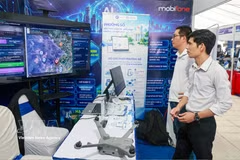
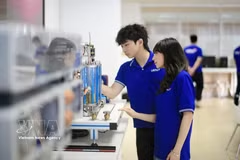
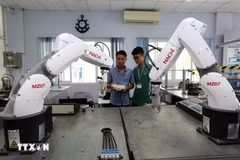
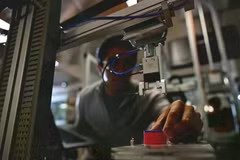
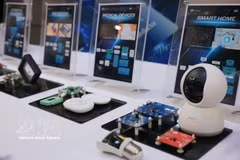
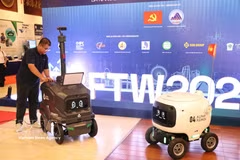
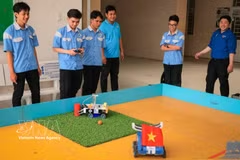
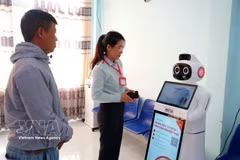
Innovative manufacturing is key to increasing productivity and sustainability as Vietnam confronts the fourth industrial revolution (Industry 4.0) challenges (Photo: baocongthuong)
Hanoi (VNA) - Innovative manufacturing is key toincreasing productivity and sustainability as Vietnam confronts the fourthindustrial revolution (Industry 4.0) challenges, experts said.
They said at a recent roundtable discussion and workshop thatkeeping up with the latest trends and technologies was imperative for theeconomy to remain relevant and competitive.
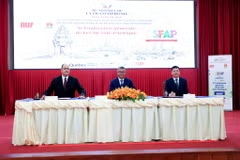
Organised by Vietnam’s Ministry of Industry and Trade, theEmbassy of Sweden and Business Sweden –the Swedish Trade and InvestmentCouncil, the event aimed to strengthen collaboration between the two countriesby sharing experiences and practices on technological innovations.
Swedish Ambassador to Vietnam Pereric Hogberg said that tradeand investment between the two countries had been growing steadily, but therewas room for further increase.
The challenges that Vietnam faces in ensuring sustainablemanufacturing and establishing itself as a global hub can be met effectivelywith expertise and solutions from Swedish companies, he said.
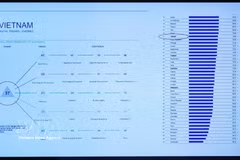
Innovation was an important factor in Sweden’s success, headded, noting that the country was ranked second in the Global InnovationIndex.
Deputy Director General of the Vietnam Industry Agency under Ministryof Industry and Trade, Pham Anh Tuan, said that with the orientation towardsindustrialisation as the core economic momentum, manufacturing was receivingsignificant attention from both the Government and private sector.
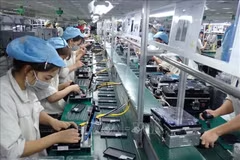
Over the past few years, Vietnam has seen a fast growingfood and beverage manufacturing sector. Electronics andautomotive components manufacturing were also growing quickly, fueled bymajor companies like Samsung moving their manufacturing and assemblyoperations to Vietnam, he said.
“However, in order to stay competitive and relevant, Vietnamneeds to keep up with the latest trends and technologies inmanufacturing,” he added.
Tuan said that Sweden was considered one of the most sustainableand innovative countries in the world and its companies had a long history ofproviding world-class manufacturing solutions within assembly tools, packingequipment, automation, digitalisation and information technology.
Sweden is seen as one of the leading nations in applyingIndustry 4.0.
Brian Hull, general director of ABB Vietnam, said that Industry4.0 did not mean the removal of all existing manufacturing infrastructure andbuilding something new.
The matter is to upgrade and improve existing ones, to keepinnovating to increase efficiency, productivity and sustainability, accordingto Hull.
"No single company can adapt to Industry 4.0 alone; itrequires co-operative work," he added.
For example, the ABB uses Microsoft platforms to develop andprovide solutions to its clients. In Vietnam, ABB has provided Heineken withmedium voltage products, transformers, motor control centres, compact secondarysubstations, engineering packages, site management and so on.
The ABB has provided Vinasoy – a food company, with withautomated pouch pick and place and box palletting systems that have resulted ingreater safety and hygiene, consistency and precision in packing and lessmanpower.
The use of robots for various applications in electronicsmanufacturer including pick and place, materials handling and machinehandling can generate better quality and reliability, as also locallyresponsive support combination.
Alan Fam, BusinessLine Manager, GeneralIndustry at Atlas Copco, said that data was the most important factor inIndustry 4.0. "Data has to be collected, processed and used to providesmarter and more efficient manufacturing solutions," he said.
Fam spoke of manufacturing intelligence – a software to gather acorporation’s manufacturing data from many sources for reporting, analysis andcommunication between enterprise-level and plant-floor systems. He said thesoftware’s primary goal was to turn amounts of manufacturing data into realknowledge, driving business productivity.
Nguyen Hoang Viet, manager of Technology Department at ThaiNguyen province-based Song Cong Diesel Company said that the company providedmechanical parts for both domestic and international partners.
He said his company was looking for investment and co-operationto improve its manufacturing technology towards improved productivity andefficiency while meeting domestic and international requirements.
Nguyen Chi Hung, deputy director of Hanoi-based VietnamAutomatic Machinery Manufacturing, said that many Vietnamese enterprises neededinnovations, and his company consulted and provided suitable technologies toits customers.
By learning about innovations and new technologies from majormanufacturers, his company could become a bridge to connect technology providerswith users, he said.
Earlier, in his meeting with the Swedish manufacturingdelegation, Deputy Minister of Industry and Trade Hoang Quoc Vuong said that Vietnam’sreadiness for Industry 4.0 was relatively modest because its starting point waslow and not much value had been added to its industrial production process.
Vietnam wanted to develop its manufacturing sector with“reasonable structure,” and use advanced technologies to become morecompetitive so that it can join the global value chain at least in some industries,Vuong said.
He also said that Vietnam had been fostering the application ofinformation technologies in management and operations, considering it apriority in its industrialisation and modernisation process.
The country was also paying a lot of attention to preparing itshuman resources to master modern technologies and become innovative, he said.
He noted that small and medium sized enterprises in Vietnamfaced difficulties in accessing credit and acquiring management skillsespecially in shifting to new modern technologies.-VNA
VNA