Vietnam proactive in addressing non-traditional security challenges: Expert

Vietnam’s "Four No's" defence policy does not hinder its engagement in international cooperation in non-traditional security matters, an expert said, welcoming the Government's efforts in implementing the national strategy for response to non-traditional security threats.

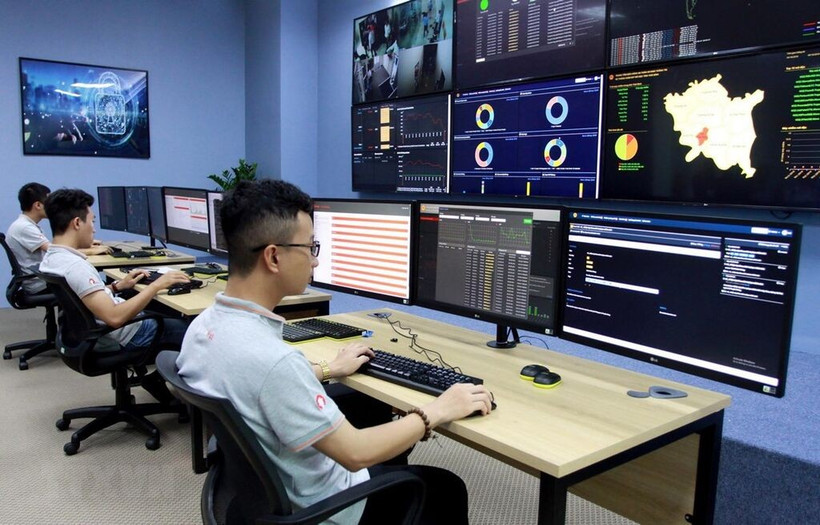
Cybersecurity is among non-traditional security issues. (Illustrative photo: VNA)

Prague (VNA) – Amid increasing non-traditional security threats, including terrorism, drug trafficking, human trafficking, cybercrime, and cybersecurity risks, Vietnam is actively advancing preventive measures and expanding international cooperation, said Assoc. Prof. Dr. Takashi Hosoda, an expert at the University of West Bohemia in the Czech Republic.

Speaking to Vietnam News Agency correspondents in Prague, the expert observed that since the end of the Cold War, security concerns have shifted beyond the field of military to encompass climate change, energy and food shortages, epidemics, natural disasters, and transnational crime.

These threats, he stressed, directly affect human lives, so human security should be placed at the centre. However, the state remains essential as a “hard shell” safeguarding sovereignty and territorial integrity. In Central and Eastern Europe, including the Czech Republic, major challenges include cyberattacks, terrorism, disinformation, climate change, energy security, and the rise of artificial intelligence (AI).

Hosoda noted that traditional and non-traditional security issues increasingly overlap, even forming complex “hybrid threats”. For Vietnam, apart from risks posed by cybercrime, organised crime, or energy security, unilateral actions in the East Sea are also among challenges.

He praised Vietnam’s national strategy for preventing and responding to non-traditional security threats to 2030, with a vision to 2045 as a key advancement. He emphasised that its success will depend on flexible decentralisation, early anomaly detection, and enhanced regional and global cooperation.

Vietnam’s "Four No's" defence policy, he opined, does not hinder its engagement in international cooperation in non-traditional security matters. He welcomed the Government's efforts in implementing the national strategy for response to non-traditional security threats, with a focus on climate change, disaster response, cybersecurity, information security, energy security, and water security, disease prevention, and organised crime. He highlighted these as essential to sustainable socio-economic development.

The expert also expressed confidence in the potential for deeper Vietnam – Japan cooperation, particularly in energy, resource security, and maritime safety, given both countries’ reliance on maritime transport.

He also recommended some measures for coping with these threats: early detection of irregularities, timely emergency response, and efficient resource mobilisation. A highly centralised structure, he argued, may lack the agility needed, suggesting instead to utilise a more decentralised and adaptive approach to command, logistics and mobilisation.

Finally, he stressed that no country can singlehandedly combat non-traditional threats. Vietnam, he said, should continue deepening cooperation within ASEAN while also expanding collaboration with global partners, including the US, China, Japan and the European Union. He concluded that non-traditional security is a shared domain where even states with divergent traditional security views can build trust and strengthen multilateralism in an increasingly unpredictable global landscape./.
VNA

See more

Deputy Prime Minister and Minister of National Defence Gen. Phan Van Giang (right) and Russian Defence Minister Andrey Belousov exchange souvenirs. (Photo: VNA)

Vietnam, Russia promote defence cooperation

In order for bilateral defence ties to truly match its role as a strategic pillar of the Vietnam-Russia Comprehensive Strategic Partnership in the new period, the two sides agreed to focus on promoting several key areas, including delegation exchanges and contacts at all levels, particularly high-level one; maintaining effective defence strategic consultation and dialogue mechanisms; training; and United Nations peacekeeping operations.

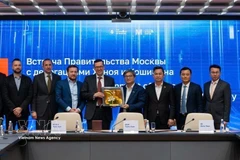
At the meeting between General Secretary of the Communist Party of Vietnam Central Committee and President To Lam and Russian Prime Minister Mikhail Mishustin in Moscow on September 8. (Photo: VNA)

Vietnamese, Russian leaders call for stronger trade cooperation

General Secretary of the Communist Party of Vietnam Central Committee and President To Lam and Russian Prime Minister Mikhail Mishustino agreed to study the establishment of new cooperation mechanisms and specialised working groups in various fields, and pledged to encourage businesses from both countries to expand their operations in each other’s markets.

General Secretary of the Communist Party of Vietnam Central Committee and President To Lam (L) meets with Chairman of the State Duma of the Federal Assembly of Russia Vyacheslav Volodin in Moscow on September 8. (Photo: VNA)

Top Vietnamese leader meets with Chairman of Russia’s State Duma

General Secretary of the Communist Party of Vietnam Central Committee and President To Lam reaffirmed that Vietnam attaches great importance to its traditional friendship and Comprehensive Strategic Partnership with Russia, considering Russia one of Vietnam’s leading important partners in its foreign policy.

Vietnam, US seek to boost cultural and educational exchanges

Vietnam, US seek to boost cultural and educational exchanges

Vietnam consistently regards education and training as a top national priority and a key driver of the country’s breakthrough development. The country is prioritising the development of high-quality human resources in science and technology, innovation and digital transformation.

Professor Reena Marwah of the University of Delhi. (Photo: VNA)

Indian expert highlights Vietnam’s important role in BRICS

Vietnam has the potential to play a deeper role in BRICS if the grouping continues to expand and strengthen its role in global economic governance. It should engage substantively in BRICS cooperation mechanisms while maintaining a balance among BRICS, ASEAN and other partners to consolidate its strategic position.

General Secretary of the Communist Party of Vietnam Central Committee and President To Lam (left) meets with Russian Presidential Aide and Chairman of the Maritime Board Nikolai Patrushev on September 8, 2026. (Photo: VNA)

Top leader highlights promising Vietnam–Russia maritime cooperation

Welcoming the two sides’ identification of orientations for maritime cooperation in 2026–2030, General Secretary and President To Lam called on relevant agencies of both countries to urgently translate them into highly feasible programmes and projects, avoiding a situation in which agreements remain merely at the level of orientations and policies.

President of the Vietnamese National Assembly Tran Thanh Man (R) meets with Chairman of the Korea-Vietnam Parliamentary Friendship Group Moon Jin Seok in Seoul on September 8. (Photo: VNA)

NA President meets RoK-Vietnam Parliamentary Friendship Group chief

President of the Vietnamese National Assembly Tran Thanh Man said the Vietnamese delegation was the first foreign one to make an official visit at the invitation of NA Speaker of the Republic of Korea (RoK) Cho Jeong Sik, with representation from the Party, NA, Government and localities.

National Assembly President Tran Thanh Man (R) receives Mongolian Ambassador to Vietnam Ganbaatar Hulan in Hanoi on August 26, 2026. (Photo: VNA)

Vietnam, Mongolia work to deepen bilateral ties in substantive, effective, sustainable manner

This is the second visit by a top Vietnamese legislator to Mongolia since the two countries established diplomatic relations in 1954, and the first official visit by NA President Man to Mongolia in his capacity. The visit demonstrates Vietnam’s high regard for bilateral relations and the important role of parliamentary diplomacy in the countries’ overall relations.

Hugues Tertrais, Honorary Professor at Paris 1 Panthéon-Sorbonne University and former Director of the Centre for Contemporary Asian History (Photo published by VNA)

Historical foundation, future momentum for Vietnam–France ties

The historical dialogue between Vietnam and France had at times been very tense, but this process helped the two sides understand and respect each other better. Greater mutual understanding built over time has created conditions for cooperation at many levels today, a French scholar has said.

General Secretary of the Communist Party of Vietnam Central Committee and President To Lam and his spouse meet with officials and staff of the Vietnamese Embassy and representatives of the Vietnamese community in Russia in Moscow on September 7, (Photo: VNA)

General Secretary and President To Lam meets Vietnamese community in Russia

In particular, the Politburo recently issued Resolution No. 23-NQ/TW on overseas Vietnamese affairs, General Secretary and President To Lam, emphasising that in the time ahead, the Party and State will continue to improve institutions, and adopt comprehensive, open and breakthrough mechanisms and policies to connect with, attract and effectively mobilise the resources of overseas Vietnamese, particularly intellectuals, experts, entrepreneurs, scientists and young people.