Vietnam sees golden opportunity from cross-border e-commerce

Cross-border e-commerce is set to become one of the strategic pillars in Vietnam’s national master plan for e-commerce development during 2026–2030, as the country looks to build a sustainable digital export ecosystem and enhance global competitiveness for its businesses.

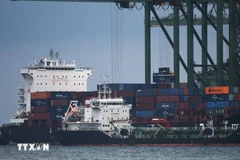
Illustrative photo (Photo: Internet)

Hanoi (VNA) – Cross-border e-commerce is set to become one of the strategic pillars in Vietnam’s national master plan for e-commerce development during 2026–2030, as the country looks to build a sustainable digital export ecosystem and enhance global competitiveness for its businesses.

Speaking at a forum on Vietnam’s e-commerce and cross-border e-commerce Outlook held recently, Nguyen Thi Hoai An, Vice President of the Global Alliance for Cross-Border E-Commerce (ACBC Global) and Chairwoman of ACBC Vietnam, stressed that cross-border e-commerce is not only the new infrastructure of global trade but also an “extended arm” of globalisation, enabling products and values to circulate without borders.

With the global market estimated at nearly 800 billion USD in 2024 and growing over 30% annually, cross-border e-commerce has become an inevitable trend for all nations and enterprises.

According to An, Vietnam is now in its “golden moment” to accelerate in this sector thanks to strategic advantages such as its location as a potential regional logistics hub, abundant raw materials, a young workforce, and rapid digital transformation capacity.

Xiao Qiuli, General Director of the Guangdong Global Shopping E-Commerce Co. Ltd. (GGBingo), said that Vietnamese firms can leverage cross-border e-commerce models to strengthen competitiveness and expand coverage by tapping into platforms such as Amazon, TikTok Shop, Lazada, Shopee, and JD.com. This will help optimise revenue and global reach.

To effectively export through cross-border e-commerce channels, Vietnamese businesses need thorough preparation. Products must meet high quality standards with transparent origins, while obtaining reputable international certifications will help build trust and win over global consumers.

For small and medium-sized enterprises (SMEs) with limited capital and production scale, Vu Xuan Linh, Director of Strategic Partnerships (Vietnam) at Singapore’s Sea Group, suggested ASEAN as the “digital frontier” for Vietnamese SMEs, cooperatives, and household businesses.

ASEAN, which is currently Vietnam’s fourth-largest export market with trade turnover of 37 billion USD in 2024, is projected to reach a cross-border e-commerce market size of 330 billion USD in 2025.

The bloc is not only a dynamic region with the growing purchasing power but also a proven market for Vietnamese goods, particularly in Singapore, Thailand, and Malaysia.

Through programmes like the Shopee International Platform (SIP), more than 350,000 Vietnamese SMEs have already exported online, utilising integrated logistics, payment, and customer service systems to “sell globally from home.” Investment in international logistics and human resource training for CBEC is expected to be a decisive factor in enabling Vietnamese goods to expand further and join global supply chains more deeply.

For new exporters, platforms such as Miss Linh – founded by a Vietnamese entrepreneur in the Netherlands in 2023 – are opening doors to Europe. The platform currently supports over 25 Vietnamese food brands in reaching European consumers. However, Nga Dang, founder of Vietnam Food Europe B.V., emphasised that success requires strict compliance with European market standards.

Meanwhile, China, a billion-consumer market long targeted by Vietnamese exporters, has its own requirements.

Dr. Chen Jia, a specialist representing the national eco-product certification system under China’s Forestry and Environment Promotion Committee, highlighted that the PEOP certification, which integrates digital tools such as QR codes and AI, serves as a “green passport” for Vietnamese products like coffee, cashew nuts, durian, and dragon fruit. This certification enhances brand positioning, builds consumer trust, and boosts sustainable export growth via cross-border e-commerce channels./.


VNA

See more

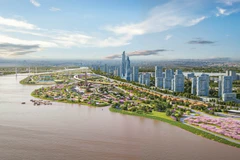
A perspective view of the Red River Landscape Boulevard project in Hanoi (Photo: VNA)

Works starts on Hanoi’s Red River Landscape Boulevard Axis project

The project is among the 234 key works and projects being launched, inaugurated or technically opened simultaneously across 34 cities and provinces nationwide to mark the 14th National Party Congress. Its launch contributes to implementing the country’s strategic development orientations while concretising Hanoi’s development goals in the new period.

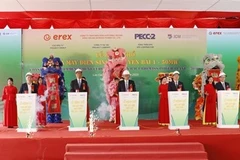
The ground-breaking ceremony of the Yen Bai 1 biomass power plant in Lao Cai province on December 19. (Photo: VNA)

Work starts on 114-million-USD biomass power plant in Lao Cai

The project, developed by Erex Yen Bai Biomass Power Co. Ltd. is located in Dong Cuong commune, Lao Cai province. It is backed by Japan’s Erex Group and falls under the Joint Crediting Mechanism, a bilateral initiative between Vietnam and Japan to reduce greenhouse gas emissions.

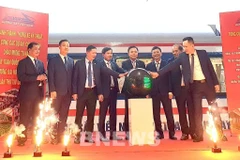
At the inauguration ceremony (Photo: VNA)

Vietnam Railways Corporation unveils upgraded coaches, digital tools

These moves reflect the VNR's commitment to fulfilling six priority tasks set by the Prime Minister, including leading in innovation and digital transformation, applying sci-tech in line with the Politburo’s Resolution No. 57-NQ/TW, and spearheading advances in digital, green and circular economy.

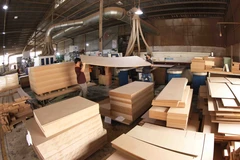
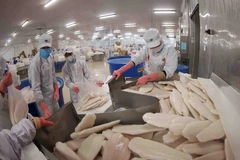
Producing MDF panels for export at Hai Duong MDF Construction and Manufacturing Co., Ltd., in Ho Chi Minh City (Photo: VNA)

HCM City targets 15 billion USD in wood exports by 2035

The merger of HCM City with Binh Duong and Ba Ria – Vung Tau is expected to give the local wood industry a strong boost into a phase of high-quality growth driven by linkages, innovation, sustainability, and deeper integration into global value chains.

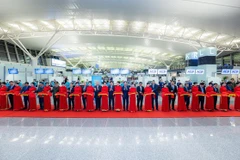
Delegates cut a ribbon to inaugurate the expanded Terminal T2 at Noi Bai International Airport in Hanoi on December 19, 2025. (Photo: VNA)

Expanded Terminal T2 at Noi Bai International Airport makes debut

The project expands the terminal’s floor area to over 200,000 sq.m, increases passenger capacity from 10 million to 15 million, even up to 18 million per year, and boosts operational capacity with boarding gates rising from 17 to 30 and jet bridges from 14 to 27, meeting strong growth in international travel demand.

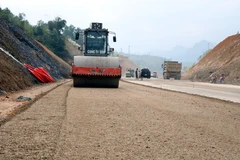
A section of Can Tho - Ca Mau Expressway (Photo: VNA)

Can Tho – Ca Mau travel time halves from December 19

Stretching more than 110 km with a total investment of over 27.5 trillion VND (1.04 billion USD), the project not only resolves long-standing traffic bottlenecks in the Mekong Delta, but also opens up new development opportunities for the entire region - especially Ca Mau, the last locality in the country to be directly connected to the eastern North–South expressway axis.

The value chain map of the electronics and electrical industry provides in-depth analysis, selection, and systematisation of information from 742 companies operating in seven key electronics and electrical sectors. (Photo: VNA)

Vietnam electronics, electrical value chain map unveiled

This marks the first time that the entire supply chain of one of Vietnam’s most prominent industries has been systematised, visualised, and officially published in a structured manner, aiming to promote trade, attract investment, and support sustainable industrial development.

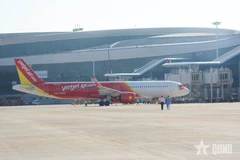
A Vietjet aircraft at Con Dao airport (Photo: VNA)

Vietjet doubles flights to Con Dao

Vietjet has announced its plan to double the number of flights between Hanoi, Ho Chi Minh City and Con Dao to meet the increasing travel demand of residents and visitors to Con Dao during the year-end and New Year period.

Phu Quoc becomes Vietnam’s first destination to feature an urban LRT system (Photo: Sun Group)

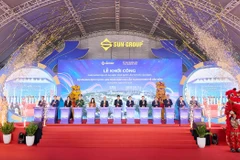
Sun Group to launch series of landmark projects across Vietnam

By simultaneously launching a series of large-scale and strategically important projects, Sun Group continues to reaffirm its position as one of Vietnam’s leading tourism developers, while standing as a clear example of the role played by the private sector in national construction and development.