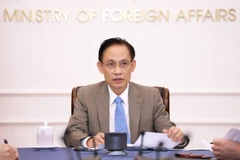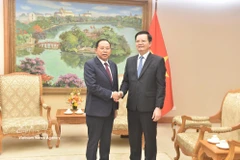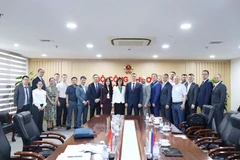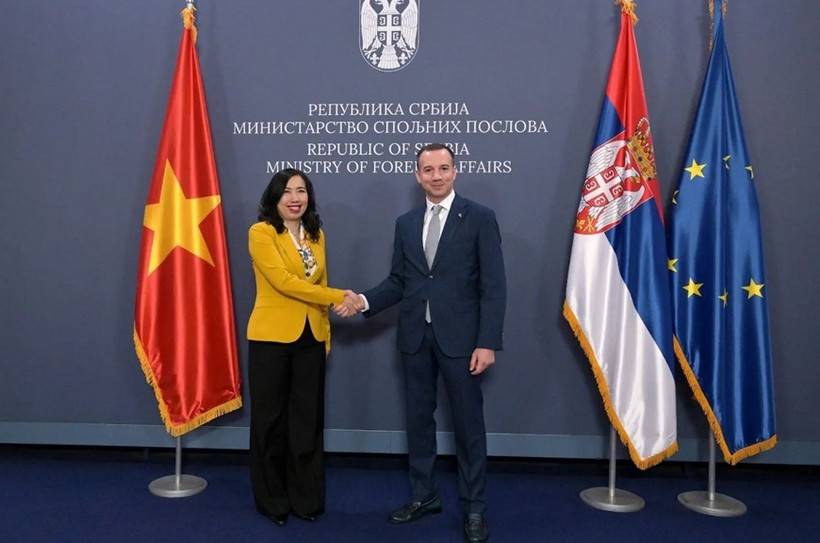
Hanoi (VNA) – Vietnamese Deputy Minister of Foreign Affairs Le Thi Thu Hang and her Serbian counterpart Damjan Jovic recently co-chaired the Vietnam–Serbia political consultation in Belgrade, as part of her working trip to Serbia from May 22-23.
Both sides shared updates on each country’s socio-economic development and discussed ways to further advance Vietnam–Serbia relations in the time ahead.
Expressing satisfaction with the recent progress in bilateral traditional friendship and all-around cooperation, they cited robust cooperation between the two foreign ministries, frequent high-level exchanges, mutual support at multilateral forums and international organisations. These efforts, they said, have deepened political trust and set the stage for expanded collaboration in other areas.
Vietnam always treasures its traditional friendship with Serbia, rooted in President Ho Chi Minh’s historic visit to the former Yugoslavia in 1957, Hang said.
She congratulated Serbia on being selected to host the EXPO 2027 in Belgrade under the theme “Play for Humanity – Sport and Music for All”, and praised its accession to the Treaty of Amity and Cooperation in Southeast Asia (TAC), a step that fosters comprehensive cooperation between Serbia and the Association of Southeast Asian Nations (ASEAN). Vietnam is eager to serve as a bridge for Serbia’s deeper engagement with Southeast Asian nations, Hang added.
Both diplomats agreed to facilitate high-level exchanges via the Party, Government, and parliament channels, especially in the lead-up to the 70th anniversary of diplomatic ties in 2027. They also committed to regularly maintaining the political consultation mechanism between the two foreign ministries, while exploring new mechanisms to deepen sectoral cooperation, including through parliamentary and people-to-people diplomacy.
Jovic proposed the exchange of delegations at all levels, urging business representatives to boost trade promotion activities and explore opportunities in such key and complementary areas as agriculture, information technology (IT), and innovation. He encouraged greater mutual investment by both countries' businesses and invited Vietnam to attend the EXPO 2027.
The host and guest pledged to continue mutual support at global and regional forums, including the United Nations and its mechanisms, such as UNESCO and the Human Rights Council.
They shared a common stance on the importance of maintaining a peaceful and stable environment for development, supporting multilateralism and free trade, and improving the effectiveness, transparency, and fairness of the UN operations. They affirmed the need to uphold international law and the fundamental principles of the UN Charter, including the peaceful settlement of disputes through dialogue.
In separate meetings, Serbian Deputy Prime Minister and Minister of Economy Adrijana Mesarovic and Minister for International Economic Cooperation Nenad Popovic praised Vietnam’s potential and growing role in ASEAN and the Asia-Pacific. They noted the ample potential for collaboration in areas where Serbia has strengths, including IT, digital transformation, high-tech industries, innovation, and agriculture.
They proposed the two countries negotiate a bilateral free trade agreement, consider the opening of a direct air route, and facilitate Serbian attendance at Vietnam’s robotics and IT conferences, seminars, and events.
Cultural and people-to-people exchanges also drew attention. Both sides committed to stepping up cultural events, art exhibitions, film screenings, sports training, and tourism, while encouraging Vietnamese students to study in Serbia. They also agreed to expedite talks on a labour cooperation agreement, aligning Serbia’s workforce needs with Vietnam’s youthful labour pool.
On the occasion, Hang announced that Vietnam will host the signing of the Hanoi Convention, a new UN framework to combat cybercrime, on October 25-26. She delivered a letter from Vietnamese President Luong Cuong inviting the Serbian President to attend, noting that Serbia’s presence would contribute to the success of this UN effort.
While in Serbia, Hang also met with representatives of the Vietnamese community living in the country./.