Korean expert expects turning point for Vietnam’s sustainable development

According to the professor, the most important strategic orientation to be defined by the 14th National Party Congress is a qualitative transformation of Vietnam’s growth model.

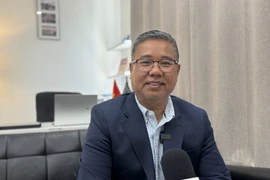
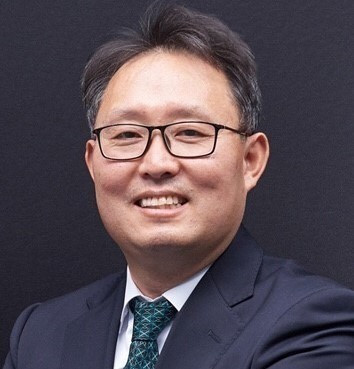
Professor and Doctor of Literature Park Yeon Gwan at Hankuk University of Foreign Studies (Photo: VNA)

Seoul (VNA) - The 14th National Congress of the Communist Party of Vietnam (CPV) will set out a turning-point development vision for the period to 2030 and further to 2045, against the backdrop of a fragmented global economy, intensifying strategic competition among major powers, and profound restructuring of global supply chains, according to Professor and Doctor of Literature Park Yeon Gwan of the Vietnamese studies faculty at the Republic of Korea (RoK)’s Hankuk University of Foreign Studies (HUFS).

According to the professor, the most important strategic orientation to be defined by the 14th National Party Congress is a qualitative transformation of Vietnam’s growth model. The country needs to gradually move beyond a development model heavily reliant on foreign direct investment and exports, toward one centred on productivity, technology, and the endogenous capacity of domestic enterprises, thereby upgrading its position in regional and global value chains.

Amid increasingly fierce strategic competition among major powers and a rapidly changing international economic security environment, Vietnam needs to enhance the resilience of supply chains in key sectors such as industry, energy, food and technology. While maintaining an open-door policy remains essential, it should be accompanied by stronger national-level strategic autonomy, avoiding excessive dependence on any single market or partner, Park stressed.

He also pointed out that infrastructure and implementation capacity remain major bottlenecks hindering the country’s development. Therefore, it needs a fundamental reconstruction of its national development space, transport and logistics systems, viewing them as the material foundation for a long-term development strategy. Beyond economic factors, reforms in the socio-cultural sphere and the enhancement of public awareness regarding law observance, public responsibility, safety and environmental protection are also seen as key conditions for ensuring sustainable development in the new phase.

On foreign affairs, Park noted that Vietnam will continue to pursue its foreign policy of independence, self-reliance, multilateralisation and diversification of external relations. However, he predicted the 14th National Party Congress may mark an important refinement toward a more proactive and strategic approach. Rather than merely maintaining a balance among major powers, Vietnam is expected to adopt a more differentiated, sector- and issue-based approach to cooperation, placing national interests and development strategy at the core to disperse risks and enhance strategic autonomy.

At the regional level, the country needs to play a more proactive role within the Association of Southeast Asian Nations (ASEAN), particularly in shaping norms and cooperation frameworks in emerging areas such as Mekong subregional development, digital transformation, green growth and non-traditional security.

Within this context, the RoK stands out as a key strategic partner closely aligned with Vietnam’s industrial upgrading goals. Park expressed the view that following the congress, Vietnam–RoK cooperation will move beyond the traditional investment–trade framework toward a more structural partnership in areas such as supply chain stability, technology transfer and high-quality human resources development.

He added that the congress can become a milestone shifting bilateral collaboration from a phase of expansion to one of greater depth, with a stronger focus on strategic sectors including semiconductors, batteries, digital industries, supply chain resilience, energy transition and workforce training, thereby contributing substantively to Vietnam’s industrial upgrading and the consolidation of a sustainable growth foundation./.

VNA
See more

Vietnamese association in Thailand elects leadership for 2026–2028 term (Photo: VNA)

Vietnamese community in Thailand elects new executive board for 2026–2028 term

Established in July 2012 under the Thai Government approval, the Association of Vietnamese in Thailand currently has 26 local chapters and a women’s committee, and has played an active role in preserving cultural identity, supporting community development, and fostering people-to-people ties between Vietnam and Thailand.

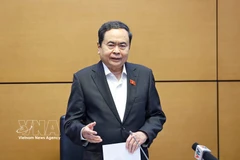
National Assembly Chairman Tran Thanh Man speaks at the event (Photo: VNA)

National Assembly Standing Committee convenes 53rd session

NA Chairman Man said the 53rd session will review and approve two resolutions on specific matters relating to the organisational structure and the contingent of prosecutors of the Supreme People’s Procuracy, as well as consider the NA’s people's aspiration report in December 2025.

Prime Minister Pham Minh Chinh meets with Uruguayan President Yamandú Orsi on the sidelines of the expanded BRICS Summit on July 7, 2025. (Photo: VNA)

Vietnam–Uruguay relations poised for further elevation: Uruguayan Ambassador

Uruguayan Ambassador to Vietnam Raúl Juan Pollak Giampietro noted that although the two countries have yet to formally establish a comprehensive partnership, the foundations of bilateral cooperation have been steadily strengthened and expanded, particularly in the fields of economy and trade, science and technology, agriculture, and people-to-people exchanges.

Assaf Talgam, a historian and a journalist of Zo HaDerekh, the official newspaper of the Communist Party of Israel. (Photo: VNA)

CPV's leadership - central factor shaping Vietnam’s enduring stability, impressive achievements: Israeli historian

Talgam said that from a comparative and historical perspective, the CPV’s leadership has been the central factor underpinning the country’s enduring political stability and impressive development trajectory. In a world marked by rapid and unpredictable changes, few political organisations have been able to maintain continuity of leadership while simultaneously adapting their governance approach as effectively as the CPV.

Prime Minister Pham Minh Chinh presents Certificates of merit from the Government’s Party Committee to individuals with outstanding achievements. (Photo: VNA)

Prime Minister outlines five specific strategies for Government’s Party Committee

PM Chinh noted that the Government’s Party Committee exercised comprehensive leadership over the Government's operations, proactively and effectively responded to emerging issues, with a particular focus on socio-economic development. As a result, 2025 witnessed high economic growth, sustained macroeconomic stability and ensured major balances.

Politburo member, Standing member of the Party Central Committee’s Secretariat Tran Cam Tu attends the rehearsal. (Photo: VNA)

Security forces stage rehearsal for 14th National Party Congress

The People’s Public Security forces have been praised for their core role in closely working with the army and relevant ministries and agencies, with success in thwarting hostile plots at an early stage, drastically combating fake news and disinformation surrounding the 14th National Party Congress.

Senior Lieutenant General Le Quoc Hung (L), member of the Communist Party of Vietnam (CPV) Central Committee and Deputy Minister of Public Security, and General Vilay Lakhamfong, Politburo member and permanent member of the Secretariat of the Lao People’s Revolutionary Party (LPRP) Central Committee. (Photo: VNA)

Deputy Minister of Public Security congratulates Lao officials following succesful 12th National Party Congress

Deputy Minister of Public Security Senior Lieutenant General Le Quoc Hungconveyed the warmest congratulations of the Central Public Security Party Committee, the Ministry of Public Security leadership, and the Vietnamese People’s Public Security Forces to Lakhamfong and other Lao public security leaders on the congress’s success and their election to key leadership positions for the new term.

A session of the National Assembly Standing Committee. (Photo: VNA)

NA Standing Committee's key work agenda for 2026 approved

A major focus will be preparations for the election of deputies to the 16th NA and to People’s Councils at all levels for the 2026–2031 term. The NASC will coordinate with the National Election Council, the Government, the Vietnam Fatherland Front Central Committee, and relevant agencies and organisations to continue implementing the election plan, organise oversight of the electoral process, and carry out its duties and powers as prescribed.