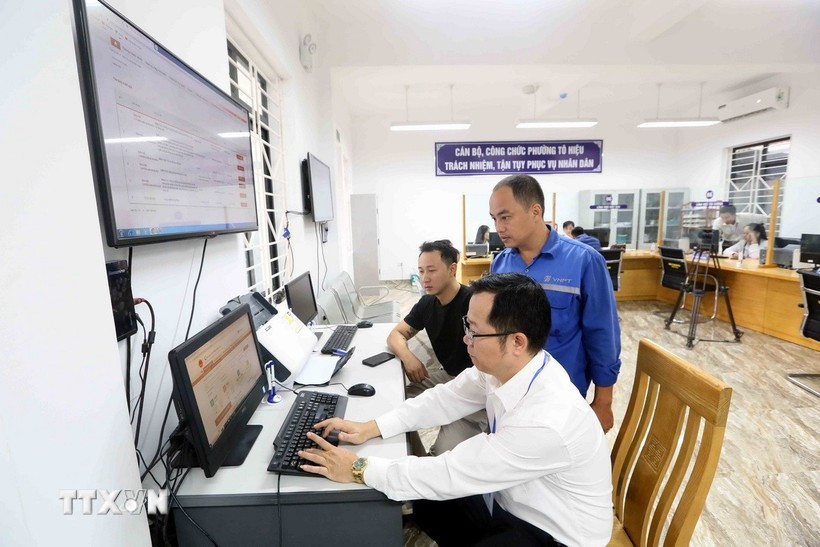
Hanoi (VNA) – The restructuring of the organisational apparatus and the implementation of a two-tier local administration model, closely linked with decentralisation and delegation of authority, have brought about an important shift in governance toward empowering authorities while ensuring accountability, fostering proactiveness and creativity, making the apparatus leaner, strengthening local-level administrations, and gradually reducing compliance costs.
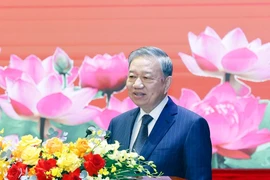
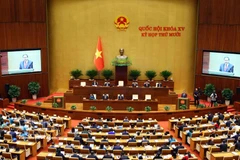
The affirmation was made by Party General Secretary To Lam while addressing a recent conference reviewing the Government and local administrations' performance in 2025 and outlining tasks for 2026. In 2025, guided by a forward-looking vision and a spirit of tireless work, the Government successfully carried out a historic decision to restructure the state apparatus and reorganise administrative boundaries, leaving a strong imprint. This was not merely an adjustment of administrative geography, but a strategic step to reshape the national governance model by reducing intermediate layers, enhancing connectivity and coherence, and improving effectiveness and efficiency in administration. Comprehensive measures were rolled out to ensure the smooth operation of the new apparatus without disrupting state management, in tandem with stronger decentralisation and a shift from an administrative system focused on control to one oriented toward development facilitation and public service.
Closer to the people, closer to the grassroots
Chairman of the Hanoi People’s Committee Vu Dai Thang said that last year, the capital city concentrated its efforts on fulfilling assigned tasks and targets, removing bottlenecks to socio-economic development, and building a two-tier local administration under the new model. Notably, its average GDP growth reached 8.16%, significantly higher than in previous years, with the economic scale estimated at around 64 billion USD. Foreign direct investment saw a sharp surge, rising by over 70% year-on-year to approximately 4.4 billion USD.
According to Chairman of the Ho Chi Minh City People’s Committee Nguyen Van Duoc, 2025 was a “stress test” year for the city as it underwent administrative consolidation while implementing strategic tasks to accelerate development. With close guidance from the Party Central Committee and the Government, strong coordination among ministries and sectors, unity across the political system, and broad consensus among citizens and businesses, the city achieved encouraging results. Organisational restructuring and the reorganisation of administrative and public service units were carried out in earnest, and the two-tier local administration model has gradually operated in a stable and smooth manner. The city’s GRDP grew by 8.03%, GRDP per capita reached 8,755 USD, and the investment climate improved.
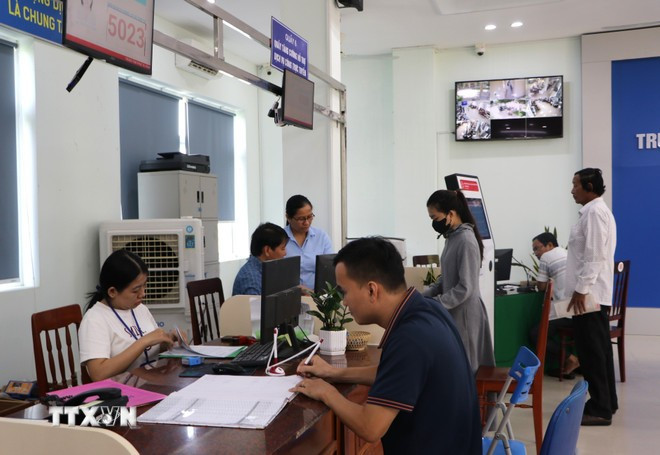
In the central province of Quang Ngai, 2025 marked an important milestone as, together with the rest of the country, it completed the reorganisation of the administrative apparatus and units and put the two-tier local administration model into operation. Adhering to the principle that “what benefits the people must be done to the utmost, and what harms them must be avoided at all costs,” officials and Party members across the province have made close engagement with the people and the grassroots level a regular practice, earning positive public feedback.
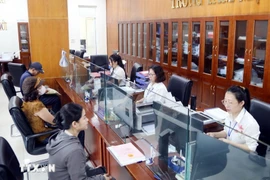
Since July 1, 2025, 96 communes, wards and special administrative units in Quang Ngai have handled more than 252,000 dossiers, with nearly 99% resolved on time or ahead of schedule, and satisfaction rates exceeding 94% among citizens and businesses, underscoring the effectiveness of the new apparatus.
Alongside the restructuring of government and local administrations, 2025 also saw comprehensive reforms of mass organisations whose tasks are assigned by the Party and the State. These organisations proactively streamlined internal structures, consolidated personnel, and issued decisions on mergers, dissolution, and transformation of affiliated public service units. To date, 20 out of 30 such organisations have completed internal streamlining, reducing the number of units by 43%, from 160 to 91.
Strengthening accountability of leaders
In practice, the streamlining of the apparatus and the rollout of the two-tier local administration model still face certain bottlenecks. General Secretary Lam pointed out that in some localities, implementation remains inconsistent, with delays in administration causing difficulties for citizens and businesses. Decentralisation has not always been matched a dequate resource allocation and capacity building, creating gaps between assigned authority and actual implementation capacity.
For 2026, the top leader called for enhanced implementation capacity under stronger decentralisation, a review to cut procedures, greater decision-making space and accountability for officials, and reduced time and compliance costs for citizens and enterprises. Priority should be given to developing high-quality human resources and raising the overall skills base of society.
He stressed the need to closely link authority with resources and accountability, ensuring smooth governance from the central to grassroots levels. Continued efforts are required to build a lean, strong, efficient and effective apparatus; strengthen accountability of leaders; tighten administrative discipline; and put an end to buck-passing and the fear of bearing responsibility. Mechanisms for evaluating and replacing officials should be refined, with capable personnel duly valued. More solutions are also needed to better utilise underused public assets and handle surplus public offices after reorganisation, thereby improving the autonomy and governance efficiency of the state apparatus.
To further streamline mass organisations, the Politburo and the Secretariat recently issued Conclusion No. 230-KL/TW on the plan to reorganise and streamline mass organisations assigned tasks by the Party and the State, as well as on evaluating the operational models of the Vietnam Cooperative Alliance and the Vietnam Chamber of Commerce and Industry. Accordingly, a unified list of 29 central-level mass organisations assigned such tasks has been approved. The Vietnam Cooperative Alliance and the Vietnam Chamber of Commerce and Industry are socio-professional organisations assigned tasks by the Party and the State, without state management functions, with their mandates assigned by the Prime Minister at the proposal of the Vietnam Fatherland Front Central Committee./.